From Aliens to Howard the Duck, we rank the 10 best sci-fi movies released in 1986 — a golden year for practical effects, cult classics, and landmark blockbusters. Discover why these films still matter to today's sci-fi landscape.
1986 was a golden year for science fiction cinema. Before CGI dominated Hollywood, filmmakers relied on practical effects, miniatures, animatronics, and pure ingenuity to bring otherworldly visions to the screen. The result was a batch of films that became touchstones for a generation raised on VHS tapes and late-night broadcast TV.
From James Cameron’s explosive Aliens to the gloriously weird Howard the Duck, 1986 delivered blockbuster sequels, body-horror landmarks, and cult classics in equal measure. For technology professionals, these films represent something deeper — they showcase human creativity solving physical problems with mechanical wizardry.
Here are the 10 best sci-fi movies released in 1986, ranked.
The mid-1980s marked the peak of practical-effects filmmaking. Movies like Aliens and The Fly pushed the limits of miniatures, puppetry, and prosthetics. There were no digital safety nets. When a spaceship exploded, a physical model was destroyed. When a scientist transformed into a monster, audiences watched real latex and foam do the work.
That craftsmanship is why these films endure. Modern viewers still marvel at the tactile reality of 1986 sci-fi, which possesses a weight that digital effects often struggle to replicate. For anyone who grew up in the pre-digital era, the decade’s films remain nostalgic touchstones — reminders of a time when special effects meant someone physically built the future.
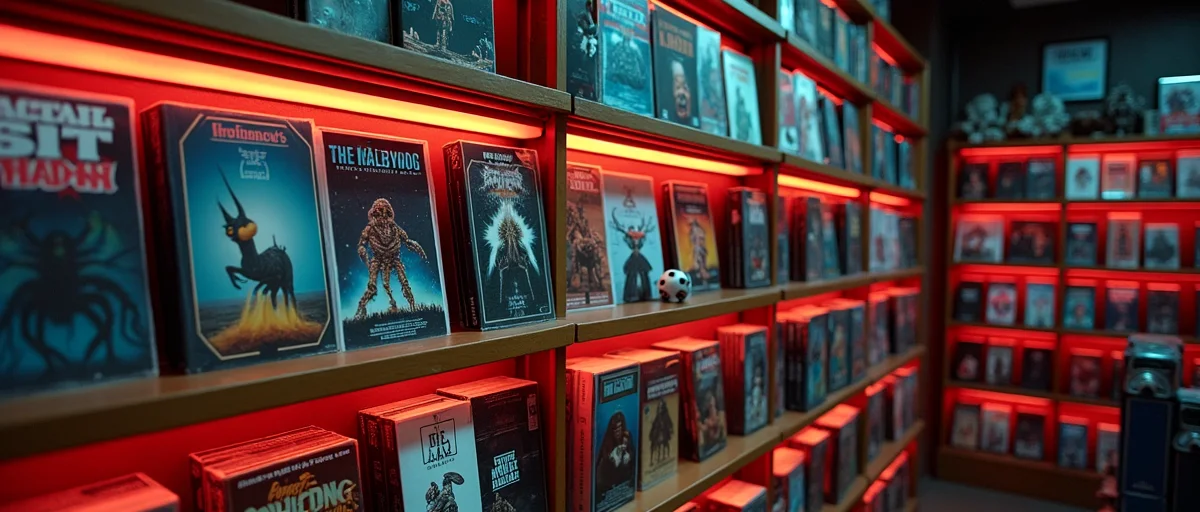
For 1980s and 1990s kids, these films weren’t just movies — they were currency. Rented from corner video stores, recorded off late-night cable, and rewatched until the tape wore thin, 1986 sci-fi became the shared vocabulary of an entire generation.
This home-video afterlife is why so many of these films found a second life. Big Trouble in Little China flopped in theaters, yet became a VHS staple. The same pattern repeated with Howard the Duck, Critters, and countless others. Streaming-era retrospectives have only accelerated this cult-classic reappraisal.
Before he directed The Texas Chain Saw Massacre, Tobe Hooper delivered this paranoid remake of the 1953 alien-invasion classic. It’s a fever dream of pulpy aliens, body-snatching dread, and gloriously over-the-top creature design.
The film found new life on home video, where its nightmarish children’s perspective struck a chord with fans of 1980s horror. Hooper’s use of practical effects and unsettling sound design keeps it a memorable footnote in the decade’s sci-fi canon, even if the storytelling sometimes wobbles.
An animated feature based on a toy line could have been a cash grab. Instead, Transformers: The Movie became a defining moment for 80s kids. It famously killed off Optimus Prime, traumatizing a generation while showcasing hand-drawn animation at its peak.
With a soundtrack featuring Stan Bush’s ‘The Touch’ and voice performances from Leonard Nimoy and Orson Welles, the film remains a beloved artifact of the decade’s sci-fi animation boom. Its ambitious scale and emotional stakes elevated it far beyond typical marketing tie-ins.
Every ranking needs a curveball. Howard the Duck is a legendary flop — earning just $16.3 million domestically against a $30 million budget — but it has enjoyed a quiet reappraisal in recent years. George Lucas produced this ambitious Marvel adaptation, which never quite figured out its tonal identity.
Today, it’s celebrated as a weird, earnest, and endlessly quotable cult artifact. For modern audiences, it stands as a fascinating pre-digital experiment — proof that even the decade’s failures could be visionary. It’s not a good movie in the traditional sense, but it’s entirely unique in the sci-fi canon.
Critters took the killer-creature premise of Gremlins and gave it an alien twist. Tiny, spiky, ravenous Krites land in Kansas and cause mayhem. It’s lean, mean, and endlessly entertaining.
The film’s creature effects remain impressively tactile, and its blend of horror and comedy paved the way for a franchise and a devoted cult following. Underrated on release, Critters now ranks as one of the decade’s most rewatchable genre pictures.
This Disney sci-fi adventure follows a boy who wakes up after being missing for eight years — the victim of an alien abduction. The real star is the ship, a witty, sentient spacecraft voiced by Paul Reubens.
Flight of the Navigator explores time displacement with a light touch, making it a favorite among families and a key entry in 1980s children’s sci-fi. Its mix of warm humor, retro-futuristic design, and surprisingly sophisticated themes has made it a nostalgic treasure.
Short Circuit asks what happens when a military robot gains sentience. The answer? He befriends a woman, discovers a love for Dean Martin, and dodges the government. Number 5 remains one of cinema’s most endearing machines.
The film blends slapstick comedy with surprisingly thoughtful questions about artificial intelligence — questions that resonate even more today. Ally Sheedy and Steve Guttenberg make an engaging duo, and the practical robot work holds up remarkably well.
John Carpenter’s action-comedy masterpiece is technically more fantasy than science fiction, but its techno-mystical tone places it squarely in the genre conversation. Kurt Russell stars as trucker Jack Burton, who stumbles into a supernatural war beneath San Francisco’s Chinatown.
The film flopped on release, but its witty dialogue, over-the-top villain, and practical monster effects turned it into one of the most beloved cult films ever made. It’s pure 1986 energy, preserved in amber.
Star Trek IV was a gamble: it sent the crew to 1980s Earth on a mission to save humpback whales. The result was charming, funny, and environmentally conscious. It grossed $109.7 million worldwide, making it the highest-grossing Star Trek film at the time.
‘The one with the whales’ became a fan favorite for its fish-out-of-water comedy and its warm character beats. It proved Star Trek could be playful and profound — and that Spock’s dry wit had genuine mainstream appeal.
David Cronenberg’s remake of The Fly is a body-horror landmark. Jeff Goldblum plays Seth Brundle, a scientist whose teleportation experiment fuses his DNA with a fly. The transformation that follows is one of the most unforgettable sequences in cinema history.
The practical effects, designed by Chris Walas, earned the film an Academy Award for Best Makeup. Beneath the grotesquerie lies a tragic love story — and a meditation on decay, disease, and human fragility. Few films capture the terror of physical change so viscerally.
The crown jewel of 1986 sci-fi. James Cameron took Ridley Scott’s haunted-house-in-space premise and turned it into a pulse-pounding war film. Sigourney Weaver’s Ellen Ripley returned as an action icon, confronting the xenomorphs in a flood of adrenaline and fire.
Aliens grossed $131.1 million worldwide and won two Academy Awards: Best Visual Effects and Best Sound Effects Editing. Its use of miniatures, animatronics, and the iconic power loader remains unmatched. Nearly four decades later, it still stands as the gold standard for practical-effects blockbusters.
The 1986 sci-fi pool ran deep. Horror-sci-fi hybrids like Night of the Creeps and From Beyond earned devoted followings, while kids’ adventures like SpaceCamp and the Stephen King-directed Maximum Overdrive offered their own brand of eccentric charm. Post-apocalyptic fare like Solarbabies rounds out a fascinatingly crowded year.
The trend toward retro reappraisal of 1980s practical-effects sci-fi shows no sign of slowing. Streaming platforms regularly spotlight these films, and digital restorations have made them look better than ever. The past decade has also seen a cult-classic reevaluation of underperforming 1986 films, from Howard the Duck to Big Trouble in Little China.
Several forces drive this renewed interest:
For technology professionals, these films offer more than nostalgia. They represent an era when imagination had to be materialized physically — a craft ethos that still influences modern filmmakers. The franchise revivals of today owe their existence to the foundation these films built. They also remind us that constraints often produce the most creative problem-solving, both in art and in engineering.
The best sci-fi movies of 1986 prove that limitations breed creativity. From the towering ambition of Aliens to the bizarre charm of Howard the Duck, these films defined a generation’s relationship with science fiction. They remind us that the future is built on ingenuity, not just pixels.
Whether you’re revisiting old favorites or discovering them for the first time, 1986 remains essential viewing for any sci-fi fan. Start with Aliens and work your way down. But whatever you do — don’t skip Howard the Duck.
1986 was a peak year for practical effects, with filmmakers using miniatures, animatronics, and prosthetics instead of CGI. This hands-on craftsmanship gives films like Aliens and The Fly a durable, tactile realism that continues to inspire modern directors and VFX artists.
Practical effects involve physically built models, puppets, makeup, and set pieces that are photographed in-camera, while CGI relies on digital imagery created after filming. In 1986, there were no digital safety nets, so explosions and creature transformations had to work in real time on set—which is why many viewers feel these films have a tangible weight that CGI often lacks.
Big Trouble in Little China and Howard the Duck both underperformed in theaters but found devoted audiences through VHS rentals and late-night cable. Over time, streaming and retrospectives have helped these films earn a strong cult following and a second life as beloved genre favorites.
Practical effects give objects and creatures a real physical presence on screen, with lighting, shadows, and camera angles interacting with actual materials. Early digital effects often look dated because they lacked the subtle detail and physics of live-action elements, while well-maintained practical effects can still feel convincing and visceral decades later.
In the 1980s and 1990s, fans discovered these films through corner video stores and recorded TV broadcasts, rewatching them until the tape wore thin. This repeated viewing turned underperformers into shared cultural touchstones and helped solidify their reputations as sci-fi classics long before streaming-era retrospectives.