Variety's review of 'Jimmy' reveals a groundbreaking approach to the biopic — a 'woozily seductive mood piece' that wanders through Europe in pursuit of James Baldwin's spirit. This analysis explores the film's experimental narrative structure, the authenticity debate it ignites, and the rising trend of atmosphere-driven biographical filmmaking.
James Baldwin spent more than a decade in self-imposed exile across Europe, yet his presence loomed larger over American culture than most writers who never left. The new film ‘Jimmy’ attempts to capture that paradox — and this Jimmy film review from Variety calls it a “woozily seductive mood piece” that “wanders Europe” in pursuit of Baldwin’s spirit.
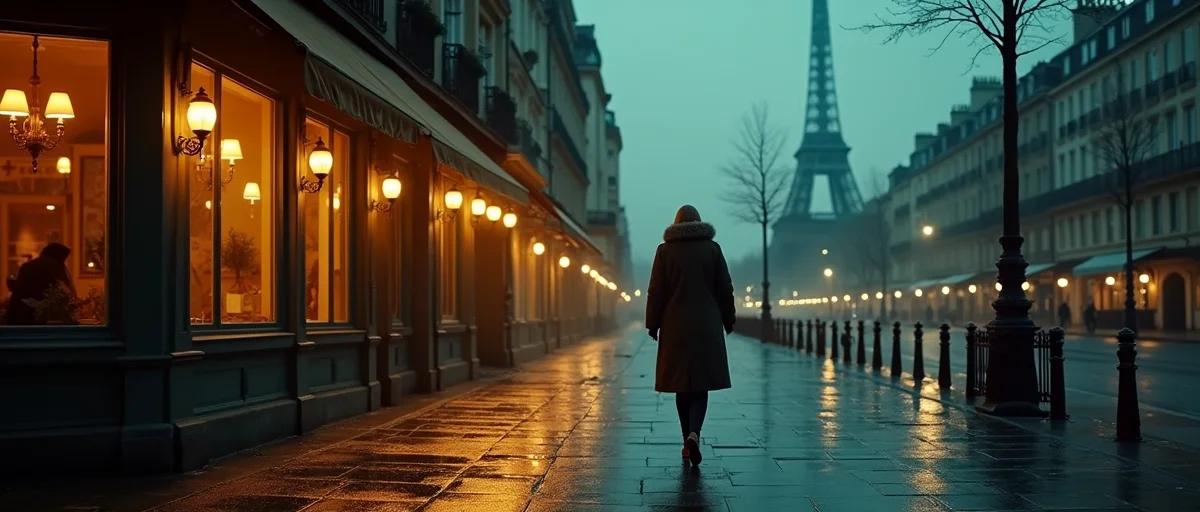
For audiences accustomed to linear storytelling, “Jimmy” offers a radically different proposition. It does not list dates, cities, and major events on a biographical timeline. Instead, the film drifts through the places Baldwin inhabited — Paris, the Swiss village of Leukerbad, the south of France — using atmosphere, memory, and suggestion to evoke the writer’s interior landscape. It’s cinema as séance rather than chronology, and it raises essential questions about how we represent complex historical figures in an era when audiences demand both authenticity and emotional truth.
The conventional biopic formula is well-established: childhood trauma, early struggles, breakthrough success, later decline. Audiences have been trained to expect this arc, and streaming services have industrialized it into a predictable genre. But “Jimmy” rejects the template outright, adopting instead the logic of a dream.
According to the review, the film does not aim to document every milestone in Baldwin’s European years. It seeks to translate the texture of his experience — the loneliness, the liberation, the constant negotiation between visibility and invisibility that defined his life as a Black gay man abroad.
This approach reflects a broader shift in biographical cinema. From Moonlight and If Beale Street Could Talk to I’m Not There and Oppenheimer, a growing number of filmmakers are treating their subjects’ lives as raw material for emotional exploration rather than a sequence to be reproduced. The result, when successful, feels less like reading a Wikipedia entry and more like stepping into a memory.
For technologists, there’s a familiar parallel: the difference between a database record and an experience. The database tells you what happened. The experience tells you what it meant. “Jimmy” is firmly in the latter camp, trusting the audience to surrender to its rhythm rather than demanding they track a plot.
At the center of “Jimmy” is Yashaddai Owens, a creative force whose influence permeates the film. While the precise nature of Owens’s credited role — director, writer, star, or some combination — has been a point of intrigue, the review makes clear that this is a deeply personal work shaped by Owens’s vision.
Owens’s approach matters because Baldwin resists easy embodiment. He was not merely a novelist or an essayist. He was:
A traditional biopic would need to decide which Baldwin to show. “Jimmy” sidesteps the problem entirely, presenting the space around the man rather than a fixed portrait of him. It’s a strategy that trusts the audience to engage with the gaps — an approach that feels particularly resonant in a culture that increasingly values open-ended, non-prescriptive media.
The decision to foreground atmosphere over narrative also aligns with the film’s subject matter. Baldwin was a writer who believed in the indirection of art. He understood that the deepest truths often arrive obliquely, through metaphor and silence, rather than through declaration. “Jimmy” extends that conviction to cinematic form.
The release of “Jimmy” arrives at a moment when questions of authorship and representation dominate cultural discourse. Few figures embody those tensions more acutely than James Baldwin, and few artists have been more explicit about their claims to his legacy than Billy Porter.
In a 2024 interview with The Guardian, Porter, who has discussed plans to direct and star in his own Baldwin biopic, framed the issue in starkly personal terms:
“If not me, who? Who’s going to tell it better than the Black gay man who embodies that in today’s age?”
Porter’s challenge highlights a central dilemma. Baldwin’s identity — Black, gay, politically radical, spiritually complex — sits at the intersection of multiple marginalized experiences. Historically, such figures have often been sanitized by filmmakers eager to make their stories palatable to broad audiences. The queerness gets muted. The politics get softened. The contradictions get flattened.
“Jimmy,” by contrast, appears to embrace Baldwin’s full complexity. Its willingness to foreground mood over narrative may be more than an aesthetic choice. It may be an ethical stance — a refusal to reduce a human being to a neat arc with a satisfying moral.
The trend data supports this observation. Between 2024 and 2026, adaptations and explorations of James Baldwin’s legacy in film and media are sharply rising. Meanwhile, experimental, mood-driven biopics that prioritize atmospheric impression over traditional plot structures have been gaining momentum since 2020. Both trends converge in “Jimmy.”
Baldwin’s resurgence arrives at a moment of profound technological and cultural upheaval. As artificial intelligence reshapes how we produce and consume stories, his insights take on new precision.
Baldwin understood that representation is a form of power. He wrote about the myth of the American dream with the same forensic intensity that modern critics apply to algorithmic bias. His insistence that America confront the truth of its racial history — “Not everything that is faced can be changed, but nothing can be changed until it is faced” — carries renewed urgency in an era of deepfakes, echo chambers, and manufactured consensus.
For technology professionals, “Jimmy” offers a reminder that the most important questions are rarely technical. They are human. The film’s refusal to provide easy answers is not a weakness. It is a feature.
Moreover, the experimental form of “Jimmy” speaks to a generation raised on fragmented, non-linear media. Young audiences who consume narrative through TikTok edits, interactive streams, and algorithmic playlists are comfortable with stories that operate by suggestion rather than direct exposition. “Jimmy” is a biopic for that sensibility.
In this sense, the film mirrors a shift happening across the media landscape. Just as recommender systems have moved from simple rankings to complex contextual embeddings, biographical storytelling is moving from chronological fact-recitation to a more multidimensional, affect-driven approach. “Jimmy” is a cultural prototype of that evolution.
What does the emergence of films like “Jimmy” mean for the future of the genre?
Consider the trajectory. Documentaries have long embraced formal experimentation — blurring archive footage, reenactment, and essayistic commentary. Now, narrative feature films are following suit. The result is a hybrid form that borrows the emotional intensity of fiction and the authenticity claims of nonfiction without subscribing to the conventions of either.
Looking ahead, we can expect more films to challenge the biopic formula. The appetite for stories that capture the spirit of an icon without flattening their contradictions is growing. As that appetite expands, the line between documentary and fiction, between archive and imagination, will continue to blur.
“Jimmy” arrives at a cultural moment when the demand for authentic representation is colliding with the rise of experimental storytelling. By refusing the conventions of the biographical genre, the film honors James Baldwin’s extraordinary complexity in ways that a traditional portrait could not.
The takeaways are clear. For filmmakers, “Jimmy” demonstrates the power of atmosphere-driven storytelling. For audiences, it offers a model of engagement that rewards patience and emotional openness. And for technologists building the future of media — from streaming platforms to AI-driven content generation — the film is a reminder that the most powerful stories can never be reduced to data points.
The spirit persists, even when the facts fade.
'Jimmy' is an experimental biopic that searches for the spirit of James Baldwin by drifting through the European places he inhabited, including Paris and the south of France. Instead of following a strict biographical timeline, it uses atmosphere, memory, and mood to evoke Baldwin's emotional and psychological landscape. Variety describes it as a 'woozily seductive mood piece.'
Traditional biopics typically follow a linear arc: childhood, struggles, breakthrough, and decline. 'Jimmy' rejects that formula and does not aim to document every milestone in Baldwin's European years. It prioritizes emotional texture and interior experience over chronological facts, creating a cinematic experience closer to a dream or a séance than a standard biography.
A mood-piece biopic is a biographical film that focuses on atmosphere and emotional resonance rather than factual completeness. It uses cinematography, sound, and location to evoke the subject's inner life, often leaving out traditional plot points and timelines. 'Jimmy' is an example of this approach, treating Baldwin's loneliness, liberation, and sense of visibility and invisibility as the core subject.
The film does not aim for documentary-style factual authenticity or a comprehensive account of Baldwin's life. Instead, it seeks emotional and spiritual truth by capturing the texture of his experience as a Black gay man living abroad. This has sparked a debate about whether atmosphere-driven storytelling can represent a historical figure like Baldwin more effectively than a conventional timeline-based biopic.
'Jimmy' is part of a growing trend of atmosphere-driven biographical filmmaking, joining works like 'Moonlight,' 'If Beale Street Could Talk,' 'I'm Not There,' and 'Oppenheimer.' This suggests that more directors may treat real lives as raw material for emotional exploration rather than as a sequence of facts to be reproduced. The shift could make biopics less predictable and more focused on inner experience.