President Trump confirmed US-Iran talks will resume Monday after calling off planned strikes. The move shifts from military tension to renewed diplomacy, with broad technology and supply-chain implications.
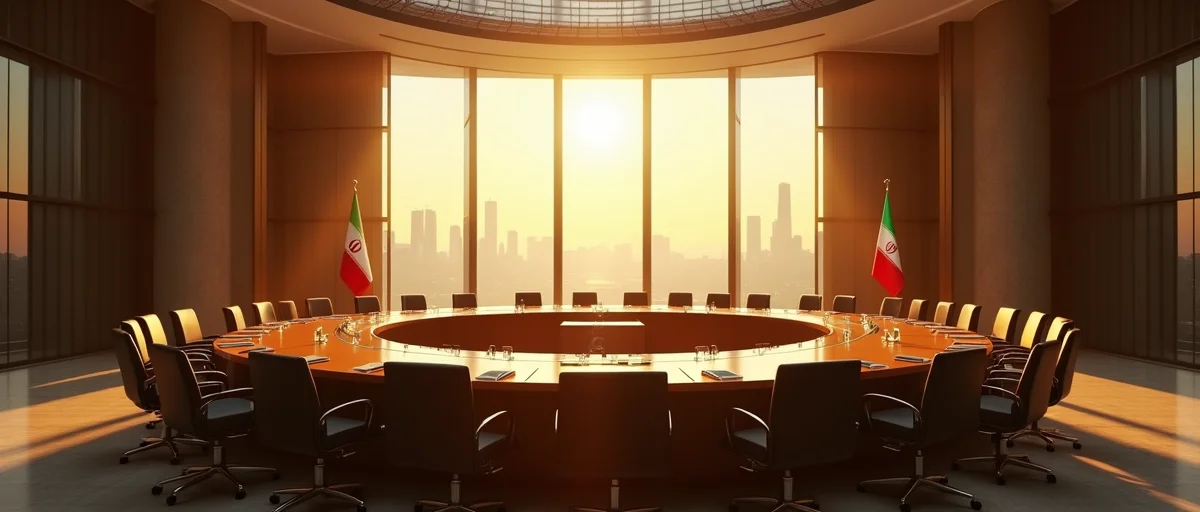
President Donald Trump has confirmed that US-Iran talks will resume on Monday, just days after he called off planned military strikes. The abrupt shift from planned offensive action to renewed diplomacy has caught the attention of global markets, security analysts, and technology leaders. For technology professionals, this diplomatic pivot carries more than political significance; it affects cybersecurity policy, energy infrastructure, and the flow of critical components in the global supply chain. With both sides indicating a willingness to return to negotiations, attention now turns to what happens at the table and what could derail the process again.
The announcement marks one of the most consequential reversals in recent Middle East diplomatic history. President Trump had reportedly prepared a series of strikes, but then called them off and ordered a new diplomatic approach. The latest peace proposal calls for the warring parties to return to negotiations and address unresolved issues in a structured manner.
This is not the first attempt to restart dialogue. Previous diplomatic efforts were derailed by thorny issues, including nuclear program concerns and sanctions-related disputes. Yet the fact that both sides remain at the table suggests that external pressure, economic realities, and technology-driven vulnerabilities are forcing a recalculation.
The White House has framed the upcoming talks as a practical step rather than a symbolic gesture. According to the President, the Monday session will focus on concrete measures to prevent escalation and build confidence. In diplomatic terms, that means setting aside maximalist demands and focusing on achievable milestones.
The decision to call off planned strikes was not made in isolation. International partners had urged restraint, warning that military action in the Gulf could disrupt global energy markets and destabilize supply chains. The technology sector, in particular, had reason to be concerned: a strike could trigger cyber retaliation, affect undersea cable traffic, and push oil prices higher, increasing costs for every hardware manufacturer and cloud provider.
There were also strategic considerations. Military action would not resolve the underlying disputes over Iran’s nuclear program and sanctions. It would likely drive negotiations further away and harden positions on both sides. President Trump’s decision to pause military action and return to talks signals a preference for managed de-escalation over open conflict.
From a trends perspective, the military escalation risk in the Gulf has declined after the announced call-off of planned strikes. That does not mean the situation is stable. Rather, the window for negotiation is now open, but it could close quickly if either side perceives bad faith at the table.
Monday’s talks will likely focus on more than just enrichment levels. The unresolved issues that doomed previous rounds remain on the table, and they are deeply interconnected. The nuclear program, sanctions relief, and regional security form a triangle of demands that no side wants to concede unilaterally.
The most immediate technical concerns are Iran’s enrichment capacity and its stockpile of enriched material. Inspectors need clear access protocols, real-time monitoring, and enforceable reporting standards. But economic questions are just as urgent. Iranian companies need predictable rules for payments, insurance, and shipping before any sanctions relief can have a practical effect.
Energy firms and logistics providers are watching closely because any change in sanctions directly affects oil supply, shipping costs, and the legal landscape for doing business in the region. For technology companies, the key question is how a potential deal would reshape cross-border data flows and digital trade. If sanctions ease, new digital payment rails, cloud infrastructure, and enterprise software could flow into a market that has long been isolated.
The risk of overreach remains. Previous talks failed because the parties tried to solve too much too quickly. The challenge for negotiators is to craft a narrow, verifiable package that both sides can present as a domestic victory while creating enough momentum for broader engagement.
For technology professionals, the most relevant dimension of US-Iran talks is the infrastructure required to make diplomacy work. Nuclear program concerns cannot be resolved through rhetoric alone; they require rigorous, transparent monitoring systems. This is where technology becomes a central actor.
Satellite imagery, remote sensors, and AI-assisted data analysis are indispensable for verifying compliance with any nuclear agreement. If the talks progress, expect renewed investment in several specific areas:
Each of these areas represents both a risk and an opportunity. A new agreement would create immediate demand for monitoring services and supply-chain transparency tools. A breakdown in talks, by contrast, would likely heighten cybersecurity threats and push companies to harden their systems.
The ongoing use of these technologies is not neutral. It changes the information asymmetry between the negotiating parties and gives confidence to third-party observers. In this sense, the technical layer is not just a support system for diplomacy; it is a strategic driver that can make de-escalation more plausible.
Even while military risk falls, cyber risk does not disappear. Negotiations often trigger an increase in phishing campaigns, disinformation operations, and probing attacks against critical infrastructure. State-aligned groups may try to influence public opinion or steal negotiating positions. Technology teams in the Gulf region and beyond should raise their alert posture, especially if a preliminary deal appears close.
Economic volatility is another factor. Energy prices often swing on headlines from nuclear talks, and those swings affect operating costs for data centers, hardware supply chains, and cloud infrastructure. A stable diplomatic outcome could reduce oil price volatility, making production costs more predictable. A collapse would have the opposite effect.
Companies that conduct business in the region should also revisit their supply-chain assumptions. Sanctions relief could open new markets for technology products and services, but it also requires new compliance workflows. Cargo tracking, trade documentation, and payment processing all become more complex in a rapidly changing sanctions environment.
Technology leaders should prepare for both outcomes. Build flexible playbooks for sanctions changes, review cybersecurity incident response plans, and monitor real-time intelligence from credible sources. The direction is positive, but the path remains volatile.
Trend data from August 2026 points to two clear movements. US-Iran diplomatic engagement is rising, while military escalation risk is declining. This is a rare positive signal in a region that has often spiraled from crisis to crisis.
The shift does not imply peace is guaranteed. Rather, it suggests that both governments see negotiation as a lower-cost alternative to military confrontation. That calculation is heavily influenced by technology. Cyber conflict can occur without a missile being fired, social media amplifies every diplomatic breach, and remote sensing makes military movements harder to hide. In this environment, diplomacy itself becomes a high-tech enterprise.
For analysts and investors, the trend line is more important than any single headline. If the talks continue, the risk premium attached to Gulf assets should ease, benefiting regional markets and global supply chains. If the talks collapse, the same risk premium will return quickly. The best preparation is to track diplomatic momentum as a continuous signal, not a binary event.
Technology professionals and enthusiasts should prepare for three plausible scenarios.
Negotiators agree on limited confidence-building measures: extended monitoring, a temporary freeze on high-level enrichment, and a narrow sanctions waiver. In this case, expect a moderate upgrade in regional investment and a boost for technologies related to verification and secure trade. Companies with compliance software, remote-sensing analytics, and maritime tracking tools could find new clients.
Talks continue without a formal deal, but the ceasefire in diplomatic terms holds. This scenario keeps the military escalation risk low while creating ongoing uncertainty. Companies should maintain current risk assessments but avoid major new investments tied to sanctions relief. Cybersecurity defenses should remain elevated because state-sponsored cyber activity may continue as a pressure tactic.
If one side concludes the other is negotiating in bad faith, the diplomatic window could close quickly. Military escalation risk would rise, energy prices would react immediately, and technology supply chains would face new disruptions. In this scenario, high-availability infrastructure planning and cyber crisis readiness become essential.
All three scenarios underscore the same point: the technology sector is not an observer in this process. It is both a target and a tool. The systems that enable verification, secure communication, and transparent trade are exactly what make sustainable diplomacy possible.
President Trump’s decision to call off planned strikes and resume Iran talks on Monday is a clear sign of active de-escalation. The latest peace proposal is designed to bring the parties back to the table and address unresolved issues, even though previous talks collapsed over nuclear and sanctions disputes.
For technology professionals, the implications are concrete: lower military risk, continued diplomatic engagement, and a growing need for secure, verifiable digital infrastructure. The recommended actions are to watch the negotiation outcomes, harden cybersecurity defenses, and revisit supply-chain and energy assumptions.
In the end, the active effort to prevent escalation while continuing diplomatic engagement is the defining dynamic of this moment. The coming days will test whether words can outlast the threats. But for now, the trend toward diplomacy is rising, and the risk of military escalation is falling. That is a meaningful shift for the entire technology ecosystem to note.