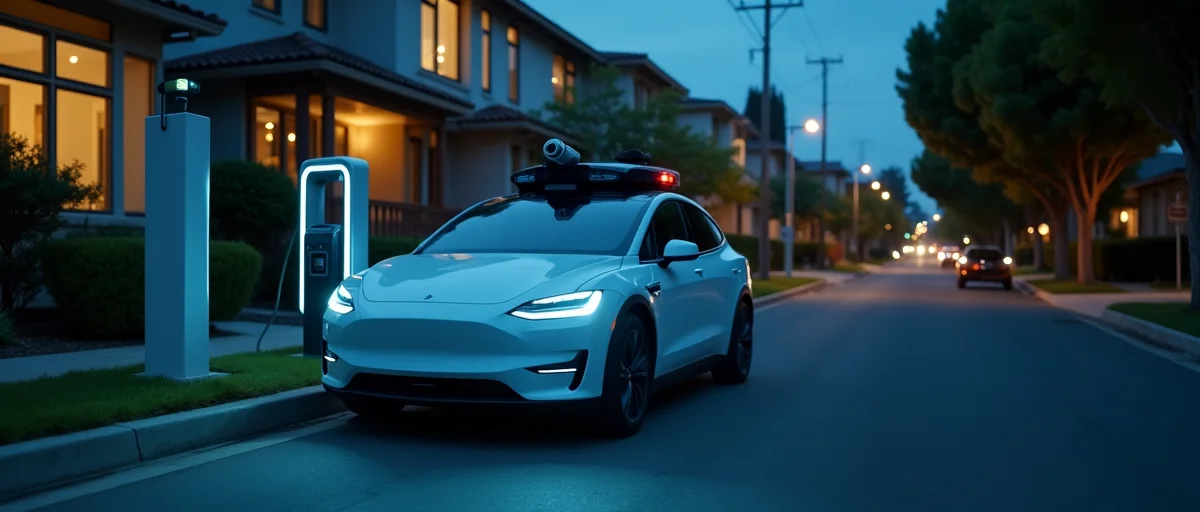
After residents complained, a judge ordered Waymo to stop overnight charging in Santa Monica—a landmark win for municipal oversight of AV operations.
A Los Angeles Superior Court judge has ordered Waymo to stop overnight charging in Santa Monica, granting the city’s motion for a preliminary injunction in an ongoing legal dispute. The 2026 ruling treats the autonomous vehicle company’s overnight charging operation as a potential public nuisance, responding to sustained complaints from residents about light pollution, sound pollution, and traffic congestion.
For technology professionals tracking the autonomous vehicle landscape, this case is far more than a local zoning dispute. It is a clear signal that municipalities are prepared to use the courts to shape how AV infrastructure operates in dense urban environments—and the outcome could influence fleet operations, charging site selection, and community engagement strategies nationwide.
The Los Angeles Superior Court’s minute order grants Santa Monica’s motion for a preliminary injunction against Waymo’s side-by-side charging facilities. The practical effect is immediate: Waymo must halt overnight charging operations at these locations while the city’s wider lawsuit continues through litigation.
A preliminary injunction is a powerful legal tool. It signals that the court considers the city’s public nuisance argument credible enough to warrant immediate relief. For Waymo, that creates urgent operational and reputational challenges in one of its key California markets.
Under California law, a public nuisance is anything that injures or interferes with the common rights of the public. Santa Monica argued that the steady flow of autonomous vehicles to and from the charging facilities interferes with residents’ quiet enjoyment of their homes and disrupts normal use of public streets and alleys.
The judge’s willingness to grant an injunction suggests the court found the city’s arguments persuasive. It also demonstrates that nuisance law—an old and flexible doctrine—can be effectively applied to 21st-century AV infrastructure.
At the center of the dispute are the operational realities of running a large autonomous fleet. Self-driving vehicles must charge when off-duty, and overnight charging is often the most efficient way to ensure full battery capacity for the next day’s trips. But in Santa Monica, that strategy collided with neighborhood life.
Residents and city officials raised three categories of complaints, each of which contributed to the court’s decision.
The constant flow of vehicles throughout the night creates widespread illumination near the charging facilities. Headlights sweep across residential properties as vehicles maneuver, security lighting and charging equipment add ambient glow, and the resulting light pollution disrupts sleep and diminishes the surrounding neighborhood’s character.
While EVs are quiet while driving, a charging depot is not silent. Vehicles hum as they navigate into charging positions, connectors click and whir, cooling fans cycle on, and backup alarms occasionally sound. At night, when ambient noise levels drop, these sounds carry further and affect more people.
The two Waymo facilities operate side-by-side, and the ongoing flow of AVs has created congestion on surrounding streets and alleys. City officials have documented problems with vehicle queuing, alley access, and general traffic disruption in a residential neighborhood not designed for high-volume fleet operations.
The Santa Monica ruling is part of a rising trend of local government regulation of autonomous vehicle operations. For years, AV companies have engaged primarily with state regulators when securing permission to deploy on public roads. But cities are now asserting their own authority when AV operations generate local impacts.
This shift is significant. Municipalities control streets, land use, zoning, and parking—and they’re increasingly willing to use those levers to shape AV behavior. The Santa Monica injunction proves that cities can halt AV infrastructure they believe harms residents, at least on an interim basis.
For AV operators, the regulatory environment becomes more complex as a result. A fleet that is lawful at the state level may still face substantial restrictions city by city. Companies must now navigate a patchwork of local rules, court decisions, and resident expectations in addition to state standards.
Santa Monica has long been a leader on urban policy issues, and its success against Waymo will likely embolden other municipalities. Cities throughout California—and potentially across the country—will watch this case closely as they address similar complaints from their constituents.
The immediate operational impact on Waymo is straightforward: overnight charging in Santa Monica must stop while the injunction remains in force. That forces the company to pursue alternative charging arrangements, which could affect fleet readiness, vehicle availability, and service levels.
The longer-term implications are more consequential. This case increases the likelihood that other municipalities will pursue similar actions when residents complain about AV infrastructure. It also raises the bar for AV companies to design their operations with neighborhood sensitivity from day one.
AV fleet operators and charging network planners can extract several practical lessons from this case:
Scrutiny of EV charging station siting and operations is rising alongside the growth of electric and autonomous fleets. The Santa Monica case highlights a central tension: broad public support for clean electric transportation, on one hand, and local resistance to the infrastructure that enables it, on the other.
That tension will not disappear with this ruling. Public charging infrastructure is essential for both EV adoption and AV fleet deployment. But as this case shows, that infrastructure must be planned with greater sensitivity to surrounding communities.
Design standards are already evolving. Some operators are investing in noise-buffering landscaping, directional lighting, and vehicle routing that avoids narrow residential streets. The Santa Monica injunction is likely to accelerate these practices because the cost of court intervention provides strong financial motivation.
The most successful AV and EV infrastructure projects will treat host communities as partners, not obstacles. Transparent communication, responsive complaint handling, and a genuine willingness to adapt operations based on community feedback are not just good public relations—they are defensive measures against legal risk.
Regulators are also likely to study this case as they develop clearer siting and operational rules. Some cities may even begin requiring public engagement and environmental review as standard elements of AV infrastructure permitting.
The Los Angeles Superior Court’s decision to grant Santa Monica a preliminary injunction against Waymo’s overnight charging operations is a landmark moment in the evolving relationship between AV companies and the cities they serve. The court’s treatment of the charging operation as a potential public nuisance confirms that municipalities have real legal leverage over AV infrastructure.
For technology professionals, the lesson is clear: as AV and EV fleets expand, local community impact must be a first-class design consideration. Ignoring noise, light pollution, and traffic congestion in operational planning carries genuine legal and financial risk.
The broader trend is unmistakable. Cities will continue to push back against AV operations that disrupt residential life. The companies that thrive will treat these concerns as valuable input for building smarter, more neighbor-friendly infrastructure. The Waymo injunction isn’t the end of AV growth—it’s a guidepost for managing that growth responsibly in the years ahead.
A preliminary injunction is a temporary court order that stops an activity while a case is still being decided. In this case, it requires Waymo to halt overnight charging at its Santa Monica facilities until the city's lawsuit is resolved. It also signals that the court found Santa Monica's public nuisance argument credible enough to justify immediate action.
Under California law, a public nuisance is anything that injures or interferes with the common rights of the public. Santa Monica claimed that the constant flow of autonomous vehicles to and from the charging sites created light pollution, sound pollution, and traffic congestion that disrupted residents' quiet enjoyment of their homes. The judge agreed that these impacts were serious enough to warrant a court injunction.
The court order specifically applies to Waymo's side-by-side charging facilities in Santa Monica, not to all of the company's operations statewide. However, the decision could set a meaningful precedent for how municipalities regulate AV infrastructure in dense urban environments. Other cities may now be more likely to use nuisance law to challenge or shape autonomous vehicle operations.
Waymo can comply by moving overnight charging to other locations outside the restricted area or seek to modify or lift the injunction during further court proceedings. The company can also appeal the preliminary injunction or present stronger evidence during the full trial. Ultimately, Waymo may need to redesign its charging site selection and community engagement strategy in urban markets.
This case shows that local governments can successfully use nuisance law to shape how AV companies operate, even before broader regulations are finalized. It suggests that AV fleets will need to consider neighborhood impacts like noise, light, and traffic when planning charging infrastructure. Expect more municipalities to impose zoning-style conditions, community input requirements, or operational limits on autonomous vehicle hubs.