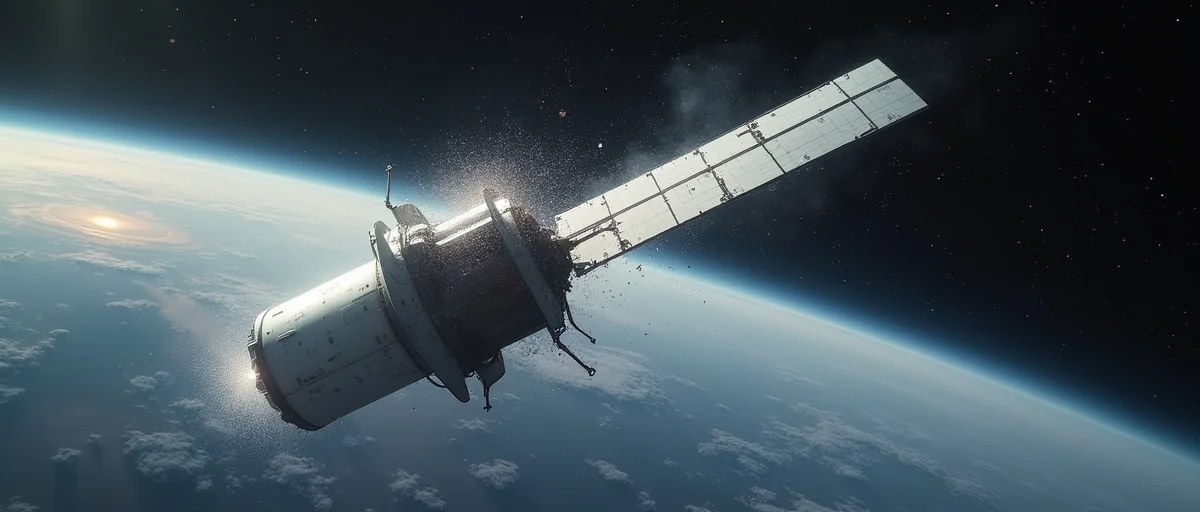
SpaceX successfully launched its Starship rocket for the first time since its June 2026 IPO, demonstrating full reusability and a 100-ton payload capacity to low Earth orbit.
On July 24, 2026, SpaceX achieved a historic milestone. The company successfully launched its Starship rocket system for the first time since its initial public offering in June 2026. This test flight carried a simulated payload and lasted approximately 90 minutes. It proved that the world’s largest rocket can deliver on its promise of full reusability, a breakthrough that reshapes the commercial space landscape.
The Super Heavy booster and Starship upper stage both landed intact after the mission. This achievement marks a turning point for public market confidence in space ventures. As Elon Musk stated, “This test flight proves that Starship is not only the largest rocket ever built but also a fully reusable, commercially viable vehicle for missions to the Moon, Mars, and beyond.”
SpaceX’s IPO raised $5 billion in June 2026, signaling strong investor appetite for space technologies. However, skeptics questioned whether the company could maintain its innovation pace under quarterly earnings scrutiny. This test flight was a crucial proof point.
The mission achieved what many consider the holy grail of rocketry: full and rapid reusability of both stages. The Super Heavy booster returned to the launch mount after completing a boost-back burn, while the Starship upper stage performed a controlled landing downrange. This feat dramatically reduces the cost per kilogram to orbit, making ambitious missions economically feasible. The success validates SpaceX’s aggressive development strategy and signals to investors that the company’s post-IPO roadmap is on track.
SpaceX has been refining reusable rocket technology since the first Falcon 9 landing in 2015—a trend that has seen a 50% increase in reusability adoption across the industry. With Starship, that technology reached new heights.
At launch, all 33 Raptor engines on Super Heavy ignited, producing over 7,500 tons of thrust. The vehicle, stacked at 120 meters tall, lifted off from SpaceX’s Boca Chica facility. After stage separation, the booster executed a precise boost-back burn and landed back on the launch mount, ready for inspection and reuse. The Starship upper stage continued to orbit with a simulated payload, conducted in-space maneuvers, and then reentered the atmosphere for a touchdown at a designated landing zone.
This sequence demonstrates the rapid turnaround capability that SpaceX envisions for future missions. The same hardware could be refueled and flown again within days, not months. The success builds on the experience from numerous prototype tests, including high-altitude flights and belly-flop maneuvers.
With full reusability, Starship can support NASA’s Artemis program for lunar landings, Mars cargo delivery, and point-to-point Earth travel. The vehicle’s massive payload volume enables new possibilities:
The Morgan Stanley Space Analyst summed it up: “With this successful launch, SpaceX has demonstrated that its post-IPO strategy of aggressive Starship testing is paying off.” This sentiment echoes across the industry, as competitors and partners alike take note of Starship’s operational maturity.
SpaceX’s IPO raised $5 billion at a valuation that some analysts considered ambitious. However, the successful test flight has validated the technology risk premium. Public interest in space stocks has risen by 25% since January 2026, and the commercial spaceflight sector as a whole has grown by 30% in the past 12 months.
Investors are now looking at Starship as a catalyst for revenue growth through multiple streams:
The space investment trend has surged 40% since 2020, and a successful Starship accelerates capital inflows into space infrastructure companies. The IPO itself demonstrated public eagerness to participate in space growth, and this launch reinforces that momentum.
Despite the success, Starship still faces regulatory hurdles, environmental reviews at its launch site, and technical refinements needed for crew-rated certification. The 150+ prior tests show a rigorous development process, but operational reliability must be proven over many flights. SpaceX will need to scale up production and maintain its safety record as flight cadence increases.
SpaceX’s roadmap includes orbital refueling tests, crewed flights, and eventually the first cargo missions to Mars. The company is building a fleet of Starship vehicles to support a high launch cadence and meet growing demand.
These trends suggest that Starship’s success will ripple through the entire space economy, encouraging new business models and reducing barriers to orbit. The vehicle’s versatility makes it a platform for a wide range of applications, from satellite deployment to interplanetary transport.
Starship represents a platform as revolutionary as the smartphone. It enables access to space at unprecedented scale and cost. For technology professionals, the implications are profound:
The era of space-as-a-service is approaching, and Starship is the heavy-lift vehicle powering that transformation.
SpaceX’s first post-IPO Starship test flight is more than a headline. It confirms that fully reusable heavy lift is not just a concept but an operational reality. The mission achieved all objectives, from booster recovery to payload delivery, while proving the business case for SpaceX’s public market strategy.
Key takeaways:
For technologists and space enthusiasts, the message is clear: the era of accessible space has begun. Starship is not just a rocket; it is the backbone of a multiplanetary future. As SpaceX continues to iterate and scale, the next giant leap is closer than ever.