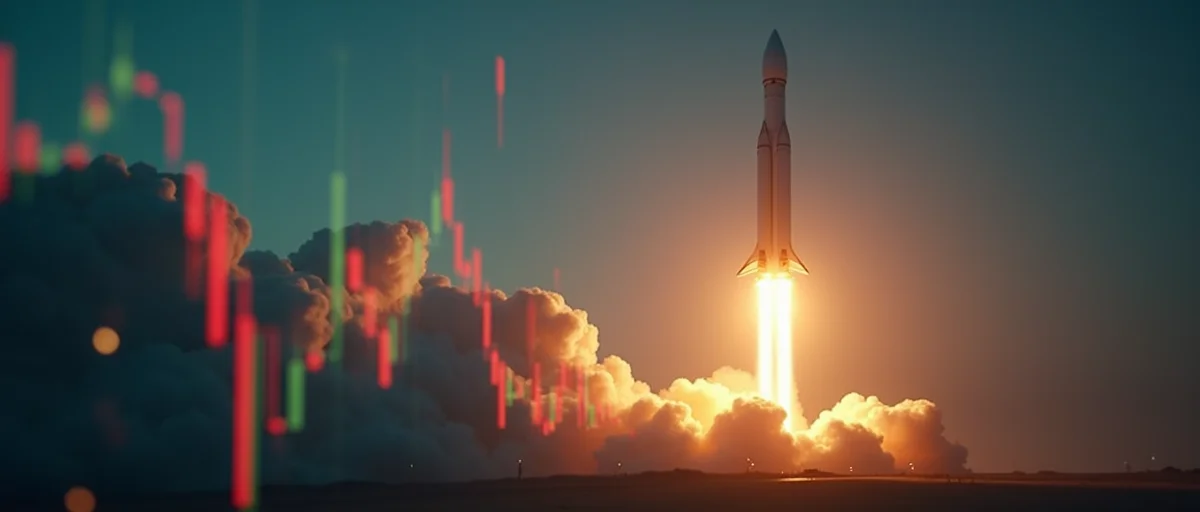
SpaceX shares fell 15% post-IPO, raising stakes for the first earnings report. Starlink growth, Starship costs, and Musk's leadership will face intense scrutiny.
SpaceX’s public debut was one of the most anticipated listings in recent memory, but the market’s verdict has been swift. Just weeks after the IPO, the company’s share price has dropped roughly 15%, erasing billions in market value and delivering a harsh reality check to the hype that surrounded the December 2024 tender offer valuation of $350 billion. Now, all eyes turn to SpaceX’s first earnings report as a public company—a high-stakes referendum on its valuation and its ability to translate ambitious growth plans into sustainable profits.
Investors have been here before. Post-IPO slumps are common among high-growth companies, but SpaceX is not just any high-growth company. It commands roughly 60% of worldwide commercial launch payload mass, operates a satellite broadband network with over 4 million subscribers, and is led by Elon Musk—a figure who has become as much a source of market volatility as a technological visionary.
The timing could not be more tense. Tesla’s latest earnings report, released just two weeks earlier, was sharply criticized by analysts, adding extra pressure on Musk as he steers two major companies through turbulent conditions. The market’s patience is thinning, and SpaceX’s first quarterly report will show whether it can rise to the occasion.
SpaceX’s transition from private darling to public company was always going to be a test. With a pre-IPO valuation of $350 billion (Bloomberg, December 2024), the company represented the pinnacle of the commercial space sector. Public investors, however, have proven more skeptical than their private-market counterparts.
Since listing, SpaceX stock has declined roughly 15%—a signal that the market is demanding stronger evidence of profitability and clearer financial transparency than the company provided during its private era. The decline is notable not just for its size, but for what it says about shifting sentiment: the novelty of owning a piece of the Mars-bound company has worn off, replaced by hard questions about cash flow, margins, and execution risk.
“SpaceX has redefined the launch market, but its valuation is now priced for perfection, and any misstep in execution could hit the stock hard,” said an aerospace equity analyst in a CNBC report.
This reset may be healthy in the long run. Lower expectations create room for positive surprises. But they also strip away the narrative cushion SpaceX once enjoyed.
The centerpiece of SpaceX’s earnings report will be Starlink. With more than 4 million subscribers globally and a reported 25% year-over-year growth rate, the satellite broadband service has become the company’s primary recurring-revenue driver. It is also the clearest path to the kind of profitability that public-market investors demand.
But subscriber growth alone will not be enough. Analysts will be looking for:
“The market is looking for specifics on Starlink’s profitability and cash flow, not just aspirational goals about Mars,” noted a space industry analyst in a CNBC report.
Starlink’s near-monopoly in low-Earth-orbit broadband gives it a competitive moat, but rivals are emerging. Amazon’s Project Kuiper and a growing list of international constellations will pressure pricing over time. This earnings report is the first chance for SpaceX to show whether its early lead is economically sustainable—or just a land grab that has yet to pay off.
SpaceX’s launch business remains the foundation of its valuation. With an estimated 60% share of worldwide commercial launch payload mass (SpaceNews, 2024), Falcon 9 and Falcon Heavy provide a diversified revenue stream spanning commercial satellite operators, NASA missions, national security launches, and international customers.
The earnings report will offer guidance on:
Starship is the pivotal variable. The program carries heavy development costs while presenting the potential to unlock a new era of low-cost space access. Investors will want to see a realistic timeline and cost estimate for Starship’s transition from experimental test vehicle to operational launch system.
For now, Starship remains largely a cost center. The gap between its Mars mission aspirations and the market’s focus on near-term returns will define much of the earnings call.
Musk’s presence looms over every question SpaceX faces. The timing of this earnings call is especially awkward: Tesla’s latest quarterly report was met with sharp criticism two weeks ago, raising concerns about management bandwidth across his various ventures. Musk’s divided attention is no longer just a governance footnote—it’s an investor concern.
“After the Tesla reaction, Musk has to prove he can deliver shareholder value across multiple companies without letting strategic focus slip,” said a tech and space policy researcher in a CNBC report.
Key governance questions that may surface during the call:
Musk has always thrived on an impossible workload, but public-market investors tend to prefer focus. How SpaceX handles these questions—directly or with deflection—will offer insight into the company’s governance maturity.
Perhaps the most consequential shift in SpaceX’s transition to public ownership is the disclosure requirement. As a private company, SpaceX could keep its financials guarded. Now, quarterly reporting will reveal revenue segmentation, cash flow dynamics, and capital expenditure plans to the world.
Investors will be watching several key financial metrics:
This transparency is both a challenge and an opportunity. It exposes SpaceX to quarterly scrutiny, but it also gives the company a chance to convince investors that its growth story has financial substance.
The first earnings report will likely send SpaceX’s stock in one of three directions:
Bull scenario: Starlink shows accelerating growth with sustainable margins, launch revenue holds steady, and the company offers reassuring guidance on Starship costs. Expect a share price recovery and renewed confidence in the equity story.
Base scenario: Financials come in solid but not spectacular. Starlink grows, launch revenue maintains momentum, but Starship remains a known cost burden. The stock stabilizes, with investors willing to wait for clearer proof of profitability.
Bear scenario: Any combination of slowing subscriber growth, capex surprises, or governance concerns sends the stock down further. The last two weeks have already shown how unforgiving markets can be toward companies with Musk at the helm.
SpaceX’s post-IPO stock decline has set the stage for a tense first earnings report. The company that once traded on visionary ambition now must prove its operational and financial discipline as a public entity. With a 15% drop to overcome, a recent Tesla earnings stumble, and a demanding investor base, the stakes could not be higher.
For technology professionals and market watchers, the key indicators are clear: Starlink’s profitability metrics, launch cadence, Starship cost disclosure, and the company’s handling of governance questions. These will determine whether SpaceX’s public-market journey accelerates or stalls.
The outcome matters beyond SpaceX. As the flagship of the commercial space sector, its earnings performance will inevitably influence sentiment across the broader space economy. Investors would be wise to approach this report with both expectation and caution—because the verdict will likely shape SpaceX’s trajectory for months to come.
SpaceX shares fell roughly 15% after its public debut, reflecting investor skepticism about its high valuation and demand for clearer profitability evidence. The decline erased billions in market value and set a tense backdrop for its first earnings report.
Investors will focus on Starlink subscriber growth, Starship development costs, and overall cash flow and margins. They will also look for signs that Elon Musk can manage two major companies effectively, especially after Tesla's latest earnings were sharply criticized.
Starlink has over 4 million subscribers, making it a major revenue driver for SpaceX. Strong subscriber growth could help justify the company's valuation, while slowing growth could raise concerns about future cash flows and profitability.
Starship is a high-cost, high-risk program that requires significant capital investment. Any delays, failures, or unexpected expenses could pressure SpaceX's margins and make it harder to deliver the profitability that public investors expect.
Musk is both a visionary and a source of market volatility, as seen with Tesla. His attention is split between SpaceX and Tesla, leading to investor concerns about execution and focus, which can amplify stock swings.