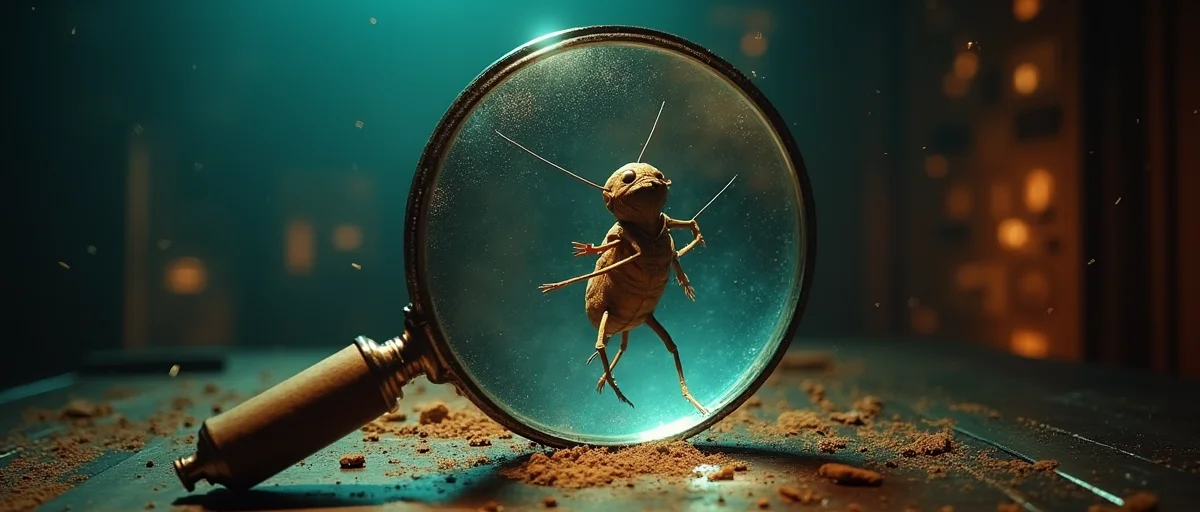
A July research roundup uncovered six overlooked science stories, from an Incan sacrificial boy's true cause of death to cyborg cockroaches with diving suits. Here's why these hidden findings matter for scientists and technology professionals alike.
Science Research Roundup: 6 Cool Stories You Almost Missed
Each month, thousands of scientific papers are published. Only a handful earn headlines, while curious discoveries slip quietly into archives. The July research roundup from Ars Technica reminds us why those underreported stories deserve attention. Six cool science stories emerged from the pile, and each one challenges assumptions, sharpens methods, or reveals something unexpected about the world.
This article breaks down the most striking research in that roundup, how forensic methods are rewriting history, and why you should care even if you are not a scientist. For technology professionals, the crossovers are closer than they might seem.
At first glance, the mummified Incan boy looks like a tragic victim of exposure. Accounts of high-altitude child sacrifice often mention freezing temperatures, and earlier interpretations of the remains concluded that the boy froze to death. A reanalysis published in Science Advances now contradicts that conclusion. Blunt force trauma, the study suggests, was the actual cause of death.
Researchers who study Capachoca - the Incan ritual of child sacrifice - have relied on both colonial texts and skeletal evidence. Colonial accounts described strangulation, asphyxiation, and blunt force trauma as common sacrificial methods. The new forensic reading fits this historical record better than the older freezing hypothesis. It also shows how careful observation can outperform received wisdom.
The finding is not just a correction. It changes the narrative for an entire civilization. The boy may have been part of a ritual that treated sacrifice as a spiritual duty. Understanding how he died allows historians to place the practice within a more accurate cultural and medical context.
To understand why the Incas sacrificed children, context matters. Capachoca was not a random act of violence. It was a highly structured ritual in which children were offered to the mountains. The children were believed to become divine intermediaries with the gods, a role that carried enormous spiritual significance.
The ritual often took place during times of crisis or major state events. Incan rulers selected children who were considered exceptionally beautiful or noble. The sacrifice was seen as an honor rather than a punishment, and it cemented the bond between the emperor, the mountains, and the divine.
This framework makes archaeological reanalysis even more important. Physical evidence must be interpreted within its cultural context. Knowing that blunt force trauma was one documented method helps archaeologists match what they find in bones with what colonial observers recorded. It also prevents modern observers from falling into reductive explanations.
The July roundup did not stop at the Andes. It also featured work on cyborg cockroaches with a diving suit, a Medici duke who died of malaria, new evidence for a companion star orbiting Betelgeuse, and ancient Egyptian princesses who served as skilled archers. Each story comes from a different field, yet all share a common thread: they expand how we view the past, the present, and even the future.
Cyborg cockroaches with a diving suit. Researchers are combining living insects with small electronic backpacks. The latest designs reportedly enable cockroaches to navigate underwater, an unusual but fascinating step in bio-inspired robotics. From search-and-rescue missions to environmental monitoring, hybrid insects could one day reach places where traditional robots struggle.
A Medici duke’s fatal malaria. New scientific analysis has pointed to malaria as the likely killer of a Medici duke. This adds to a growing list of historical mysteries being revisited with modern tools. Molecular methods can now detect pathogens in ancient remains, allowing historians to rewrite medical biographies centuries after death.
Betelgeuse’s hidden companion. The red supergiant Betelgeuse has behaved strangely in recent years, dimming and brightening in ways that puzzled astronomers. Evidence of a companion star in orbit around Betelgeuse could help explain those variations. It also highlights how much remains unknown even about some of the most studied objects in the night sky.
Ancient Egyptian princesses as archers. Skeletal analysis suggests some royal women developed the well-defined upper bodies of practiced archers. The finding challenges assumptions about gender roles in ancient Egypt and shows how physical activity is written into the skeleton.
What makes these stories cool is that they hover between the familiar and the strange. A cockroach is familiar; a diving cockroach is not. A historical duke is familiar; malaria as the killer is not. The same twist appears in the Incan boy: a frozen ritual victim becomes a victim of blunt force trauma. That shift is what makes science exciting.
These five stories alone are worth a deep dive. But they are only a sample of the research that rarely makes the mainstream news cycle. The sixth story in the roundup - a reminder that not every surprising finding gets the coverage it deserves - should be a prompt for anyone who cares about discovery.
The Incan boy story is part of a larger trend. Over the last decade, forensic reanalysis of archaeological remains has become more common and more powerful. New imaging techniques, ancient DNA analysis, and refined trauma interpretation often overturn earlier conclusions.
This matters beyond archaeology. The same scientific mindset - question old assumptions, test them with better data - supports innovation in fields like robotics and artificial intelligence. Betelgeuse’s companion star and the Medici malaria case are both examples of how new data can reframe long-standing problems.
For technology professionals, the lesson is straightforward. Legacy systems, outdated algorithms, and long-accepted performance benchmarks can all benefit from fresh evaluation. The tools available in 2026 are not the tools of a decade ago.
Modern forensic reanalysis also relies on technology that did not exist when many museum collections were first studied. The same is true in software and engineering: older solutions carry hidden biases because they were built with limited data. Reopening those decisions with better tools often reveals better paths.
The Incan boy story is particularly powerful because it reverses a well-known narrative. According to earlier research, his body showed signs of exposure. The new analysis in Science Advances suggests something different. Noting the exact location and type of injury can be difficult when remains are fragile, which is why reanalysis often depends on high-resolution scans.
Reanalysis does not mean earlier scientists were careless. More often, it means the questions were different. Older research focused on where the boy was found and why he was there. New research asks how his body responded to violence, a question that requires forensic tools developed long after his mummy was recovered.
Every discipline has its own Betelgeuse: a legacy system that behaves oddly, a benchmark that once meant something, or a piece of data that contradicts common sense. In science, an unexpected blip often leads to a reassessment. The same curiosity can help engineers and product teams detect early warning signs in data.
Museums do not discard old artifacts when new methods emerge. They re-examine them. Similarly, companies do not always need a new stack to gain value from existing data. A fresh algorithm, a new visualization, or a refined metric can surface insights hidden for years.
Research roundups also reward curiosity. The July story list included a Medici duke, ancient Egyptian princesses, and a red supergiant star. These subjects have little in common on the surface. Yet the scientific methods used to study them share a maturity that comes from decades of tool-building.
This is the deeper lesson: progress is rarely linear. It accelerates when researchers question past interpretations, borrow tools from adjacent fields, and share results with people outside their specialty.
A story does not need a flashy press release to change how we think. Small studies often seed the breakthroughs of the next decade. Bio-inspired robotics, for instance, draws direct inspiration from the animal kingdom and, in this case, living insects. The cyborg cockroach may sound like a sci-fi novelty, but it represents a practical step toward resilient, adaptable machines.
Research roundups also serve a journalistic purpose. They collect scattered findings and present them in context, helping readers connect dots across disciplines. Without them, important work can languish behind paywalls and jargon.
For busy professionals, following a monthly research roundup is an efficient way to stay current. It takes less than 15 minutes to read, yet it offers a cross-disciplinary view that can spark creative thinking.
The medicine, astronomy, and archaeology stories all point toward a broader trend: ancient DNA and scientific methods are being used to revisit historical mysteries with increasing precision. That trend is not limited to academic labs. It also influences genealogy, forensic science, and even personalized health.
If you want to make overlooked science part of your routine, start small. Set aside 15 minutes each week to browse curated science newsletters or research roundups. Look for stories outside your field. An insect robot can trigger ideas for sensor design; a forensic technique can inspire new error-correction procedures.
Keep a simple notebook for unexpected findings. Reviewing notes later can reveal patterns. Share roundups with colleagues. Discussion transforms passive reading into active learning.
Most importantly, treat every research roundup as a treasure hunt. You are not reading for a test. You are reading for signals - for the odd detail that might change a future decision.
The Science Advances study on the Incan boy is a reminder that science is not just about new discoveries. It is also about re-examining old evidence. When earlier interpretations are overturned, the entire field shifts.
The July research roundup offered six cool science stories that were easy to miss. From a sacrificial death rewritten by forensic analysis to diving cyborg cockroaches, these stories prove that scientific curiosity is alive in every corner of research.
Your takeaway: pay attention to what is not trending. Reanalysis is a superpower, and roundups are one of the best ways to stay flexible in a world of constant technological change.
The reanalysis published in Science Advances concluded that the boy died from blunt force trauma, not from freezing as earlier interpretations suggested. This finding aligns with colonial accounts that described blunt force trauma as one common method in Incan sacrificial rituals.
Capachoca was the Incan ritual of child sacrifice, in which children were offered to the mountains and believed to become divine intermediaries with the gods. It was a highly structured spiritual practice, not a random act of violence.
They can correct long-held assumptions and refine how historians understand past civilizations. The reanalysis demonstrates how careful forensic observation can overturn accepted narratives and provide a more accurate cultural and medical context.
Research roundups surface cross-disciplinary findings, such as bio-inspired robotics like cyborg cockroaches, that can inspire new technologies. They also model the value of revisiting old data with fresh methods, a mindset useful for debugging, data science, and product iteration.
Earlier interpretations of the mummified Incan boy suggested freezing, but the new study argues that blunt force trauma was the actual cause. Colonial sources describe strangulation, asphyxiation, and blunt force trauma as documented sacrificial methods, so cause of death should be evaluated using both historical and forensic evidence.