The IRIS/Nodoca device uses an AI throat exam to replace uncomfortable nasal swabs, making routine physicals quicker, painless, and more effective.
Routine physicals are the gateway to preventive care. They can also be uncomfortable. Few patients enjoy a nasal swab. That long cotton tip entering the sinus cavity is invasive. It often makes eyes water. Some people sneeze or cough. Others feel a sharp sting.
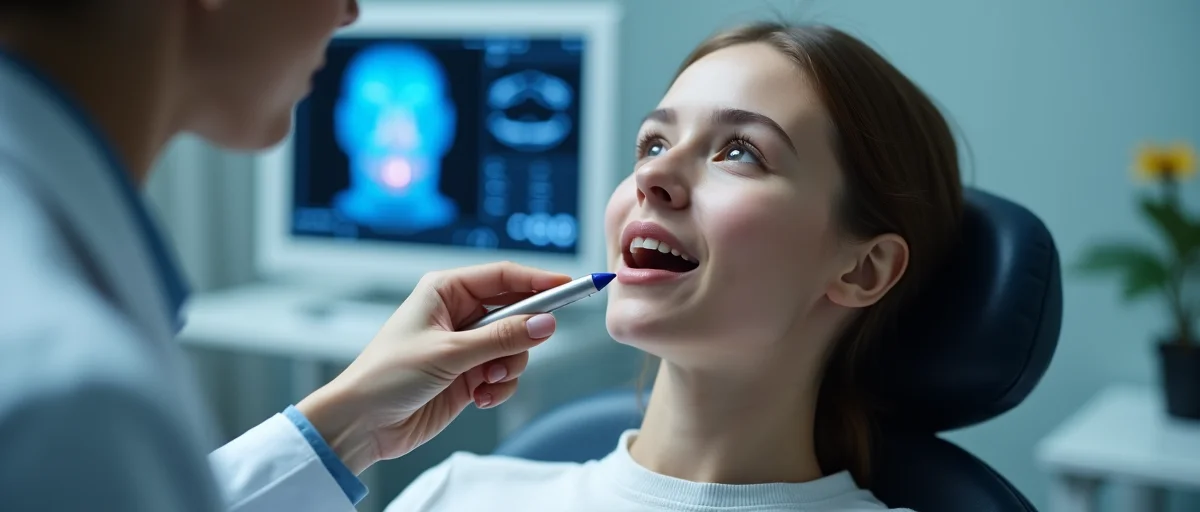
A Japanese startup believes there is a better way. Its new system, IRIS/Nodoca, uses an AI throat exam to take the misery out of routine screenings. Instead of a nasal swab, patients open their mouths while a device captures a digital image of their throat. AI then analyzes that image for signs of illness. The result is a faster, less intrusive experience for patients and a useful diagnostic tool for clinicians.
Nasal swabs have long been a standard way to collect respiratory samples. They are used to test for influenza, COVID-19, and many other infections. They also happen to be one of the most disliked parts of a routine physical.
For many people, the swab triggers anxiety before it even enters the nose. The actual procedure can cause tearing, coughing, and a feeling of pressure. Some patients recoil, which makes the process harder for clinicians. The discomfort is so common that some patients simply avoid preventive care.
That avoidance is a serious problem. Preventive screenings only work when people are willing to show up. If a simple test causes dread, the entire healthcare journey suffers. The question is whether technology can ease that friction.
IRIS/Nodoca is an AI-assisted physical examination system designed by a Japanese startup. The system combines a physical examination device with machine learning software. Rather than entering the nasal cavity, it captures a high-resolution image of the patient’s throat.
The name Nodoca is believed to come from the Japanese word for throat, ‘nodo’. It reflects the device’s focus on transforming how throat exams are performed. The companion ‘IRIS’ label suggests an intelligent visual system. Together, IRIS/Nodoca may replace the traditional nasal swab in routine physicals.
For patients, the experience is remarkably simple. The clinician asks the patient to open their mouth. A small device captures one or more images of the throat. No swab is inserted. No pain is inflicted. The entire process takes seconds.
For providers, the speed is equally important. Instead of preparing a swab, avoiding patient reactions, and sending the sample to a lab, the AI throat exam can produce immediate results. That makes it especially valuable for busy clinics and urgent care centers.
The device is not meant to replace the clinician’s judgment. It is designed to support it. By providing a standardized image and an AI-generated assessment, it can help doctors spot subtle signs they might otherwise miss. The results can be stored in the patient’s electronic record for comparison over time.
An AI throat exam is a combination of optics, image processing, and machine learning. The process starts with image capture. The device uses a camera or imaging sensor to record the throat’s appearance. Then the system preprocesses the image to remove artifacts. Finally, AI models analyze the remaining data.
The AI looks for visual markers associated with inflammation, redness, swelling, and other throat conditions. It compares the image against patterns learned from clinical datasets. The output can highlight anomalies and suggest whether further testing is needed.
This approach is not without limits. Throat images provide only one layer of information. The AI is not confirming the presence of a virus or bacteria. Instead, it narrows the diagnostic space. That is precisely why it fits well into a screening workflow.
Machine learning models are trained on thousands of labeled throat images. Over time, these models improve as more data is collected. The result is a system that becomes more accurate with each scan, assuming the data is diverse and well-annotated.
For technology professionals, this is a familiar pattern. The device is a narrow AI system: highly skilled at one task. It does not reason like a physician. But it can accelerate routine decisions and reduce unnecessary tests.
The AI throat exam has benefits that go beyond avoiding the nasal swab.
These benefits matter in real-world settings. A pediatrician examining a child can avoid the crying fit that often follows a swab. An occupational health clinic can screen workers without making them dread the process. A rural clinic with limited lab access can get an immediate assessment.
The most obvious use for the AI throat exam is in routine physicals. The device can replace a swab-based screening step without adding discomfort. But the potential is much larger.
Telemedicine has reduced friction by bringing care to the home. Yet remote exams still lag when a physical sample is required. A device like IRIS/Nodoca, if adapted for home or community settings, could close that gap.
Imagine a remote consultation where the clinician asks the patient to place a small imaging device on a table and open their mouth. AI analyzes the throat instantly, and the clinician makes a decision during the same session. This is the kind of integration that could define the next wave of digital health.
No new medical device is without hurdles. The IRIS/Nodoca system will need regulatory approval in multiple markets. It will require clinical validation to prove it matches or exceeds the accuracy of standard swabs. And it will need to integrate with electronic health records and existing diagnostic workflows.
Privacy is another consideration. Throat images are biometric data. Patients will need reassurances about storage, access, and AI governance. Hospitals, meanwhile, will need to train staff and update protocols. Reimbursement frameworks will also need to evolve.
These challenges are real, but they are not new. Every AI-assisted diagnostic tool faces the same path. The companies that successfully navigate these steps will be well-positioned in the emerging digital physical exam market.
The rise of AI-assisted physical exams creates new challenges for health IT leaders.
These issues will decide whether the device moves from a promising prototype to a standard clinical tool. For technology professionals, they highlight the same concerns found in any AI deployment: security, scalability, and transparency.
The AI throat exam is more than a single device. It is a marker of a broader trend. Traditional physical exams are being reinvented with sensors, cameras, and decision-support algorithms.
Future devices may combine throat imaging with temperature sensing, audio analysis, and even skin assessment. They may use AI to track changes over time, giving patients a longitudinal view of their health. The physical exam of the future will likely be faster, more comfortable, and more data-rich.
For technology professionals, this is an exciting intersection of hardware, software, and healthcare. The same techniques used in computer vision, edge computing, and secure data management are now being applied to a stethoscope’s successor.
The nasal swab has been a routine physical’s least popular moment. The IRIS/Nodoca device changes that. By using an AI throat exam, Japanese innovators have shown that diagnostics do not have to hurt. The technology offers comfort, speed, and intelligent clinical support.
For patients, the takeaway is simple: screenings are becoming less invasive. For providers, it is a reminder that well-designed AI can improve both experience and outcomes. For technology professionals, this system signals a growing demand for AI-assisted medical devices.
As the technology matures, watch for regulatory approvals and wider adoption. The AI throat exam may soon become the standard, not the exception, in routine physicals. The world of preventive care is ready for a less painful way.
The IRIS/Nodoca is an AI-assisted physical examination system developed by a Japanese startup. Instead of using a nasal swab, the device captures a high-resolution image of a patient's throat while the patient simply opens their mouth, and machine learning software analyzes the image for signs of illness.
A traditional nasal swab involves inserting a cotton tip into the sinus cavity, which can cause discomfort, tearing, coughing, and anxiety. An AI throat exam is non-invasive, faster, and painless—patients just open their mouth for a few seconds while the device takes a digital image, making routine physicals more comfortable and efficient.
The IRIS/Nodoca is designed to screen for respiratory infections similar to those traditionally tested with nasal swabs, such as influenza and COVID-19, by analyzing throat images for visual signs of illness. However, specific diagnostic capabilities depend on the AI model's training and clinical validation.
The device is intended to replace nasal swabs in routine physicals and preventive screenings, but it may not be suitable for every diagnostic situation. Some tests may still require laboratory analysis of swab samples, so the IRIS/Nodoca is best understood as a faster screening alternative rather than a universal replacement.
The timeline for widespread adoption depends on regulatory approvals, clinical trials, and integration into standard medical workflows. As the device is currently developed by a Japanese startup, early availability may be limited to select clinics or regions before broader rollout occurs.