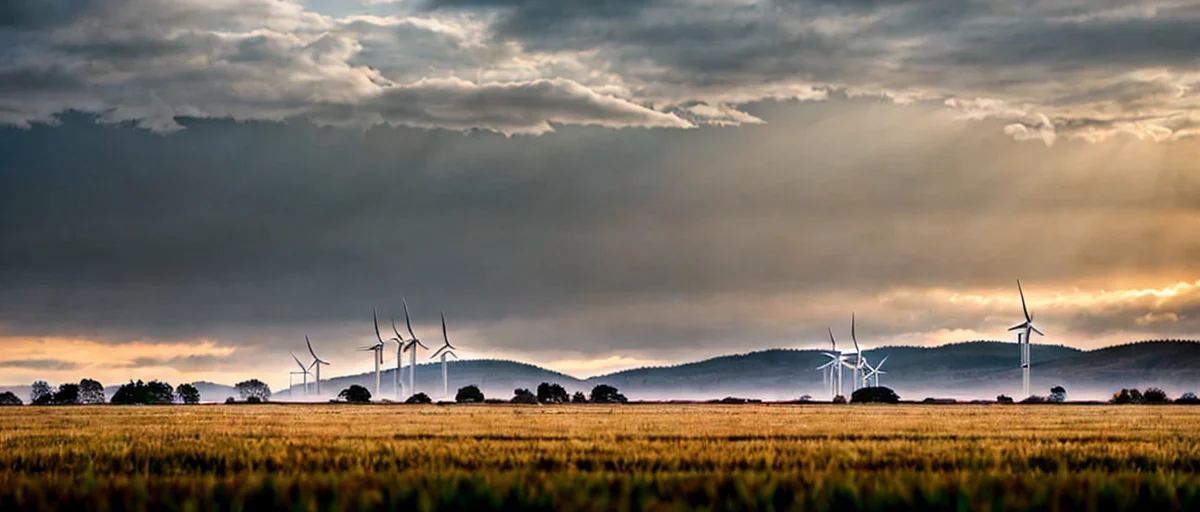
Discover an open-source project that delivers a complete pipeline for day-ahead wind power forecasting using NWP data. From preprocessing to model evaluation, it supports multiple farms and integrates machine learning for accurate predictions.
Wind energy plays a pivotal role in the global transition to renewable power. However, its inherent variability poses significant challenges for grid operators and energy traders. Accurate day-ahead wind power forecasting is essential for efficient power system scheduling, reducing balancing costs, and maximizing the value of wind generation. Numerical Weather Prediction (NWP) data provides the meteorological foundation for such forecasts, but building a robust, end-to-end pipeline that transforms raw NWP outputs into actionable predictions remains a complex task.
Enter Mr-yiyi/NWP-Driven-Wind-Power-Forecasting, an open-source project that addresses exactly this challenge. It offers a modular, complete workflow covering every step from data preprocessing and feature engineering to model training, evaluation, and visualization. Designed with real-world power system operations in mind, the tool supports multiple wind farms and forecasting models, making it a valuable resource for both researchers and practitioners. This article explores the pipeline’s architecture, key features, and the broader trends driving open-source solutions in renewable energy forecasting.
Day-ahead predictions (typically for the next 24–48 hours) are critical for electricity market bidding, unit commitment, and reserve allocation. Inaccurate forecasts force operators to keep more fossil-fueled reserves online, increasing costs and carbon emissions. Improving forecast accuracy by just a few percentage points can translate into millions of dollars in annual savings for large utility companies. Moreover, as wind penetration grows, the need for reliable forecasting tools becomes even more pressing.
Over the last five years, machine learning (ML) techniques have increasingly been applied to day-ahead wind power forecasting. Traditional methods like persistence models and physical approaches are being supplemented—or replaced—by data-driven models such as random forests, gradient boosting, and deep neural networks. The trend is clearly rising, as these models can capture complex, non-linear relationships between NWP inputs and actual power output. However, implementing a full ML pipeline from scratch is time-consuming and error-prone, highlighting the value of open-source frameworks that standardize and simplify the process.
The NWP-Driven Wind Power Forecasting project provides a complete, transparent pipeline that can be adapted to different wind farms and forecasting horizons. It is built with modularity in mind, allowing users to swap components or extend functionality. Let’s break down its key stages.
Raw NWP data often comes in formats that require extensive cleaning and alignment. The pipeline automates ingestion, handling missing values, and merging data from various meteorological variables (e.g., wind speed, direction, temperature, pressure). Time alignment between forecast issuance and actual measurements is a common pitfall that the preprocessing module addresses systematically.
Feature engineering is where domain expertise meets machine learning. The pipeline includes functions to create meaningful predictors, such as wind speed at turbine hub height, power curves, and rolling averages. These features help the model learn physical relationships and reduce the influence of noise. Users can easily add custom features thanks to the project’s modular design.
A variety of ML algorithms are supported out of the box. The repository includes examples with Gradient Boosting Machines (e.g., LightGBM, XGBoost) and neural networks. The training harness handles cross-validation, hyperparameter tuning, and backtesting, ensuring that models are robust and not overfit to historical patterns. Evaluation metrics such as normalized root mean square error (NRMSE), mean absolute error (MAE), and R² are computed automatically, with results logged for comparison across different models and configurations.
The project emphasizes reproducibility—all training runs can be configured via YAML files, making it easy to track experiments and share setups with colleagues.
Understanding model performance requires more than just numbers. The pipeline includes visualization modules to plot actual vs. predicted power curves, error distributions, and time series of forecasts. These plots help identify systematic biases or periods of poor performance (e.g., during ramps or storms).
For deployment, the project provides scripts to save trained models and apply them to new NWP data, generating day-ahead forecasts in a format suitable for integration into energy management systems. This bridges the gap between research prototyping and operational use.
These features make the project a valuable starting point for both academic research and commercial applications.
To illustrate the pipeline’s utility, consider a regional utility operator responsible for a portfolio of wind farms. They need reliable day-ahead forecasts for dispatch planning and balancing market participation. By cloning the repository and adapting it to their specific NWP data sources and farm characteristics, they can quickly establish a baseline forecasting system. The modular structure allows them to test different ML models and feature sets without reinventing the data infrastructure. Over time, they can incorporate additional data sources (e.g., SCADA data, weather station observations) by extending the preprocessing module.
Another use case is in research. A graduate student studying wind power forecasting can use the pipeline to compare the performance of a newly proposed neural network architecture against established baselines. The built-in evaluation framework saves weeks of coding. Because the pipeline is open source, the student’s enhancements (such as a new feature engineering technique) can be contributed back to the community, accelerating progress for everyone.
The rise of open-source tools for renewable energy forecasting is a clear trend. Initiatives like this lower the entry barrier for smaller players—cooperatives, startups, and developing nations—allowing them to access state-of-the-art forecasting capabilities without expensive proprietary software. As more projects adopt open standards, we can expect faster innovation, better reproducibility, and broader collaboration.
Machine learning will continue to advance, especially with the integration of attention-based models and hybrid physical/statistical approaches. The modular pipeline architecture makes it straightforward to adopt these new techniques. Additionally, the growing availability of high-resolution NWP data and edge computing will enable real-time, farm-level forecasting that further improves grid stability.
Day-ahead wind power forecasting is a cornerstone of modern grid management, and the NWP-Driven Wind Power Forecasting project provides a powerful, open-source solution. By delivering a complete pipeline from data preprocessing to visualization, it saves time and reduces complexity for developers and researchers. Its support for multiple models and farms, combined with a focus on real-world scheduling, makes it a practical tool for anyone serious about improving wind forecast accuracy.
To get started, visit the GitHub repository, explore the code, and adapt it to your own data. Whether you’re a utility operator seeking better forecasts or a researcher pushing the boundaries of ML, this pipeline offers a solid foundation. Join the growing community leveraging open source to accelerate the renewable energy transition.


NWP uses mathematical models of the atmosphere to forecast weather variables like wind speed, direction, and temperature. It is critical for day-ahead wind power forecasting because it provides the meteorological data needed to predict wind generation hours to days in advance, which supports grid scheduling, energy trading, and reserve allocation.
Start by cloning the GitHub repository (Mr-yiyi/NWP-Driven-Wind-Power-Forecasting) and following the setup documentation. You will need NWP data (e.g., GFS or ECMWF forecasts) and historical wind power data from your wind farm. The pipeline provides preprocessing scripts, model training modules, and evaluation tools to run a complete forecast workflow.
The pipeline supports several machine learning models, including random forests, gradient boosting, and deep neural networks. Users can select and compare different algorithms, as the modular design allows easy swapping of models. The best model depends on the specific data characteristics and farm location.
Yes, the pipeline is designed to manage multiple wind farms by organizing data with farm identifiers and allowing separate training and evaluation for each site. This makes it practical for portfolio-level forecasting, where operators need predictions for several farms simultaneously.
NWP data often has coarse spatial resolution and systematic biases, which can degrade forecast accuracy. The pipeline mitigates these issues through preprocessing steps like interpolation to match site locations, bias correction techniques, and feature engineering that extracts relevant meteorological signals. It also provides model evaluation metrics to help users identify and improve weak forecasts.