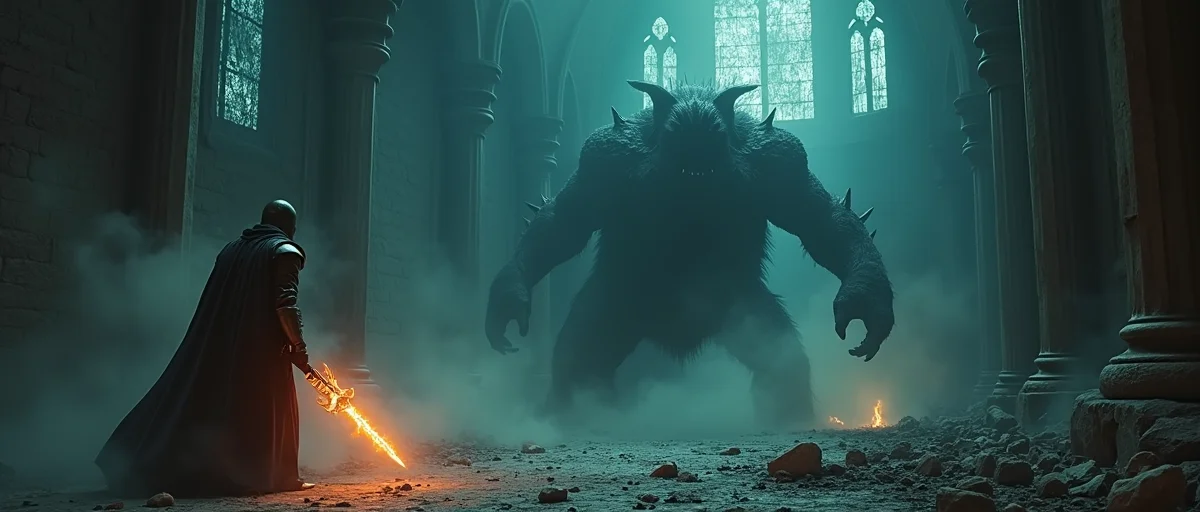
Game Freak's Beast of Reincarnation launches this week to reviews calling it competent but unremarkable. Critics note the Pokémon studio's Soulslike borrows heavily from genre giants without finding a unique identity.
Game Freak, the legendary studio behind Pokémon, has released its latest non-Pokémon project: Beast of Reincarnation. The Soulslike game arrives this week to a chorus of reviews that can best be summarized by Polygon’s own take: “It’s fine. It’s fine!” But for a studio with Game Freak’s pedigree, is “fine” enough?
Critics agree the game is competent, technically solid, and mechanically sound. Yet it struggles to escape the shadow of the genre titans it emulates. For technology professionals and gamers alike, Beast of Reincarnation raises an important question: can a studio known for one of gaming’s biggest franchises really innovate beyond its signature creation?
Beast of Reincarnation is a Soulslike action RPG developed by Game Freak. It represents another step in the studio’s ongoing effort to diversify beyond its Pokémon empire, marking another non-Pokémon project for the team.
While detailed coverage focuses on the critical response rather than the game’s specific mechanics, the consensus makes clear that it follows established genre conventions. Players familiar with the Soulslike formula will find expected elements: challenging combat, dark fantasy themes, and meaningful progression systems.
For readers unfamiliar with the genre, Soulslike games are characterized by:
Beast of Reincarnation delivers all these elements. The problem, according to critics, is that it delivers them without putting a distinctive spin on any of them.
The critical response to Beast of Reincarnation paints a picture of a technically proficient game that fails to leave a lasting impression. Polygon’s summary captures the general sentiment with remarkable brevity: “It’s fine. It’s fine!”
This isn’t damning with faint praise—it’s a recognition that the game accomplishes what it sets out to do. The combat is responsive. The world is atmospheric. The difficulty curve is punishing but fair. Yet none of these qualities distinguishes it from the dozens of other Soulslikes released in recent years.
Reviewers consistently note that the game:
Interestingly, the source material includes no numerical review scores or aggregate percentages. The critical response is qualitative, focusing on the game’s overall impression rather than specific metrics.
The most compelling reason to play Beast of Reincarnation isn’t the game itself—it’s the studio behind it. Game Freak has spent decades building Pokémon into a global phenomenon. The opportunity to see what the studio can do outside that franchise is a draw in itself.
Critics suggest that curiosity about Game Freak’s original work is likely the main driver of interest in Beast of Reincarnation, rather than any particular innovation the game introduces. The studio’s pedigree creates a level of attention that the game’s own merits might not generate on their own.
This creates a double-edged sword. Game Freak’s reputation raises expectations, and players expect more from a studio with such a storied history. The studio’s ongoing diversification beyond Pokémon represents a significant shift, one that has been gaining momentum as of the game’s 2025 release.
Beast of Reincarnation enters a market that has become increasingly crowded over the past decade. FromSoftware’s Dark Souls spawned an entire genre of imitators, and the space now includes both exceptional titles and forgettable clones.
The Soulslike market saturation has been trending upward over the past decade, making it increasingly difficult for new entries to capture attention. Notable games that broke through by adding meaningful innovations include:
Each of these games succeeded by taking the basic Souls formula and adding something meaningful. Beast of Reincarnation, by contrast, is described by critics as playing it safe—polished but without a strong hook beyond its inspirations.
In today’s gaming landscape, “fine” carries more weight than it once did. With hundreds of games releasing every year, players have limited time and money. A game that is merely competent doesn’t stand out in a sea of options.
The lack of a strong hook is Beast of Reincarnation’s most significant weakness. When players can choose from proven genre staples or innovative newcomers, a game that doesn’t offer something unique is likely to be overlooked.
For Pokémon fans specifically, Beast of Reincarnation appeals primarily through the studio connection rather than through any innovation the game itself brings. The title lacks a strong hook beyond its inspirations, making it appealing mainly to genre enthusiasts and Pokémon fans curious about Game Freak’s original work.
Beast of Reincarnation represents an important milestone in Game Freak’s evolution. The studio is actively exploring new creative directions, and this release demonstrates both its technical capabilities and its current creative limitations.
For technology professionals and enthusiasts, the game offers an intriguing case study in brand perception and creative risk. The lessons from Beast of Reincarnation’s reception are clear:
Game Freak’s future beyond Pokémon remains unwritten. Beast of Reincarnation may not be the breakout hit the studio hoped for, but it provides a foundation for future experiments. The critical feedback suggests the studio has the technical skills to compete—what it needs now is a more distinctive creative vision.
Game Freak is not alone in its desire to expand beyond a signature franchise. Across the gaming industry, developers that achieved massive success with a single series are increasingly exploring original properties.
This diversification trend is rising as of the game’s 2025 release, and it carries both opportunities and risks. On one hand, it allows studios to demonstrate their full creative range and attract new audiences. On the other hand, it can be difficult to escape the shadow of a beloved franchise, particularly when players come to a new game expecting a similar experience.
Beast of Reincarnation illustrates this tension perfectly. It arrived with significant attention because Game Freak made it, but that attention—and the expectations that came with it—may have ultimately worked against the game.
Given the critical response, Beast of Reincarnation will likely appeal to a specific audience. You might enjoy it if:
However, if you’re looking for the next genre-defining experience, this game may not deliver what you’re seeking. The strongest reason to pay attention to Beast of Reincarnation is watching how one of gaming’s most successful studios navigates its own evolution.
Beast of Reincarnation is a competent Soulslike that struggles to escape its inspirations. Critics describe it as “fine,” and that assessment feels both accurate and damning. The game demonstrates Game Freak’s technical skill while highlighting the studio’s need for bolder creative visions.
For the technology professional, the takeaway extends beyond gaming. The Beast of Reincarnation story is a reminder that brand equity and technical prowess can’t substitute for genuine innovation. In any industry, “fine” is rarely enough to stand out.
If you’re a Soulslike enthusiast or a Game Freak fan eager to see what the Pokémon studio can do on its own, Beast of Reincarnation deserves a look—but check the Polygon review roundup for the full context first, and decide for yourself whether “fine” from a legendary studio is worth your time.
Sources: Polygon’s review roundup on Beast of Reincarnation, published March 6, 2025.
Beast of Reincarnation is a Soulslike action RPG developed by Game Freak, the studio best known for Pokémon. It follows the genre's core conventions, such as methodical combat, dark fantasy themes, and challenging progression, but reviewers say it doesn't add a distinctive twist to those ideas.
No. Beast of Reincarnation is a separate non-Pokémon project, part of Game Freak's efforts to diversify beyond its Pokémon franchise. It is not set in the Pokémon universe and does not feature Pokémon-style creatures or mechanics.
Critics describe it as competent and mechanically solid, but it borrows heavily from Soulslike giants without carving out a unique identity. If you've played major games in the genre, you'll recognize familiar elements, but you may not find a memorable new angle.
It may be approachable for beginners because it follows well-established Soulslike conventions and has solid gameplay fundamentals. However, because critics find it unremarkable, players who want a standout first experience might prefer a genre-defining title instead.
When critics call the game 'fine,' they mean it does what it sets out to do without being exceptional. It has responsive combat, an atmospheric world, and a punishing difficulty curve, but it fails to leave a lasting impression or break new ground for the genre.