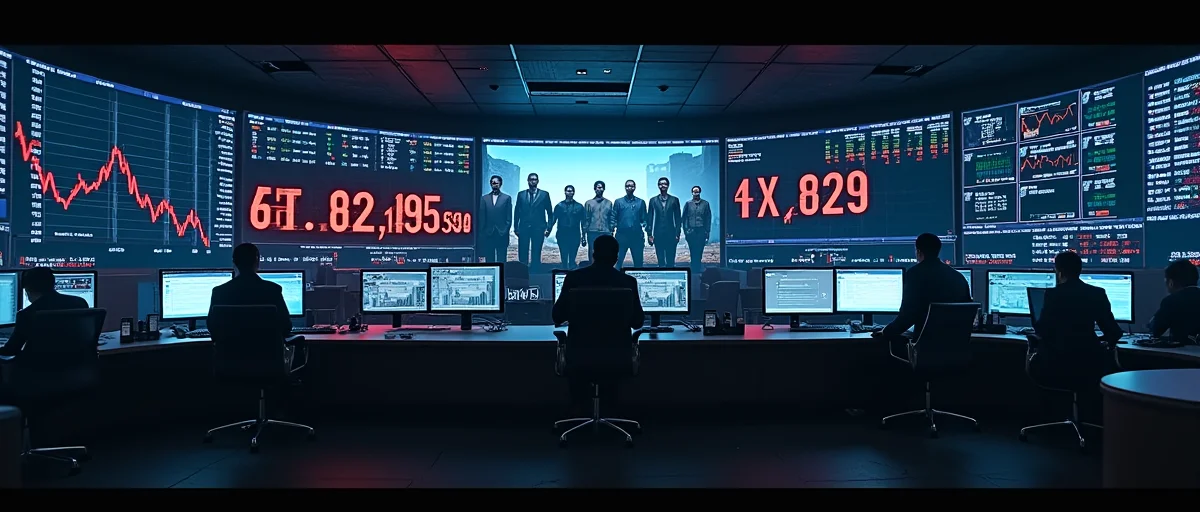
AMC Global Media shares fell 6% in pre-market trading after the company reported Q2 earnings that missed Wall Street expectations, despite announcing a $500 million renewal deal with Netflix for The Walking Dead. The stock has still risen over 70% in the past year, reflecting the complex dynamics of a media company navigating streaming growth and cable decline.
AMC Global Media reported second-quarter earnings that fell short of analyst estimates, sending shares down 6% in pre-market trading. The earnings miss punctuates a challenging period for the traditional cable network, even as it secures a landmark $500 million streaming deal with Netflix for The Walking Dead. Despite the immediate setback, AMC’s stock has surged more than 70% over the past year, highlighting the volatile but promising landscape for legacy media companies in the streaming era.
AMC Global Media’s second-quarter results disappointed Wall Street on both revenue and profit fronts. Total revenue declined in the quarter, reflecting ongoing headwinds in the linear television business. According to Deadline, shares dropped 6% immediately after the announcement as investors recalibrated expectations.
Key factors behind the miss include:
The earnings shortfall underscores the tension AMC faces as it tries to maintain its legacy cable business while pivoting toward digital and streaming opportunities. For technology professionals watching the media sector, the drop serves as a reminder that even well-known brands are not immune to the disruption caused by cord-cutting.
Amid the gloomy earnings report, AMC announced a massive renewal deal with Netflix for The Walking Dead. The agreement, valued at $500 million, extends the streaming rights for the flagship series and strengthens AMC’s relationship with the world’s largest streaming platform.
This deal is significant for several reasons:
The deal also reflects a broader trend: streaming platforms are increasingly licensing content from traditional studios to fill their libraries. For technology professionals building content platforms and recommendation engines, this arms-length relationship between content owners and distributors is reshaping how content is packaged and delivered.
Despite the 6% pre-market drop, AMC Global Media stock has risen more than 70% over the past year, according to Deadline. This remarkable gain suggests that investors see AMC as a comeback story, not a dying business.
What explains the disconnect between a quarterly miss and a soaring share price? A few factors:
For investors and technology analysts, the message is clear: quarterly earnings snapshots don’t always capture the long-term strategic shifts that drive stock prices. The 70% annual gain shows that AMC is successfully repositioning itself for a streaming-first world.
AMC’s story is emblematic of the entire media industry’s transition from linear TV to on-demand digital distribution. The trends driving this shift are unmistakable:
From a technology perspective, this transition creates both challenges and opportunities. For professionals working in media software, content management, or CDN infrastructure, the demand for scalable, secure, and cost-effective streaming solutions has never been higher. AMC’s ability to manage rights across multiple platforms—from Disney+ to Netflix—requires sophisticated systems that track usage, royalty payments, and compliance.
Moreover, the shift has led to innovative business models. Some studios are launching their own direct-to-consumer apps, while others (like AMC with Netflix) rely on a mix of owned platforms and licensing. Technology teams must support flexible content monetization strategies, from ad-supported video (AVOD) to subscription tiers.
AMC Global Media’s Q2 earnings miss and the subsequent stock drop are more than just a corporate hiccup—they offer valuable lessons for anyone following the intersection of media and technology.
For technology professionals, the message is clear: building systems that help media companies navigate this complexity—through cloud solutions, AI-driven content tagging, or dynamic ad insertion—will be essential to their future success.
AMC Global Media’s 6% stock dip following its Q2 earnings miss demonstrates the immediate pressure investors place on legacy cable companies. However, the 70% yearly gain and the $500 million Netflix deal paint a more nuanced picture—one of a business successfully leveraging its content library to survive and thrive in the streaming era. The road ahead involves balancing declining linear revenue with growing streaming opportunities, and technology will be at the heart of that transformation. For industry observers, AMC’s journey offers a case study in strategic reinvention, reminding us that while quarterly results matter, they don’t always tell the whole story.
The stock drop was due to AMC's Q2 earnings missing Wall Street expectations on both revenue and profit. Investors focused on the immediate financial underperformance, which included declining cable subscribers and lower advertising spending, rather than the long-term potential of the Netflix deal.
AMC's Q2 earnings miss was driven by three main factors: a decline in cable subscribers reducing distribution fees and ad revenue, softness in the advertising market, and higher content costs from investments in original programming and streaming infrastructure.
The deal provides revenue stability through a significant multi-year licensing agreement, strengthens AMC's relationship with the leading streaming platform, and demonstrates the ongoing value of AMC's content library in the streaming era, helping offset some pressure from the declining linear business.
The article doesn't provide investment advice, but the 6% drop shows short-term sensitivity to earnings. However, the stock has risen over 70% in the past year, indicating complex dynamics. Investors should consider both the challenges in cable and the opportunities in streaming content licensing before making a decision.
AMC's experience illustrates the tension traditional media companies face: they must manage declining linear TV revenue while investing in streaming growth. The Netflix deal shows that content licensing remains valuable, but successful transition requires balancing short-term earnings pressure with long-term digital strategy.