Anduril is reportedly negotiating a $100 billion funding round, tripling its valuation from 2025. The surge underscores surging investor demand for defense technology and autonomous systems. The company now stands among the most valuable private entities globally.
Anduril, the defense technology startup co-founded by Palmer Luckey, is reportedly in discussions to raise a new funding round at a staggering $100 billion valuation — more than three times its valuation from just a year ago. The potential deal, reported by Reuters via TechCrunch, underscores an unprecedented surge in investor appetite for AI-powered military systems and marks a pivotal moment for the defense tech sector.
A $100 billion valuation would place Anduril among the most valuable private companies in the world, rivaling SpaceX and ByteDance. For a company founded in 2017 and still scaling, the valuation reflects exceptional confidence in its technology and growth trajectory.
The news also signals a broader transformation: venture capital is flowing into defense technology at record levels. Private investment in defense tech has doubled over the past three years, and Anduril stands at the center of this shift, representing a new generation of contractors that prioritize software, autonomy, and rapid iteration over traditional hardware-heavy approaches.
Anduril’s target valuation of $100 billion represents a 300% increase from its approximately $30 billion valuation in 2025. This year-over-year growth rate is extraordinary, even by Silicon Valley standards.
To put this into perspective, a $100 billion valuation would surpass the market capitalization of several traditional defense primes. L3Harris trades at around $35 billion, while General Dynamics has a market cap of approximately $85 billion. Anduril, a private startup, would be worth more than these decades-old giants.
The valuation also positions Anduril significantly ahead of other defense-focused startups. Palantir, which went public in 2020, has a market capitalization of roughly $50 billion. Anduril’s implied value is double that, despite having substantially lower revenue.
Investor enthusiasm for Anduril stems from several distinct factors:
Anduril’s core platform, Lattice, uses artificial intelligence to aggregate data from sensors, drones, and other systems. It autonomously identifies threats and recommends courses of action, enabling faster decision-making in contested environments.
The company has secured significant deals directly with the U.S. Department of Defense, including counter-unmanned aircraft systems for base protection, Autonomous Surveillance Towers for border security, the Dive-LD autonomous underwater vehicle, and Ghost reconnaissance drones. These contracts provide recurring revenue and validate Anduril’s approach.
Anduril applies software best practices — continuous integration, rapid prototyping, and user feedback — to defense challenges. This agility is rare in an industry accustomed to multi-year cycles and enables quick fielding of new capabilities.
Palmer Luckey’s background founding Oculus gives him credibility in both hardware and software. The leadership team combines veterans from Palantir, SpaceX, and the military, blending technical and operational expertise.
For decades, the defense industrial base was dominated by a handful of prime contractors with deep Pentagon relationships. That dynamic is changing rapidly.
Venture capital investment in defense technology has more than doubled over the past three years, with firms like Andreessen Horowitz, Founders Fund, and General Catalyst committing dedicated capital to national security startups.
“We are seeing a paradigm shift in how the Pentagon sources technology,” noted a defense industry analyst. “Startups are now able to compete for programs once reserved for primes.”
Anduril’s success exemplifies this change. It has shown that a startup can win major contracts, scale production, and challenge established players. The company is following a path similar to Palantir, but with a stronger emphasis on hardware and autonomy.
Anduril’s ecosystem spans land, air, sea, and software:
| Product | Domain | Description |
|---|---|---|
| Lattice | Software | AI-powered operating system that fuses sensor data and controls autonomous systems |
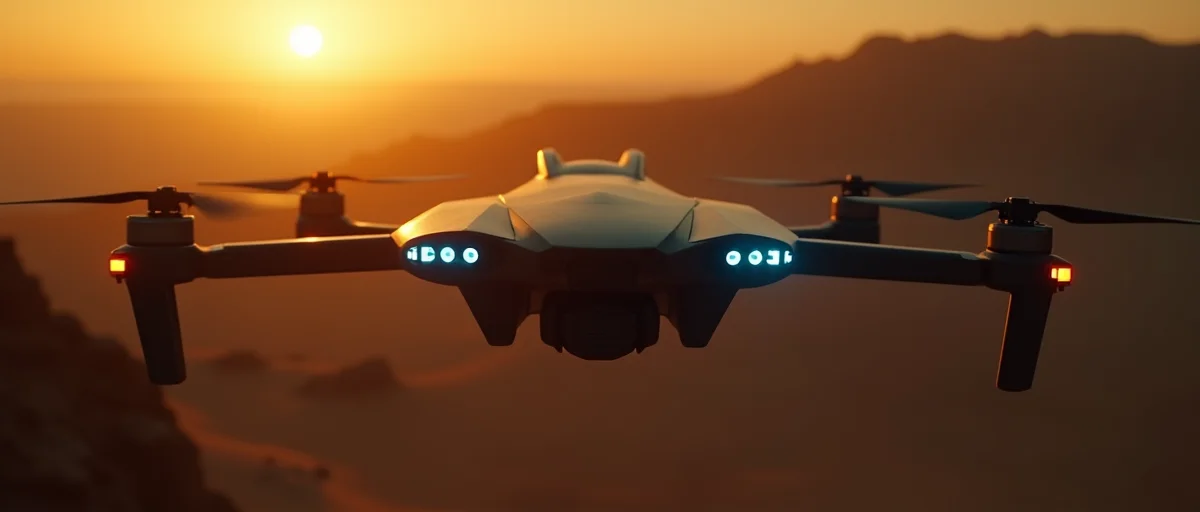
| Ghost | Air | Small autonomous quadcopter for persistent surveillance |
| Autonomous Surveillance Tower (AST) | Land | Mobile solar-powered towers for border and perimeter security |
| Dive-LD | Sea | Autonomous underwater vehicle for mine detection and reconnaissance |
| Sentry | Air | Larger autonomous aircraft with longer endurance |
These systems are designed to interoperate, creating a network of sensors and effectors managed centrally via Lattice.
Despite the optimism, Anduril faces significant risks:
Anduril’s rise is part of a broader trend: the military adoption of artificial intelligence. The Pentagon has made AI a priority through initiatives like the Joint Artificial Intelligence Center (JAIC) and the Replicator program, which aims to field thousands of autonomous systems by 2027.
For technology professionals, defense tech offers new opportunities in computer vision, reinforcement learning, sensor fusion, and secure software development — often with competitive compensation that rivals big tech.
For entrepreneurs, the defense market is opening up, but it requires patience, understanding of procurement, and the ability to navigate security clearances and compliance.
Anduril’s story serves as a blueprint: start with a clear technology advantage, build direct customer relationships, and scale quickly with venture capital.
Anduril’s reported $100 billion valuation is a landmark moment. It demonstrates that private markets believe the future of warfare will be defined by software, autonomy, and data — and that newcomers can disrupt legacy industries.
While risks remain, the direction is clear: venture capital is flooding into defense, and companies like Anduril are leading the charge.
Key Takeaways: