Lyft and Baidu launch robotaxi testing in London, merging Baidu's Apollo Go with Lyft's Freenow platform. This first Chinese AV deployment in London reshapes the competitive landscape.
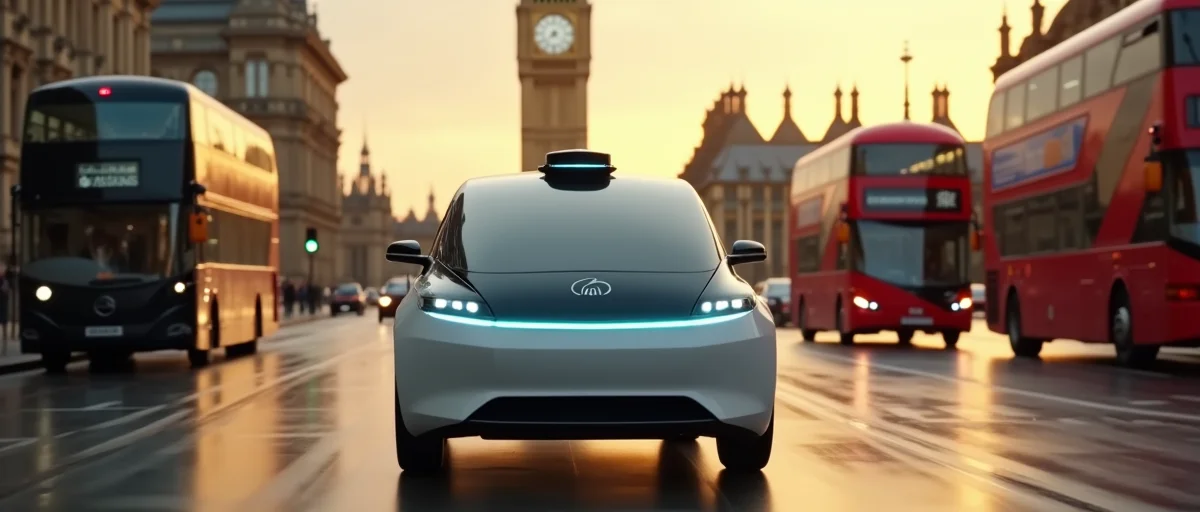
London has long been a hub for transportation innovation, from the iconic black cab to the rise of ride-hailing apps. Now, the city is becoming a global testing ground for robotaxis. The latest development: Lyft and Baidu have launched autonomous vehicle testing in London, marking a significant milestone in the race to commercialize self-driving taxis. This partnership is the first deployment of Chinese autonomous vehicle technology in the UK capital, and it signals a new phase in the global expansion of robotaxis.
Lyft’s strategic acquisition of European ride-hailing platform Freenow in 2025 provides the foundation for this initiative. By integrating Baidu’s Apollo Go autonomous vehicles into the Freenow app, the companies aim to offer a robotaxi service that combines Lyft’s mobility network with Baidu’s advanced AI. For technology professionals and enthusiasts, this partnership represents a convergence of two major trends: the international expansion of Chinese autonomy companies and the acceleration of robotaxi testing in European cities. The London market, already a hotbed for ride-hailing competition, now faces a new contender that blends global expertise with local platform strengths.
The partnership between Lyft and Baidu is a testament to the power of strategic alignment. Lyft, a leader in US ride-hailing, made a bold move by acquiring Freenow in 2025. Freenow is not just any European player; it is a multi-modal platform that integrates ride-hailing, car sharing, and scooters in over 100 European cities. Its strong presence in London gave Lyft an immediate user base and local operational knowledge.
Baidu, through its Apollo Go initiative, brings a decade of autonomous driving research and commercial operation experience. The Apollo platform is one of the most robust in the world, with partnerships spanning automakers, suppliers, and technology companies. By combining these assets, the two companies can accelerate the deployment of robotaxis in London.
London presents a unique set of challenges for autonomous vehicles. It has left-hand traffic, a dense network of narrow streets, complex intersections, and a diverse mix of road users including pedestrians, cyclists, and buses. Weather conditions, from rain to occasional fog, add another layer of complexity.
Successfully deploying robotaxis in London would be a strong validation of the technology. It would demonstrate the ability to handle one of the most difficult driving environments in the world. Moreover, London is a major market for ride-hailing services, making it an attractive target for commercial deployment.
Baidu has been investing in autonomous driving for over a decade. Its Apollo platform, launched in 2017, has been adopted by partners globally. The Apollo Go robotaxi service has provided millions of rides in Chinese cities like Beijing, Wuhan, and Guangzhou.
The technology relies on a multi-sensor approach: LiDAR for 3D mapping, cameras for object recognition, and radar for distance detection. The system uses high-definition maps with centimeter-level accuracy and integrates AI algorithms to make real-time decisions.
Adapting Apollo Go to London is a complex task. The software must learn to recognize British traffic signs, understand road markings that differ from those in China, and interact with the city’s unique traffic patterns. Baidu will likely use a combination of simulation and real-world testing to train its models.
Safety is a top priority. The initial testing phase will include safety drivers ready to take over in case of emergency. Data collected during these testing runs will be used to refine the system. The goal is to gradually remove the safety driver and offer fully autonomous rides.
Baidu has a strong safety record with Apollo Go. The system has operated without major incidents in China. However, regulations in the UK are stringent. Transport for London (TfL) requires extensive testing and validation before commercial deployment. The UK Automated Vehicles Act 2024 provides a legal framework for such operations, focusing on safety, insurance, and liability.
London is not a greenfield for autonomous vehicles. Several companies are already testing robotaxis in the city.
The entry of Lyft and Baidu adds a new dimension. Unlike Wayve and Oxa, which are technology providers, Lyft is a ride-hailing platform with an existing customer base. This could give it a faster path to market, as it can leverage the Freenow app to offer robotaxi rides to users.
The UK government has been supportive of autonomous vehicle testing. The Centre for Connected and Autonomous Vehicles (CCAV) and the Self-driving Vehicles Hub (SDV) provide coordination and funding. London’s Ultra Low Emission Zone and congestion charge also incentivize the use of clean, efficient robotaxis.
Despite the progress, challenges remain. Public trust in autonomous vehicles is still mixed, and safety concerns are paramount. The testing period will be crucial to demonstrate reliability. Additionally, the partnership must navigate data governance issues related to Chinese technology in a Western city.
However, the opportunities are immense. A successful robotaxi service in London could reduce traffic accidents, lower emissions, and provide affordable mobility options. For Lyft, it would be a key differentiator in the competitive ride-hailing market. For Baidu, it would be a crowning achievement in its global expansion.
The Lyft-Baidu partnership is part of a broader trend. Chinese autonomous vehicle companies are expanding internationally, driven by a maturing domestic market and growth opportunities abroad. WeRide, Pony.ai, and AutoX are also exploring overseas deployments.
Meanwhile, robotaxi testing in European cities is rising. Over the last 12 months, cities like Paris, Munich, and Stockholm have seen increased autonomous vehicle activity. London, with its pro-innovation stance and large population, is at the center of this movement.
For those in the autonomous vehicle industry, this development offers several insights:
While no specific statistics are available for this article, the global autonomous vehicle market is expected to grow to billions of dollars in the coming decade. The robotaxi segment is a key driver. London, as a major city, represents a sizable market opportunity.
The start of robotaxi testing by Lyft and Baidu in London is a pivotal moment. It marks the first deployment of Chinese autonomous driving technology in the UK capital and highlights the power of strategic partnerships. By combining Lyft’s ride-hailing network with Baidu’s Apollo Go, the companies are well-positioned to make an impact.
As testing proceeds, the industry will be watching closely. The data gathered from London’s challenging streets will inform the development of safer and more capable autonomous vehicles. For technology professionals and enthusiasts, this partnership is a clear signal: the future of mobility is arriving, and London is one of its key proving grounds.
Key Takeaways:
Apollo Go is Baidu's autonomous ride-hailing platform, built on over a decade of research and development in self-driving technology. It is one of the most comprehensive autonomous driving platforms globally, with partnerships across automakers, suppliers, and tech companies. In this partnership, Apollo Go provides the vehicle technology that will be integrated into Lyft's Freenow app for London operations.
The service will be accessible through the Freenow app, which Lyft acquired in 2025. Once available, users can request a robotaxi just like they would a regular ride-hail. The initial phase involves testing with safety drivers, with a broader public rollout expected in the future.
London presents unique challenges including left-hand traffic, narrow and winding streets, complex intersections, and a dense mix of pedestrians, cyclists, and traditional vehicles. The city's unpredictable traffic patterns and historic road layouts require advanced sensor fusion and decision-making, making it a rigorous testing ground for autonomous technology.
Baidu's Apollo platform is one of the most robust autonomous driving systems, with extensive commercial operation experience in China. While Waymo has been operating in select US cities, Baidu brings a decade of research and a vast partner ecosystem. Both are leaders, but Baidu's deployment in London marks the first time its technology is being tested in a European market, underscoring its global ambitions.
This partnership is the first deployment of Chinese autonomous vehicle technology in London, signaling a new phase in global robotaxi expansion. By combining Lyft's European presence through Freenow with Baidu's AV expertise, it is likely to accelerate the adoption of self-driving taxis in other European cities. It also intensifies competition among major ride-hailing platforms to integrate autonomous vehicles.