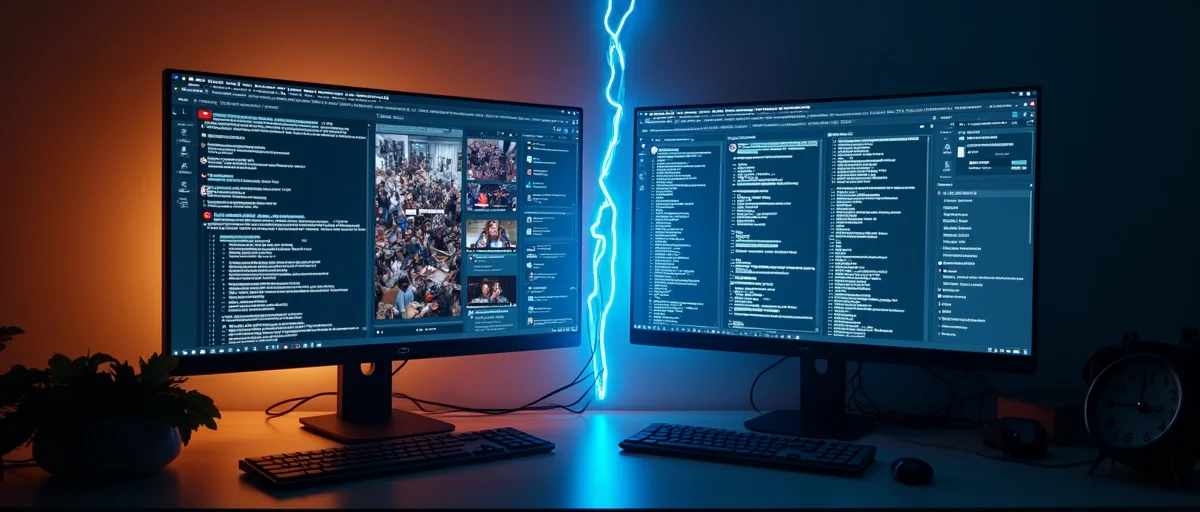
The DeepSeek Web API project enables developers to interact with DeepSeek's large language models using standard OpenAI API libraries. By leveraging browser automation, it creates a local proxy that translates API requests into web interface interactions, offering a creative workaround for accessing language models without native API support.
Developing applications with large language models often locks you into a specific API ecosystem. OpenAI’s SDKs set the de facto standard, but accessing other powerful models usually means rewriting code. The open-source project DeepSeek Web API shatters that barrier. It provides an unofficial, self-hosted API that mirrors OpenAI’s endpoints, allowing you to use your existing OpenAI tools—like the Python or Node.js SDK—to communicate with DeepSeek’s models. This article explores how the project works, why it matters, and what risks it carries.
DeepSeek Web API is a local proxy server that translates standard OpenAI API requests into actions on DeepSeek’s web interface. Instead of waiting for an official API from DeepSeek, developers can now leverage the familiar OpenAI format to experiment with DeepSeek’s language models. The project is written in TypeScript, ensuring type safety and a modular architecture that makes it easy to extend or contribute to.
The core trick is browser automation. DeepSeek Web API uses Chrome DevTools Protocol (CDP) via Puppeteer to control a headless Chrome browser. When you send a chat completion request to the local proxy, the software logs into DeepSeek’s chat interface using a provided session token, submits your prompt to the browser, waits for the model’s response, and then returns it formatted exactly like an OpenAI API response. Everything happens locally on your machine—no data passes through third-party servers.
This design means the proxy is essentially a bridge between OpenAI’s HTTP specification and DeepSeek’s JavaScript-based web interface. The project currently supports the /v1/chat/completions endpoint, with potential for more compatibility layers down the road.
Getting started requires a valid DeepSeek account and a bit of command-line comfort. First, clone the repository and install dependencies using your preferred package manager. You then need to obtain your DeepSeek session token from the browser’s developer tools and set it as an environment variable (DEEPSEEK_SESSION_TOKEN). Start the server, and it listens on a local port (default 3000).
Once the proxy is running, you can query DeepSeek models with code you already have:
import openai

openai.api_base = "http://localhost:3000/v1"
openai.api_key = "unused"  # proxy doesn’t check keys

response = openai.ChatCompletion.create(
    model="deepseek-model",
    messages=[
        {"role": "user", "content": "Explain quantum computing in simple terms."}
    ]
)

print(response.choices[0].message.content)
Only the api_base changes. The project maps the model parameter to DeepSeek’s internal model selection, and the rest works seamlessly. This compatibility is the project’s main selling point.
The AI model landscape is rapidly diversifying, but official APIs are often behind. DeepSeek has not released a public API that matches the mainstream standard, leaving developers who want to use it without a straightforward path. Unofficial compatibility layers like DeepSeek Web API fill that gap. According to current trends, these types of projects are on the rise this year, as the community seeks ways to access models without vendor lock-in or expensive subscription fees.
By creating a bridge between proprietary web interfaces and standardized protocols, these layers enable faster experimentation. Developers can compare models, build prototypes, and even integrate alternative models into existing pipelines—all without waiting for official support. This reduces the barrier to entry and fosters a more open AI ecosystem.
Because DeepSeek Web API relies on browser automation, it inherits all the fragility of that approach. Any change to DeepSeek’s front-end code can break the proxy. The browser session consumes local resources and may introduce latency. Rate limiting also applies because you are essentially sending requests through a web interface, not a dedicated API. The project is not intended for production workloads; it is best suited for learning, prototyping, and low-volume personal use.
Authentication is another hurdle. You need an active DeepSeek session token, which means you must have a valid account and periodically refresh the token. This is less convenient than API keys but necessary to mimic the login process.
Unofficial APIs exist in a gray area. Automating web interactions can violate the service’s terms of use. Before using this project, review DeepSeek’s terms to understand if scripting against their web interface is allowed. The project itself is provided as a proof of concept, and you assume all responsibility for compliance.
DeepSeek Web API exemplifies the ingenuity of the open-source community in solving real-world friction. While it may not replace official APIs, it demonstrates a strong demand for interoperable access. As AI models proliferate, we may see more standardized protocols emerge, reducing the need for such workarounds. Until then, projects like this empower developers to vote with their keyboards and choose the best model for the job.
For now, if you are curious about DeepSeek models and want to experiment through familiar tools, DeepSeek Web API offers a low-friction path. Just be aware of its limitations and treat it as the clever prototype it is.
DeepSeek Web API stands as a testament to developer creativity, providing an elegant compatibility layer that bridges DeepSeek’s web interface with OpenAI’s widely adopted API format. It lowers the barrier for accessing an alternative language model, encourages experimentation, and highlights the growing demand for flexible, community-driven access to AI. While not production-ready, it serves as a powerful tool for learning and prototyping. If you need to integrate DeepSeek into an existing OpenAI workflow without starting from scratch, this project is worth exploring—just keep its limitations and ethical considerations in mind.