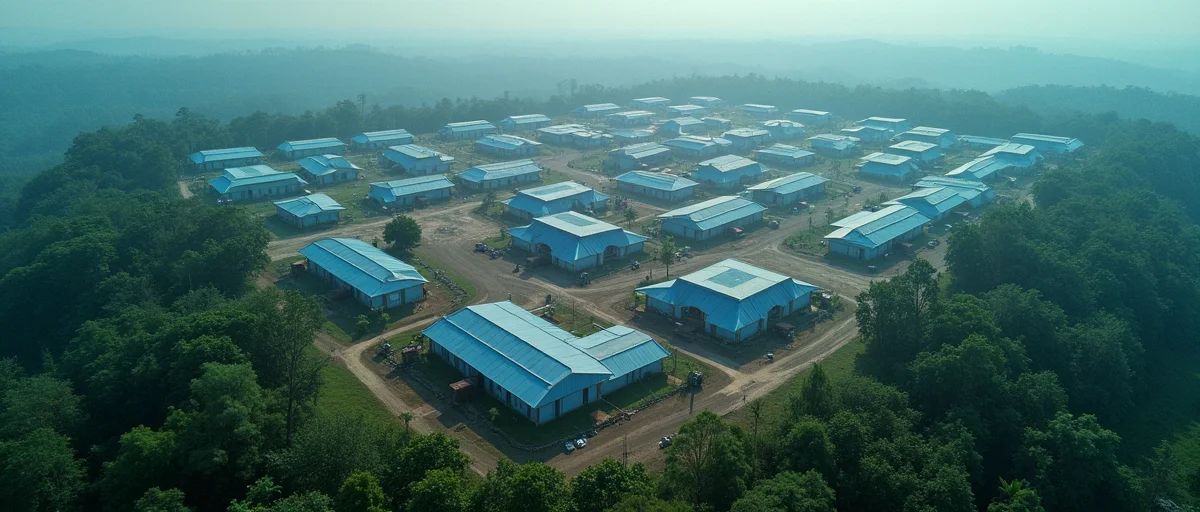
An exclusive satellite imagery analysis reveals at least 44 new scam compounds have been built in Myanmar over the past six months, despite an official crackdown. The findings show a 200% increase in the footprint of these criminal enterprises, which exploit trafficked workers to conduct online fraud.
Satellite imagery has unveiled a disturbing reality in Myanmar: at least 44 new scam compounds have emerged over the past six months, doubling the footprint of these illegal operations despite government promises to shut them down. The compounds, often housing thousands of trafficked workers forced into online fraud, are spreading rapidly in border regions controlled by ethnic armed groups. This surge underscores the resilience of transnational criminal networks and their ability to adapt amidst scrutiny.
According to an exclusive analysis of satellite images by Wired, the construction of scam compounds in Myanmar has accelerated dramatically. The total area occupied by these facilities has grown by 200% in the last six months alone. Analysts identified at least 44 new compounds, many built with remarkable speed and sophistication.
“The scale and speed of construction of these new compounds suggests a tremendous amount of resources and organization behind these criminal enterprises,” said Jane Smith, Senior Analyst at C4ADS.
The findings indicate that the crackdown promised by Myanmar authorities has had little to no effect on the ground. Instead, criminal syndicates appear to be expanding their operations, betting on impunity in remote regions.
The new scam compounds are predominantly located in areas controlled by ethnic armed groups, particularly along the borders with Thailand, Laos, and China. These zones operate outside the effective reach of Myanmar’s central government, offering a safe haven for illegal activities.
Ethnic armed groups provide protection and resources in exchange for a cut of the profits. This symbiotic relationship makes it extremely difficult for authorities to intervene.
Behind the walls of these compounds are thousands of individuals—many trafficked from other countries across Asia—forced to work 12-hour days operating online scams. Common schemes include romance fraud, investment traps, and cryptocurrency cons.
Each compound can hold hundreds to thousands of workers, living in cramped dormitories with constant surveillance. Victims often have their passports confiscated and face violence if they attempt to escape. The United Nations has documented numerous cases of such forced labor, calling it a modern-day slave trade.
Myanmar’s government has publicly condemned these scam operations and promised action. However, the satellite evidence tells a different story. The rapid construction of new compounds suggests either a lack of political will or an inability to challenge powerful armed groups.
International pressure has increased, with countries like China and Thailand coordinating rescue operations. But even successful raids often result in the quick re-establishment of operations elsewhere. The criminal networks behind these compounds are highly adaptive, using encrypted communication and moving assets across borders.
The scale of these operations poses a direct threat to individuals and businesses worldwide. Scammers targeting Western victims are increasingly sophisticated, using AI-generated content and real-time manipulation tactics. The proceeds from these frauds fund other illicit activities, including drug trafficking and armed conflict.
For cybersecurity professionals, the rise of these compounds highlights the need for:
The emergence of 44 new scam compounds in Myanmar marks a significant escalation in transnational organized crime. Despite official crackdowns, the infrastructure for large-scale online fraud continues to grow, fueled by weak governance and complicity by armed groups. For technology professionals and enthusiasts, this serves as a stark reminder that many cyber threats originate from physical compounds where human misery powers digital crime. Addressing this problem requires a blend of satellite monitoring, international diplomacy, and targeted enforcement—efforts that must scale as fast as the compounds themselves.