Discover how Antigravity Arcade uses generative AI to transform text prompts into playable game prototypes in minutes, backed by data showing 55% studio adoption and 300% yearly growth in AI prototyping.
For decades, the critical bottleneck in game design has been the gap between conception and implementation. A brilliant game design document could lie dormant for months, waiting for engineering bandwidth. This friction stifles creativity and inflates budgets. What if you could collapse that timeline from months to minutes? This is the promise of Antigravity Arcade, a platform that leverages cutting-edge generative AI to transform a single descriptive text prompt into a fully playable arcade game almost instantly. For technology professionals and gaming enthusiasts, this is not merely a clever demo; it is a profound shift in the economics and logistics of game creation.
The traditional development lifecycle—ideation, prototyping, coding, art production, testing—requires a coordinated team of specialists over an extended period. Antigravity Arcade: From prompt to game in minutes challenges this fundamental structure. By feeding a complex game concept into a sophisticated AI model, the platform generates core gameplay logic, interfaces, physics parameters, and visual assets in a fraction of the time. It represents the vanguard of a new era where the barrier to entry for game development is drastically lowered, and the pace of iteration accelerates exponentially.
The adoption of generative AI within the game industry has transcended experimental phases and entered the mainstream. According to the GDC State of the Game Industry 2024 report, 55% of game studios are actively employing AI tools in their production pipelines. This widespread integration focuses on tasks ranging from environment art generation to dialogue scripting. The most significant impact, however, is emerging in code generation.
The Unity 2024 Gaming Report corroborates this trend, revealing that 71% of game developers believe AI will significantly improve their workflow efficiency. The primary driver for this optimism is the automation of tedious coding tasks. Prototyping, historically a labor-intensive phase requiring specialized engineering talent, is now accessible through natural language. Tools like Antigravity Arcade are perfectly positioned to capitalize on this demand, allowing designers and producers to bypass the traditional “dev ticket” bottleneck and see their ideas running in real-time.
The core value proposition of Antigravity Arcade is the radical compression of the development feedback loop. Let us examine a specific use case. A user wants to test a novel mechanic. Instead of drafting a technical design document and waiting for a sprint allocation, they simply type a prompt.
The platform’s promise of “Antigravity Arcade: From prompt to game in minutes” relies heavily on the richness of the initial prompt. A prompt that reads ‘make a space game’ will yield a generic, sloppy result. A robust prompt that defines the core loop, the win/loss conditions, the control scheme, and the aesthetic will return a significantly more refined prototype. This paradigm forces a new discipline on the creator: the discipline of clear, structured thought. The more precisely you can define the rules of your game in natural language, the better the AI can execute them. This blurs the line between the highly technical role of a Programmer and the abstract role of a Game Designer, creating a new hybrid role of the AI-Augmented Visionary.
The seamless translation of “antigravity burst reverses asteroid direction” into a functioning physics equation requires a complex, multi-modal AI architecture. This goes far beyond simple text completion.
“The promise of generative AI is that it can turn anyone into a creator, not just a consumer.” - Jensen Huang, CEO of NVIDIA
These platforms represent a fulfillment of this vision. They typically employ a three-tiered AI system:
Furthermore, there is the challenge of coherence. The AI generated the game in one pass. If a bug exists in the generated code—say, the antigravity burst fires continuously instead of for three seconds—the system must be able to debug its own output. This is where the leading platforms are investing heavily. Vector embeddings of the generated code are analyzed against the original prompt’s intent. If a mismatch is detected, an autonomous agent loop can write patches to the code, compile, test, and verify the fix. This creates a self-healing prototype generation system, further reducing the need for human intervention in the initial validation phase. For the tech audience, the sophistication of these feedback loops is the true technical marvel.
The Reality of Refinement: As the research suggests, the first generation is rarely perfect. The initial assets might be placeholder quality, the game balance might be off, or a corner case in the physics might break the gameplay. The human developer remains essential for iterative refinement—polishing the code, tuning the difficulty curve, and replacing AI-generated art with final assets. This is not automation that replaces the developer; it is augmentation that makes the developer superhumanly productive.
The trajectory of this technology is undeniable. The trend data highlights an explosive increase in interest and investment. Generative AI for Game Prototyping has experienced a 300% increase in activity over the past 12 months. This is a clear signal that the market recognizes the immense value of speed-to-prototype.
What This Means for Tech Professionals:
Actionable Strategies for Integration:
The 300% growth trend underscores that early adoption provides a significant competitive advantage. Studios that integrate AI prototyping now are building workflows and institutional knowledge that will pay dividends for years to come.
Antigravity Arcade: From prompt to game in minutes is far more than a clever tool; it is a signpost for the future of an entire industry. By leveraging generative AI, it demolishes the traditional barriers of time, cost, and specialized skill that have historically constrained game development.
The data is definitive: the majority of studios are already on board, and the growth in the prototyping space is exponential. For developers, technical directors, and innovation leaders, the message is clear. The era of the ‘prompt-to-play’ pipeline has arrived. The ability to translate a vision directly into a playable experience is redefining the creative workflow. The future of game development belongs not to those who write the most lines of code, but to those who can best architect their vision and collaborate with AI to bring it to life.

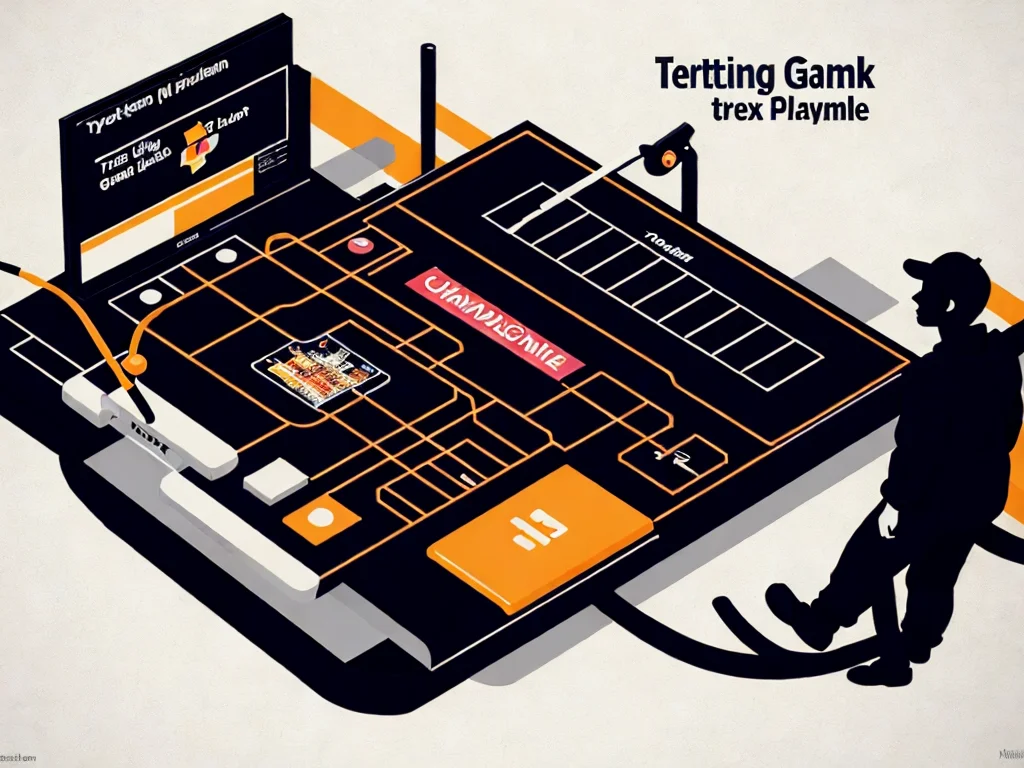

Antigravity Arcade is a platform that uses generative AI to turn a short text description into a fully playable arcade game prototype in minutes, greatly accelerating the game design process.
The platform takes a natural language description of a game concept and feeds it into an advanced AI model, which then generates the necessary code, physics, user interface, and visual assets automatically, bypassing manual programming and art creation.
Industry surveys show strong adoption: the GDC State of the Game Industry 2024 report found that 55% of game studios actively use AI tools, and the Unity 2024 Gaming Report indicates that 71% of developers believe AI will significantly improve their workflow efficiency.
Traditional prototyping requires specialized teams for coding, art, and testing over months. Antigravity Arcade lets designers and producers create a working prototype directly from a prompt, drastically reducing time, cost, and the need for technical resources.
It is especially valuable for game designers, producers, and other non-programmers because it removes the coding barrier, enabling them to iterate on game ideas quickly without waiting for engineering support.