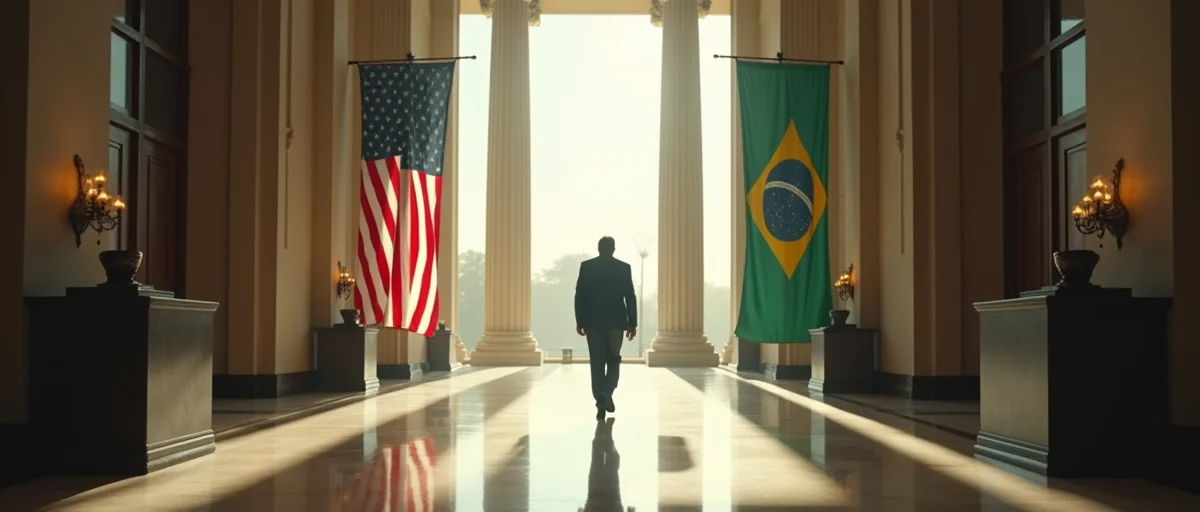
The Trump administration canceled Brazil's ambassador visa after Brazil refused to approve the U.S. ambassador nominee, escalating a reciprocal diplomatic dispute.
The Trump administration has canceled the Brazilian ambassador’s visa in a tit-for-tat diplomatic move that caught many observers by surprise. The action, disclosed in a background briefing by a senior State Department official, comes after Brazil failed to approve President Donald Trump’s nominee to serve as U.S. ambassador to Brasília.
For technology professionals and companies with teams across the Americas, this is more than a political headline. It is a reminder that visa policies are increasingly used as leverage in international disputes—and that even routine consular processes can become unpredictable.
The immediate cause is straightforward. Brazil has not approved the U.S. ambassador nominee. In response, Washington canceled the Brazilian ambassador’s visa as a reciprocal measure.
A senior State Department official confirmed the decision to reporters on condition of anonymity. The official described it as a “reciprocal” action. The Washington Post reported the remarks on August 4, 2026.
This is a classic tit-for-tat escalation. One country takes an action, and the other responds in kind. Recalling or canceling an ambassador’s visa is a serious step because it limits a country’s top diplomatic representative from conducting normal duties.
The dispute began with a stalled ambassadorial appointment. Under standard diplomatic practice, the host country must approve an incoming ambassador before they can take office. Brazil’s delay in approving Trump’s nominee left Washington waiting—and eventually, Washington decided to respond.
The key facts are simple:
This chain of events shows how quickly a routine administrative process can become a political flashpoint.
The only quote in the briefing was brief but powerful. A senior State Department official said the visa cancellation was a “reciprocal” action. That one word tells us the decision was intentional and directly linked to Brazil’s actions.
Background briefings allow officials to speak without being named. That makes the signal less personal but no less significant. The fact that the State Department briefed reporters suggests Washington wanted the move to be public—and wanted Brazil to know it.
Background briefings are a common tool in diplomacy. They let officials explain policy without taking individual ownership. This creates a delicate balance: the message is clear, but the messenger remains anonymous.
In this case, the background briefing served two purposes:
For diplomats and analysts, this wording signals that the U.S. wants a calibrated response, not a full break in relations.
Diplomatic visas are special travel documents issued to foreign diplomats and officials. They allow them to enter and stay in the host country while performing their duties. Unlike ordinary visas, they are closely tied to the political relationship between two countries.
When a host country cancels an ambassador’s visa, the effect is immediate. The ambassador loses their legal status in that country. They may have to leave or face legal consequences.
Because ambassadors are central to foreign diplomacy, such action is rare. It signals deep frustration. It also raises the stakes for future negotiations.
Reciprocity is a core principle in diplomacy. Nations often treat each other the way they are treated. If one country restricts the other’s diplomats, the second country often responds in kind.
This visa cancellation is a textbook example. Brazil restricts the U.S. ambassador nominee; the U.S. restricts Brazil’s ambassador. The “reciprocal” comment from the State Department makes the logic explicit.
The cancellation fits a broader pattern. As of August 2026, reciprocal visa restrictions are on the rise in diplomatic disputes. Countries are increasingly using visa policies as instruments of leverage, alongside sanctions and trade measures.
This trend matters for anyone who travels across borders for work. Technology professionals, in particular, depend on predictable visa systems for:
When diplomatic tensions rise, visa timetables can stretch. Approval rates can fall. Travelers may face extra scrutiny at airports.
Consider a U.S.-based technology company that relies on engineers in São Paulo. If the visa dispute continues, those engineers could face longer wait times for U.S. visas. The firm’s ability to deliver products might suffer.
Similarly, a Brazilian startup founder who needs to meet investors in Silicon Valley could encounter delays. For early-stage companies, a few weeks of visa uncertainty can mean missed deadlines and lost opportunities.
These are not hypothetical scenarios. They are the kind of operational risks that technology teams must plan for when political climates shift.
The United States and Brazil are the two largest economies in the Americas. Their relationship spans trade, defense, environment, and technology. A visa dispute of this magnitude can create significant headwinds.
The core problem is trust. Ambassadors are trusted intermediaries. When an ambassador is unable to serve, formal communication channels narrow. That makes it harder to navigate complex issues, including technology governance and data flows.
Technology governance is a key area of U.S.-Brazil cooperation. The two countries discuss everything from cybersecurity to digital trade. An ambassador-level vacuum weakens those dialogues.
For technology professionals, this is a practical concern. Policy decisions made now—or delayed—will affect how companies handle data, privacy, and emerging technologies. A less cooperative bilateral environment can slow progress on shared standards and interoperability.
If you travel between the United States and Brazil—or if your company employs staff in either country—here are actionable steps to protect your operations.
For team leaders, this is a good moment to reassess global mobility policies. Ask yourself:
By thinking ahead, you can avoid a crisis when diplomatic friction peaks.
The likely next move belongs to Brazil. If Brasília approves the U.S. ambassador nominee, Washington may restore the Brazilian ambassador’s visa quickly. If not, the standoff could escalate further.
No one can predict exactly how this will unfold. But past patterns suggest that reciprocal visa actions are often resolved through quiet negotiation. Both sides have an incentive to prevent lasting damage.
Diplomatic tensions often ease when leaders see the economic cost of continued escalation. For the technology sector, the cost is clear: uncertain mobility, delayed projects, and weaker policy coordination.
A swift resolution would benefit both countries. Until then, professionals should prepare for the possibility of sustained friction.
The Trump administration’s cancellation of the Brazilian ambassador’s visa is a deliberate, reciprocal act. A senior State Department official framed it clearly: it was a response to Brazil’s failure to approve the U.S. ambassador nominee.
For technology professionals, the broader lesson is to treat visa policy as an operational risk factor. Reciprocal visa restrictions are rising, and geopolitical disputes can disrupt travel and talent mobility overnight.
Stay informed. Build contingency plans. Keep communication channels open. In a world where diplomacy and technology are increasingly intertwined, preparation is the best defense.
An ambassador's visa is what allows that diplomat to enter and remain in the host country to perform official duties. Canceling it restricts the ambassador's ability to travel and work normally in the country, which is considered a serious diplomatic step. It signals that the sending country's top representative is no longer welcome under standard conditions.
The cancellation was a reciprocal response to Brazil's failure to approve the U.S. ambassador nominee to Brasília. Because Brazil had not approved the nominee, Washington canceled the Brazilian ambassador's visa as a tit-for-tat measure. A senior State Department official confirmed the action was intentional and directly linked to Brazil's delay.
A reciprocal diplomatic action is when one country responds to another country's move by taking an equivalent or matching step. In this case, Brazil's non-approval of the U.S. ambassador nominee was met with the U.S. cancellation of Brazil's ambassador visa. It is a way of applying pressure while signaling that the other country's actions have consequences.
Before an ambassador can take office, the host country must formally approve or accept the incoming ambassador's credentials. This process, called agrément, lets the host government vet and consent to the nominee. If approval is delayed or withheld, the sending country may respond with diplomatic measures, as seen in this dispute.
Yes, visa policies can become unpredictable when governments use them as leverage in diplomatic disputes. While this cancellation targets the Brazilian ambassador specifically, it highlights how broader visa relationships can be affected by political tension. Technology professionals and companies with teams across the Americas should monitor such developments because routine consular processes may change without warning.