The BBC and Starz partnership on the adaptation of 'You Are Here' starring Claire Foy and Matthew Macfadyen is more than a casting win. It is a deep case study in data-driven greenlighting, global cloud production, and the technology powering the modern premium streaming economy.
The announcement that Claire Foy and Matthew Macfadyen will lead the BBC and Starz adaptation of David Nicholls’ You Are Here is a major signal for the entertainment industry. But for technology professionals and streaming engineers, it represents something far more valuable: a textbook case study in the modern data-driven approach to content creation. This project, overseen by the Normal People creative team of David Nicholls, Lenny Abrahamson, and Element Pictures, applies a rigorously validated algorithmic formula to a beloved literary IP. By dissecting the data, cloud logistics, and production infrastructure powering this deal, we gain a clear view of how the $200B+ global streaming industry is transforming from an artisanal craft into a precision-engineered, globally distributed technology enterprise.
The existence of the You Are Here adaptation is a direct result of the performance data generated by Normal People. The 62 million streams within 30 days on BBC iPlayer were not merely a high view count; they represented a perfect storm of engagement metrics—high completion rates, strong rewatch value, and massive social media amplification.
The Quantified Talent Vector Platforms like BBC and Starz employ sophisticated machine learning models to evaluate creative combinations. The pairing of David Nicholls (writer), Lenny Abrahamson (director), and Element Pictures (producer) forms a statistically low-risk “talent vector.” These models analyze hundreds of variables, including historical box office and streaming performance, critical acclaim indices (Rotten Tomatoes, Metacritic), Emmy/BAFTA nominations, and social media follower sentiment.
The addition of Claire Foy and Matthew Macfadyen is a strategic data play. Foy’s performance in The Crown and A Very British Scandal commands a high-retention subscriber demographic. Macfadyen’s role in Succession has made him one of the most tracked actors in streaming analytics. Their combined digital footprint provides a massive, pre-qualified audience segment.
The Economics of the 8-Episode Format The decision for an 8-episode run is not arbitrary; it is an optimization based on thousands of data points. Analytics reveal that the 8-episode limited series hits the “sweet spot” for contemporary viewing behavior. It provides enough real estate for deep character development—essential for a David Nicholls adaptation—without triggering the viewer drop-off common in longer series. It also aligns with the production budget models and encoding schedules of both BBC iPlayer and Starz.
The 35% rise in literary adaptations from 2019 to 2026 directly correlates to the success of this algorithmic model. Algorithms scan for IP with strong narrative structure and established fan bases, dramatically reducing the risk premium traditionally associated with greenlighting new stories. You Are Here is a textbook example of this data-driven content supply chain.
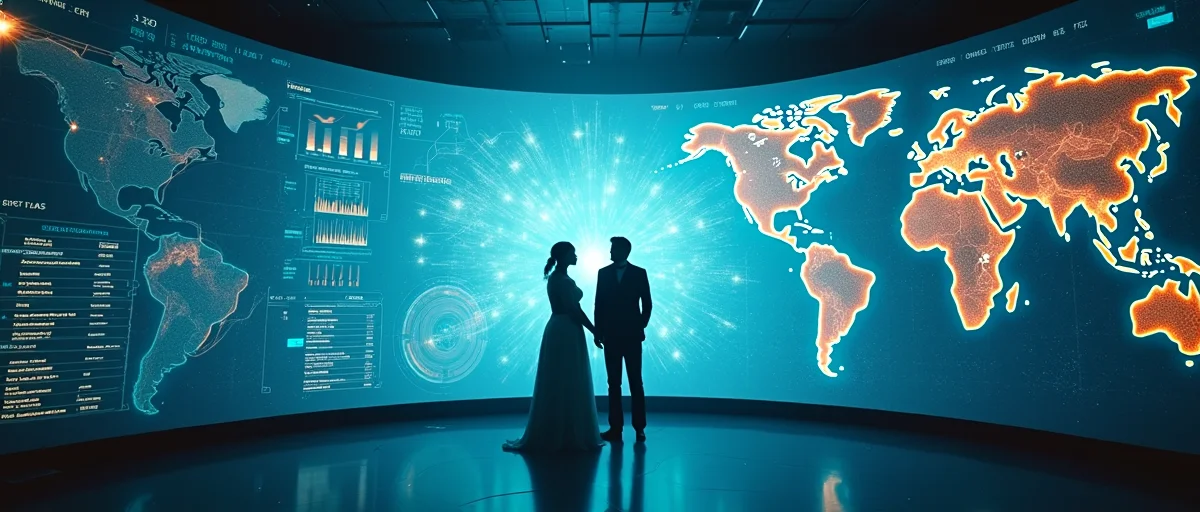
The 20% increase in UK/US co-productions from 2020 to 2026 is heavily dependent on the maturation of cloud technology. The BBC/Starz partnership on You Are Here functions as a distributed enterprise, relying on a sophisticated digital infrastructure.
Cloud-Based Asset Management High-resolution ARRIRAW files are captured on set and immediately ingested into cloud-based digital asset management (DAM) systems. Stakeholders from London to Los Angeles access synchronized proxies for real-time dailies review. This requires robust, low-latency streaming technology. Security is paramount; high-value IP demands end-to-end encryption and strict granular access controls, mirroring a high-security financial trading floor.
Pipeline Standardization (IMF Complexities) One of the greatest technical hurdles in co-productions is differing broadcast standards. The BBC requires delivery in 25fps using HLG for HDR. Starz requires 23.976fps using PQ (ST 2084). Modern color pipelines use the Interoperable Master Format (IMF) to create a single source file that automatically generates compliant versions for each distributor. This automated workflow ensures consistent color grading and eliminates manual transcoding errors.
Remote Collaboration as DevOps Post-production on You Are Here will be a globally distributed operation. Color grading might happen in London, VFX in Dublin, and sound mixing in Los Angeles. Tools like Evercast allow for low-latency streaming review sessions. Frame.io provides frame-accurate collaboration. This workflow resembles a highly efficient DevOps lifecycle—version control, automated QC checks, and iterative updates are standard operating procedure.
The specific casting and creative talent demand a cutting-edge technology stack to deliver the required production value for a premium streaming audience.
Capture and Virtual Production Cameras like the ARRI ALEXA 35 or Sony Venice 2 are chosen for their incredible dynamic range and color science. These cameras are the standard for 4K HDR streaming. Virtual production, driven by Unreal Engine, is becoming essential for period or location-heavy dramas. It allows for complex environment capture (e.g., the hiking landscapes of the book) without massive location logistics, reducing cost and carbon footprint.
Advanced Audio Engineering Dolby Atmos is mandatory for modern prestige streaming. The intimate dialogue of a David Nicholls adaptation requires object-based mixing to ensure clarity across diverse home theater setups. Sound designers use sophisticated spatial audio tools to build immersive soundscapes.
AI-Driven Pre-Production Artificial intelligence is revolutionizing the pre-production pipeline. AI tools can instantly perform script breakdowns, generating detailed prop lists, location requirements, and character schedules. Generative AI can produce high-fidelity concept art for directors and cinematographers, visualizing key scenes long before a single frame is shot.
The investment in You Are Here is a targeted bet on the “premium literary adaptation” demographic. This segment has the highest Lifetime Value (LTV) on streaming platforms—they are less likely to churn, they engage heavily, and they drive cultural conversation.
The Normal People Playbook as Algorithmic Training Data The 62M streams of Normal People generated a massive dataset. It wasn’t just viewership; it was social sentiment analysis. Platforms tracked every meme, review, and discussion. This data trains recommendation engines to identify and target similar IP. Starz and BBC can now predict with high confidence that fans of Normal People, One Day, and Conversations with Friends will form the core audience.
Personalized Delivery (The Art of the Thumbnail) The user experience for You Are Here will be highly personalized. A user who loved The Crown might see a poster dominated by Claire Foy. A fan of Succession will be served an image highlighting Matthew Macfadyen. This personalization is a sophisticated stack combining content metadata engines, user behavior analytics, and A/B testing frameworks. It ensures the highest possible conversion rate for the target audience.
The You Are Here adaptation is the perfect embodiment of the modern streaming era—a synthesis of data science, global cloud infrastructure, and artistic ambition. It demonstrates that greenlights are now algorithmically quantified, productions are managed via cloud networks spanning continents, and content is delivered with laser-focused personalization. For technology professionals, this project validates the operational rigor that underpins the entire global content economy. The art of television has a powerful new co-author: technology.
Data-driven greenlighting uses performance metrics such as view counts, completion rates, and social engagement to inform content investment decisions. In the case of 'You Are Here', its greenlight relied on the success of 'Normal People', which had 62 million streams on BBC iPlayer within 30 days and high rewatch value.
Platforms deploy machine learning models that analyze hundreds of variables, including historical box office performance, critical acclaim, awards, and social media follower sentiment. These models produce a 'talent vector' that quantifies the expected risk and return of a specific creative pairing, such as a writer and director collaborating.
A low-risk talent vector typically involves creators with a proven record of high engagement, critical success, and audience resonance. For instance, the team from 'Normal People'—David Nicholls, Lenny Abrahamson, and Element Pictures—formed a statistically low-risk vector because their previous collaboration delivered strong streaming numbers and cultural impact.
Cloud production enables assets such as scripts, footage, and metadata to be stored and accessed in a central repository. This allows production teams at BBC, Starz, and their partners to collaborate in real-time across different regions, reducing delays and streamlining the path from production to global distribution.
The adaptation underscores the increasing reliance on data-driven greenlighting, cloud-based global production pipelines, and advanced audience analytics. It suggests that premium streaming content will be increasingly optimized through algorithmic insights, while still depending on creative instincts to balance data with storytelling.