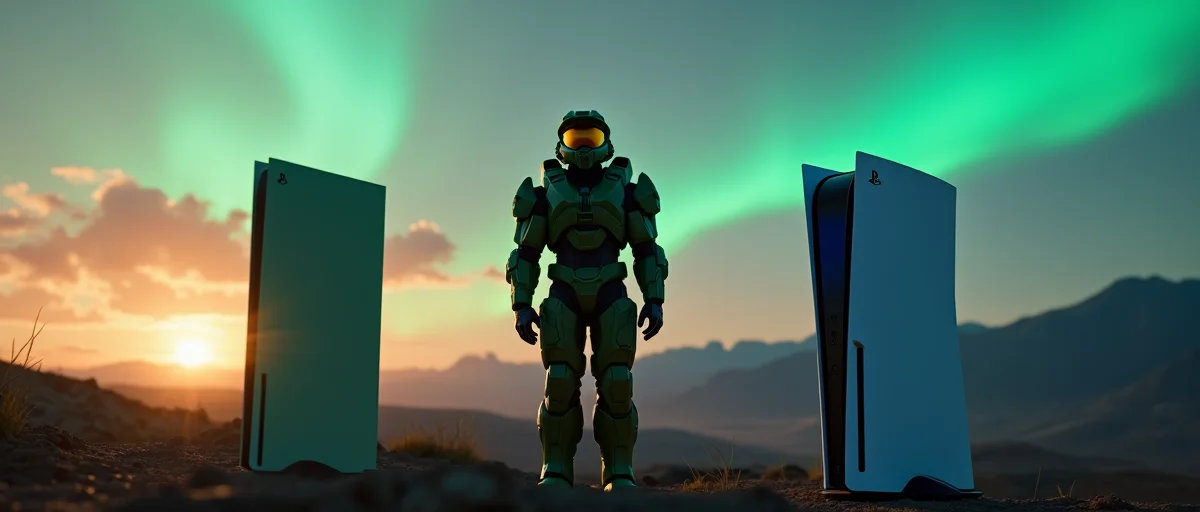
Halo: Campaign Evolved may rekindle love for the 2001 original, but 14 years later, Halo 4 remains the franchise's best entry. This analysis explores its story, visuals, multiplayer evolution, and why nostalgia shouldn't overshadow its successor.
As the gaming world revisits the original Xbox classic through Halo: Campaign Evolved, a remake of 2001’s Halo: Combat Evolved, conversations about the franchise’s legacy have grown louder. Players are once again exploring the Pillar of Autumn, stepping out onto the ring, and engaging with the game that defined a generation. But this rekindled affection masks a more interesting fact: Halo 4, released 14 years ago, is still the best Halo game ever made. Recent Polygon commentary makes this case squarely, framing Halo 4’s excellence as a counterpoint to the industry’s obsession with Bungie’s formative masterpiece.
Every new Halo release triggers a wave of retrospective analysis. With Halo: Campaign Evolved arriving in 2026, attention has shifted squarely to the original 2001 title. This remake is not just a technical exercise; it carries the explicit goal of preserving the moody tone, clever level design, and balanced combat that made Halo: Combat Evolved a landmark.
Yet the remake also forces players to ask why the series lost its way. Many point to the original’s enduring quality, while others argue that the franchise’s best years came later. A rising trend in current Halo discourse is the nostalgia-driven reassessment of every entry. That trend has helped many players revisit Halo 4 with fresh eyes, and in doing so they have discovered a game that was always more ambitious than it was given credit for.
Halo 4 is a game about two characters. Master Chief is no longer just a mute supersoldier; he is a man running out of time. Cortana, the AI who has been at his side for years, faces the same tragedy. The campaign spends hours building their relationship, then breaks it in a way that still resonates.
This emphasis on character-driven narrative was a deliberate departure from the Halo formula. The original was about exploration and discovery. Halo 4 is about sacrifice and loss. The result is a campaign with emotional stakes that Bungie rarely attempted.
Moreover, Halo 4’s story integrates its mechanics. Early missions on the Forerunner planet Requiem emphasize verticality and tactical options. Later missions push you through tight, alien environments as Cortana’s condition worsens. The narrative and gameplay feed each other, a rarity in shooters.
In 2012, Halo 4 was one of the most visually impressive games on the Xbox 360. 343 Industries created stunning Forerunner architecture and fluid character animations. On a platform many thought was reaching its limits, Halo 4 proved otherwise.
Today, that visual ambition remains an important part of its legacy. The lighting, particle effects, and facial animations stand up surprisingly well. More importantly, the art direction was fresh. Instead of repeating the green and gray color palette of earlier Halo entries, Halo 4 embraced blue-tinted Forerunner environments and glowing technology, giving the game a distinct identity.
The technical leap wasn’t only visual. Halo 4 ran steadily during intense combat and traded some large-scale battles for more detailed arenas. This focus on consistency supported its cinematic approach.
No discussion of Halo 4 can ignore the multiplayer changes. Sprint, loadouts, and armor abilities split the fanbase. Traditionalists felt these additions diluted the arena shooter formula. For some, Halo 4 was not proper Halo.
But 14 years later, many of those complaints have softened. Halo 4’s multiplayer introduced meaningful features like Spartan Ops, a narrative-driven co-op mode that served as a precursor to live-service content. Its gunplay was fast, responsive, and deep. Players who mastered its systems found competitive layers that rewarded positioning and map knowledge.
The debate may never end, but Halo 4’s multiplayer deserves recognition for pushing the series forward. It was a necessary experiment. If Halo Infinite later walked back some of those choices, it was partly because Halo 4 tested the limits.
Let us be clear: Halo: Combat Evolved is a masterpiece. Its moody atmosphere, from the silent corridors of the Pillar of Autumn to the rain-soaked Forerunner structures, is unforgettable. The level design of Two Betrayals and The Library challenged players in ways that still feel bold.
Yet nostalgia can be a distorting lens. Revisiting the 2001 original reveals awkward encounters where enemy AI behaves inconsistently. Some levels drag, relying on repetitive geometry and backtracking. The graphics, while charming, have dated significantly. These flaws do not erase its importance, but they should not be ignored when comparing games.
The Polygon argument favors Halo 4 because it uses the original as a foundation and then builds on it. Halo 4 takes the gunfeel, sandbox, and iconic gameplay hooks of Halo and wraps them in a richer narrative and more modern technical package. It is a refinement, not a rejection.
The success of Halo: Campaign Evolved suggests strong demand for old-school Halo experiences. Remakes allow new players to see why the series became legendary, but they can also inspire reassessment of later entries.
A nostalgia-driven wave has renewed critical interest in Halo 4. The debate over which Halo game is best is no longer settled by memory. Players are using modern standards to judge older titles, and Halo 4 holds up because it anticipated many modern design trends.
For the franchise, this could mean a more balanced appreciation of every era. The teams behind Halo can learn from Halo 4’s ambition and from the original’s restraint. The future of Halo may not lie in picking sides, but in synthesizing the best elements of both.
Halo 4 remains the best Halo game 14 years later. It combines an emotionally resonant story, polished gunplay, and a willingness to take risks. While Halo: Combat Evolved deserves credit for establishing the series, the original’s legacy should not obscure its successor’s achievements.
If you have been swept up in the Campaign Evolved nostalgia, take a moment to return to Halo 4. Compare campaign pacing, character arcs, and environmental storytelling. Judge the game not by what it changed, but by how well it executed those changes. The answer may surprise you. Halo 4 was once the black sheep. Now it looks like the crown jewel.
Halo 4 focuses on the personal relationship between Master Chief and Cortana, turning the campaign into a character-driven story about sacrifice and loss. Unlike the original Halo's emphasis on exploration and discovery, Halo 4 gives both characters emotional arcs that resonate long after the credits roll.
Halo 4 introduced more loadout customization, sprint as a standard ability, and a faster, more modernized combat flow compared to earlier entries. This shifted the multiplayer away from the equal-start arena style of past Halo games and toward a more flexible, personal loadout system.
Many fans prefer Halo: Combat Evolved for its groundbreaking level design, moody atmosphere, and balanced arena combat that defined the series. Nostalgia also plays a major role, since Halo CE was a landmark launch title for the original Xbox and shaped the first-person shooter genre.
Halo: Campaign Evolved is a remake of the original 2001 Halo: Combat Evolved, designed to preserve its tone, level design, and combat while updating the presentation. The remake has sparked fresh debate about the franchise's legacy, but many critics argue that Halo 4 remains the stronger, more ambitious entry.
Yes, Halo 4 still holds up well visually thanks to its detailed Forerunner environments, strong art direction, and solid performance on modern platforms. More importantly, its emotional story and refined gameplay make it worth playing for both longtime fans and newcomers exploring the franchise.