Oil prices plummeted 5% on reports Iran would halt attacks if the US pauses, slashing geopolitical risk premium. The event highlights algorithmic trading and AI in market reactions, offering key insights for technology professionals.
Oil markets experienced a sharp 5% decline on July 27, 2026, following reports that Iran signaled a potential halt to attacks if the United States maintains a pause in hostilities. The drop erased billions in market value within minutes, sending West Texas Intermediate (WTI) crude to session lows and Brent below critical support levels. For technology professionals, this event is far more than a commodity story—it is a powerful demonstration of how real-time news analysis, algorithmic trading, and big data infrastructure converge to drive rapid market movements. Understanding these dynamics is crucial as technology increasingly mediates commodity markets, from automated trading bots to AI-driven demand forecasting.
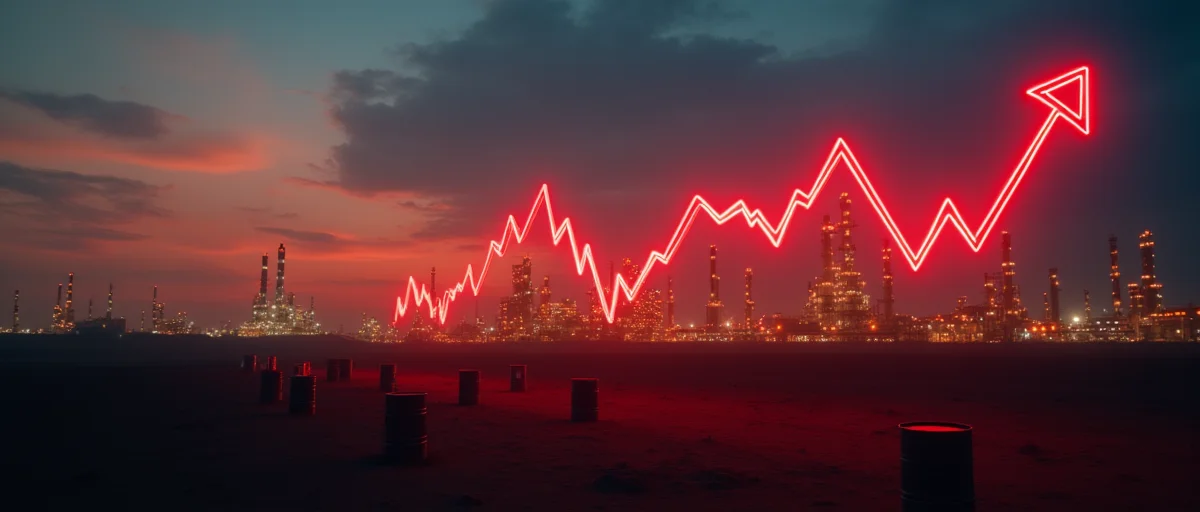
On July 27, 2026, reports emerged that Iran indicated it would halt attacks against adversaries if the U.S. maintains a pause in its military operations. The news triggered a 5% drop in both WTI and Brent crude benchmarks, marking one of the year’s most significant single-day declines. According to CNBC, this sharp move erased a substantial portion of the geopolitical risk premium that had been priced into oil over preceding weeks.
Helima Croft, Managing Director and Head of Commodities Strategy at RBC Capital Markets, commented: “This news significantly lowers the geopolitical risk premium that had been built into oil prices over recent weeks.” Her assessment underscores how quickly market sentiment can shift on political signals. The decline also fits a broader trend of increased market sensitivity to geopolitical headlines, a pattern technology professionals need to track as data-driven trading expands.
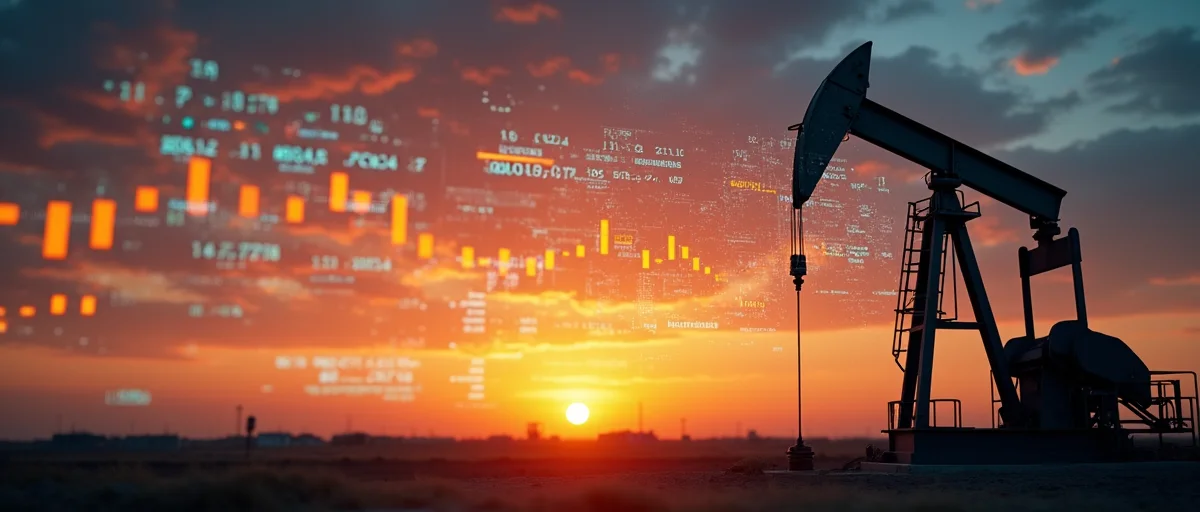
For technology professionals, the episode highlights the sensitivity of commodity markets to unstructured geopolitical data. The reaction was not solely driven by human traders; automated systems played a major role. High-frequency trading algorithms, designed to parse headline sentiment and execute trades in milliseconds, likely amplified the move. These systems rely on natural language processing (NLP) models that scan news sources, assess sentiment, and adjust positions accordingly.
This technological layer of market participation has made oil prices more reactive to news than ever before. The 5% decline was completed in less than 10 minutes, as reported by market observers. The same algorithms that cause rapid declines can also reverse positions when new information emerges, leading to heightened volatility. For firms building these systems, understanding the interplay between headline ambiguity (e.g., “reportedly signals”) and algorithmic weighting is an ongoing challenge.
Sustained lower oil prices have direct technology implications. Data centers, cloud operators, and large-scale computing facilities often have significant energy costs. A 5% drop in crude can translate into reduced operating expenses over time, easing margins for infrastructure-heavy tech companies. Conversely, oilfield technology firms—specializing in digital drilling, IoT sensors, and automation—may see budget pressure as exploration expenditures decline.
Energy tech companies developing renewables, battery storage, and efficiency solutions may face a shifting funding landscape. When oil is cheap, the immediate competitive pressure for alternative energy adoption softens, potentially affecting venture capital flows into clean technology. However, the long-term trend toward decarbonization remains intact. Technology professionals should watch oil prices as a macro indicator: sustained lows can slow but not halt investment in energy innovation. The Iran news could even spark interest from value-oriented tech investors by lowering entry valuations on renewable stocks.
For tech professionals involved in algorithmic trading, risk management systems must account for geopolitical flashpoints. The Iran event demonstrates that news-driven strategies need robust anomaly detection and circuit breakers. Many firms now employ multi-source verification to avoid false signals, while machine learning models are trained to interpret conditional language (“if U.S. pause holds”) more accurately. The intersection of geopolitics and market microstructure is a growing domain for data scientists and quantitative analysts.
The Iran report is a case study in how modern markets interpret ambiguous geopolitical signals. Worded as “reportedly signals,” the news carried uncertainty that algorithms had to weight. Future advances in artificial intelligence, particularly large language models (LLMs), will improve the nuance with which such signals are understood. These models can better grasp context, historical precedents, and the credibility of sources, potentially reducing false alarms.
The 5% oil slide triggered by Iran’s signal is a vivid reminder of the interplay between global events and market technology. Geopolitical risk premiums can vanish overnight, powered by algorithms that process news at machine speed. For technology professionals, the key takeaway is the importance of data: the quality, speed, and context of information now directly influence trillion-dollar markets.
Staying informed about such dynamics is no longer optional for those working in fintech, energy tech, or data infrastructure. As AI continues to permeate trading, the ability to interpret both the news and the algorithms’ reactions will define success. The Iran news event is just one example—be ready for the next one. Whether you are building the next generation of trading bots or simply managing energy costs for a data center, understanding the technological dimensions of oil market reactions is an essential skill in today’s interconnected economy.
These systems use natural language processing to parse news headlines and gauge sentiment in milliseconds. When a de-escalation signal is detected, they automatically execute trades that can amplify market moves, such as the 5% oil price drop.
The geopolitical risk premium is the extra cost built into oil prices due to potential supply disruptions from conflicts. When a ceasefire signal emerges, that premium rapidly deflates, causing sudden price declines.
It demonstrates how algorithmic trading, big data infrastructure, and AI-driven analysis converge to drive rapid market movements. Understanding these mechanisms is crucial for designing robust real-time systems and deploying NLP models in high-frequency environments.
NLP models are trained to classify sentiment and extract key events from unstructured text. They output signals that trigger automated trades, often executing faster than humans can process the same information.
AI will integrate diverse data sources—geopolitical reports, satellite imagery, supply chain indicators—to forecast price movements with greater accuracy. This will make markets even more reactive to real-time information streams.