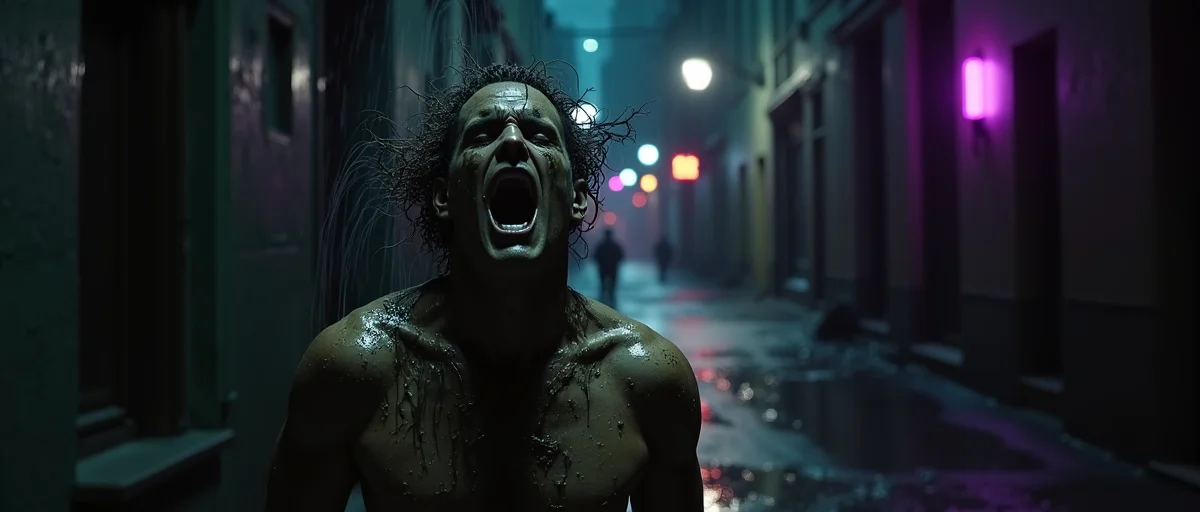
The debut trailer for DC's Clayface provides a visceral showcase of body horror, pushing the boundaries of superhero storytelling and VFX technology. We analyze the film's strategic significance, its origins in the 1992 'Feat of Clay' episode, and what it means for the DCU's 'Gods and Monsters' technical and narrative roadmap.
The debut trailer for DC Studios’ Clayface is far more than a standard franchise preview. It is a strategic and technical manifesto aimed directly at the intersection of horror cinema, massive IP management, and high-performance computing. For technology professionals and enthusiasts, it offers a compelling case study in visual effects (VFX) innovation, franchise architecture, and aggressive market segmentation. The visceral body horror on display represents a calculated departure from the standard superhero formula, pushing the boundaries of what digital rendering and practical effects can achieve in a synchronized pipeline. Originating from a pitch by horror auteur Mike Flanagan, the project transitioned seamlessly to director James Watkins and writer Hossein Amini, yet retained its core inspiration: the haunting 1992 Batman: The Animated Series episode “Feat of Clay.” This convergence of high-order horror and mainstream IP reveals a new DC Universe that is aggressively leveraging its animated legacy to build a gritty, technologically ambitious new cinematic identity.
The decision to root the film in the classic 1992 animated series is a textbook example of respecting legacy code while rebuilding the operating system. Mike Flanagan’s original pitch centered on Matt Hagen, the acting career man turned tragic monster, a character previously voiced with unnerving charm by Alan Tudyk in Creature Commandos. The “Feat of Clay” episode is a masterclass in emotional engineering. It treats its villain’s origin as a tragedy of ambition and exploitation by corporate interests (Roland Daggett). This structure provides the perfect framework for a modern horror film. The tragedy gives the body horror its profound weight. Without this emotional fidelity—this staying true to the spirit of the original code—the morphing is just spectacle. Flanagan understood this implicitly; it is character-driven horror, not just jump scares.
Flanagan’s departure due to scheduling conflicts could have easily derailed the project’s momentum. Instead, DC Studios treated it like a leadership pivot in a critical software sprint. James Watkins (Eden Lake, The Woman in Black) brought a different flavor of refined British tension, but the core architecture of the film remained intact. “Swapping showrunners is a classic risk in creator-driven development,” notes a theoretical analysis of the shift. “But the fact that the concept survived intact proves that the ‘product owner’ role—the unwavering vision of a grounded, tragic body horror film—was prioritized over any single implementation lead.” This is a mature project workflow that mirrors the best practices of successful hardware and software development cycles where the spec is king.
Clayface is arguably the most technically demanding character ever committed to a mainstream superhero film for an extended runtime. His constant state of morphing violates the rigid body assumptions that underpin most modern VFX and game engine pipelines. The trailer’s emphasis on grotesque, wet, tearing transformation signals a major financial and R&D investment in next-generation rendering technology.
For VFX engineers and computer scientists, Clayface presents a multi-layered computational problem that borders on a stress test for current hardware.
The team must solve several impossible problems simultaneously:
The transition from a rigid body to a fluid represents one of the hardest problems in computational geometry. Normally, characters are skinned to a skeleton (rigging) for animation. Clayface requires deconstructing this skeleton and rebuilding it every frame. This requires a technique known as ‘neural skinning’ or dynamic topology, where machine learning models predict how the clay should deform based on the actor’s performance, but then overrides that prediction to allow for tearing, stretching, and reforming. This creates a uniquely unsettling ‘uncanny’ motion that is deeply effective for the horror genre.
“Rendering a stable human face that can melt into a slurry of clay is a nightmare of simulation,” a VFX pipeline architect might testify. “It requires a hybrid approach combining finite element analysis for the flesh and particle physics for the fluid elements. The compute time for a single shot is staggering.” The computational power required for a full transformation sequence is immense. High-fidelity particle simulations require the infrastructure of a small server farm. This is a massive vote of confidence in HPC (High-Performance Computing) hardware being applied to creative storytelling.
Flanagan and Watkins are known for grounding their horror in tangible reality. Expect a strong return to animatronics, puppetry, and extensive prosthetics, overlaid with digital augmentation. This hybrid approach is a rising trend in an industry seeking to overcome the “CGI fatigue” that plagues over-rendered blockbusters. For systems engineers, this represents a synchronous workflow challenge: the data from practical sensors and camera tracking must perfectly map to the digital model in post-production. The seamless integration of the practical base with the digital overlay will be the defining technical achievement of the film.
The film is a core component of Chapter 1: Gods and Monsters. James Gunn’s rollout strategy for the DCU mirrors the structure of a highly efficient platform roadmap.
The decision to debut the trailer ahead of San Diego Comic-Con was an aggressive market signal. It announced that the DCU platform is mature enough to support specialized, high-risk content. This is a direct application of community-led growth strategies, similar to a major tech company launching a niche developer tool at a major conference to signal ecosystem depth.
Importantly, the ‘Gods and Monsters’ arc functions as a service-oriented architecture (SOA). Each film or series is a microservice with its own genre, tone, and technical requirements. They share an ‘API’ of characters and lore (Creature Commandos seeding Clayface for this film) but operate independently. This reduces the risk of a single failure taking down the entire system—a lesson learned hard from the monolithic DCEU.
Furthermore, the involvement of Hossein Amini for rewrites (Drive, The Two Faces of January) suggests a focus on taut, noir-inflected crime tragedy. This ensures the groundbreaking VFX serves a sophisticated narrative rather than just spectacle. The script is the kernel; the VFX are the peripherals.
The rise of body horror in superhero cinema is more than an artistic choice; it is a direct response to audience desensitization and a data-driven market segmentation strategy. The visual cortex of the modern viewer requires increasingly complex stimuli to register threat. The visceral, tactile nature of body horror triggers a neurological response that digital explosions can no longer reliably produce.
“The success of Clayface could validate a new development model for the entire industry,” a franchise strategist might argue. “Investing heavily in genre-specific talent and specialized VFX to capture a dedicated audience, rather than trying to please everyone.” This is the future of content development: breaking the monolithic blockbuster into specific taste profiles with dedicated investment. The data clearly supports this. Horror offers a massive ROI relative to its budget, with a deeply engaged, loyal audience that turns out for premium theatrical experiences. By wrapping a horror film in a superhero cape, DC executes a perfect financial and artistic hedge: accessing the guaranteed distribution of a major IP while servicing the deeply loyal horror audience. It is the logical conclusion of data-driven content strategy.
From a craft standpoint, this signals a shift in hiring expertise. Studios are no longer just looking for action choreographers; they actively seek practical effects specialists from the legacy horror tradition and HPC specialists from the tech industry. The overlap between these skillsets—the “VFX-Horror-Tech Venn diagram”—is the new frontier of superhero cinema.
The Clayface trailer is a victory lap for bold creative concept and a gauntlet thrown for technical execution. It proves the DCU is willing to take the creative and infrastructural risks necessary to differentiate itself. By leaning deeply into body horror, it challenges VFX teams to achieve an unprecedented balance of artistry and simulation science, transforming a classic villain into a tragic, modern figure.
Actionable Takeaways for Professionals:
The future of content is not just blockbuster or indie—it is the convergence of both, fully digitized, and actively testing the limits of physics simulation and narrative design.
The 'Feat of Clay' is a classic 1992 episode of Batman: The Animated Series that served as the emotional blueprint for the film. It tells the tragic origin of Matt Hagen, a failed actor who becomes the monstrous Clayface after corporate exploitation, grounding the body horror in a deeply human story.
The trailer uses visceral, transformative body horror not just as spectacle but as a narrative device tied to the character's tragedy. This marks a deliberate shift from standard superhero action, placing emotional and physical vulnerability at the core of the story.
Horror auteur Mike Flanagan pitched the project because he saw Clayface as a perfect vehicle for character-driven horror rooted in the animated series. He later stepped down due to scheduling conflicts, and DC Studios brought in director James Watkins and writer Hossein Amini to carry the vision forward.
The trailer signals that the DCU is aggressively leveraging its animated legacy and blending horror genres into its mainstream IP. This approach combines gritty emotional storytelling with ambitious VFX innovation, aiming to differentiate the franchise through bolder, more genre-diverse films.
The trailer showcases a synchronized pipeline mixing advanced digital rendering with practical effects to create seamless, morphing body horror. This pushes the boundaries of what is technically possible in superhero films, prioritizing realism and emotional impact over flashy spectacle.