A professional analysis of how Strange New Worlds Season 4 sacrifices character arcs for high-concept gimmicks, drawing direct parallels to software development pitfalls like feature creep and technical debt.
In the world of software engineering, a “gimmick” is a feature that looks impressive in a demo but fails to provide lasting value. It is the code shipped without test coverage, the unvetted API integration, the new dashboard built instead of fixing the broken search function. Star Trek: Strange New Worlds Season 4 has become the narrative equivalent of this broken search function.
The season shines with high-concept gimmicks—everyone turning into Vulcans, a holodeck murder mystery, omnipotent beings playing games with our heroes. Yet, beneath the glossy visual effects lies a hollow core. The character development that made the first two seasons so promising has stalled. Essential maintenance on the emotional engine has been deferred in favor of building flashy new modules designed solely to generate headlines. For an audience of technology professionals, this pattern is immediately recognizable and deeply frustrating: it is narrative tech debt.
In software, a gimmick is a feature with high “wow” factor but low utility. It breaks the codebase’s consistency. Similarly, Season 4 of Strange New Worlds feels like a series of high-budget proof-of-concepts rather than a cohesive story. The writers seem to ask, “What is the wildest genre we can graft onto Star Trek this week?” rather than “What is the best story for these characters?”
This approach is unsustainable. When every episode is a gimmick, no episode feels grounded. Emotional stakes require a foundation of reality, even in science fiction. Without it, the audience becomes desensitized to the spectacle.
A holodeck episode is a classic Trek trope, but the new series’ execution often feels hollow. It isn’t used to challenge the characters’ core beliefs, but simply to provide a visually distinct set piece. This is the equivalent of adding a new microservice that doesn’t properly communicate with the rest of the stack. It works in isolation but fails to contribute to the whole narrative.
The research data explicitly names the problem: “sacrificing serialized growth for spectacle.” This is classic feature creep. The product backlog of the season is full of high-velocity tickets for “cool things” while the critical bugs in the character logic remain unpatched.
The stagnation is particularly frustrating given the talent involved. Anson Mount, Ethan Peck, Rebecca Romijn, Christina Chong, Celia Rose Gooding, Melissa Navia, Babs Olusanmokun—this is an exceptionally strong cast. They are capable of profound work. The materials are simply not there. Watching them act their hearts out in a disposable holodeck adventure feels like seeing a world-class engineer forced to fix printers. Their skills are being wasted on low-impact tasks that do not leverage their capabilities.
After three seasons of wrestling with his fate, Season 4 largely sidelines this internal conflict. The show knows where he ends up, so it feels compelled to keep him on a narrative treadmill. He makes grand speeches, but rarely makes difficult choices that challenge his core ethos. This is the “Kubernetes Cluster” problem. The orchestration is there, but the individual pods are not being assigned meaningful new tasks.
The character is trapped between the legacy of Leonard Nimoy, Ethan Peck’s excellent interpretation, and the demands of a modern streaming schedule. Season 4 continues the trend of using Spock as a comedic foil or a data-processing unit rather than a fully realized person. His emotional journey is reduced to a switch that toggles between “Vulcan” and “Human” based on the plot’s convenience.
La’an has a powerful arc tied to her family legacy and the Eugenics Wars, yet the show gives it shallow lip service to make room for crossover events. Uhura is intelligent and capable, but she rarely gets an episode that belongs solely to her emotional journey. Both characters are often deployed as “fixers” for the plot’s technical problems rather than drivers of the narrative.
The “omnipotent aliens trapping foes in a terrarium” episode is a prime example of gimmick over substance. As a standalone idea, it is fun. As a character episode, it fails. The conflict is external and quickly resolved. There is no lasting consequence, no scar. It is pure, unoptimized spectacle. In tech terms, it is a demo that never gets deployed to production. It has no effect on the state of the system.
The ‘gimmick episode’ is not inherently a bad thing. Deep Space Nine’s ‘The Visitor’ or ‘Far Beyond the Stars’ are technically gimmicks. The difference is that those episodes used the premise to explore character trauma and ambition. In Strange New Worlds, the gimmick is the goal. The Terrarium episode is just an adventure. There is no deeper theme being explored.
This reflects a broader trend in streaming where “content” is valued over “story.” Algorithms favor the bingeable, the flashy, the instantly gratifying. A slow-burn character piece does not perform as well in the metrics for the first 24 hours. This is the tragedy of the modern streaming landscape: the optimization for the algorithm often degrades the art form. Strange New Worlds Season 4 is a victim of its own success in this algorithm game.
The most significant structural flaw of the current season is the accelerating rush to integrate James T. Kirk. Paul Wesley is a fine actor, but the character is a massive dependency injection into a system that worked perfectly well without him.
The show was supposed to be a parallel track to The Original Series, exploring the Strange New Worlds of Pike’s Enterprise. Instead, it has become a prequel machine, spending more time setting up a 1966 series than building its own 2020s legacy. When a writer knows a character must survive to appear in another show, the current narrative risks becoming a hollow process of hitting checkpoints.
There is a palpable anxiety in the writing room regarding canon. Every reference to a future event feels less like an Easter egg and more like a contractual obligation. The connection to the Gorn, the glimpses of the Romulan War, the constant teasing of Kirk—it all creates an Uncanny Valley effect. The characters exist in a present that is constantly being interrupted by flash-forwards to a future we already know. It prevents the narrative from breathing and stunts the growth of the ensemble cast.
If Strange New Worlds were a software project, what would the Q4 roadmap look like?
Strange New Worlds Season 4 is a cautionary tale for anyone who builds complex systems. Whether you are writing code or a teleplay, the same rules apply: you must prioritize the stability of your core architecture over the allure of a quick, flashy hack.
The gimmicks of Season 4 are a performance patch that fails to address the deep-seated bugs in the show’s character development. If the franchise wants to survive the churn of the streaming wars, it must perform a hard reboot of its narrative priorities. The fans are the primary users. We are begging for a stable, reliable, emotionally resonant product. Give us the hard commit of character development over the vaporware of gimmickry.


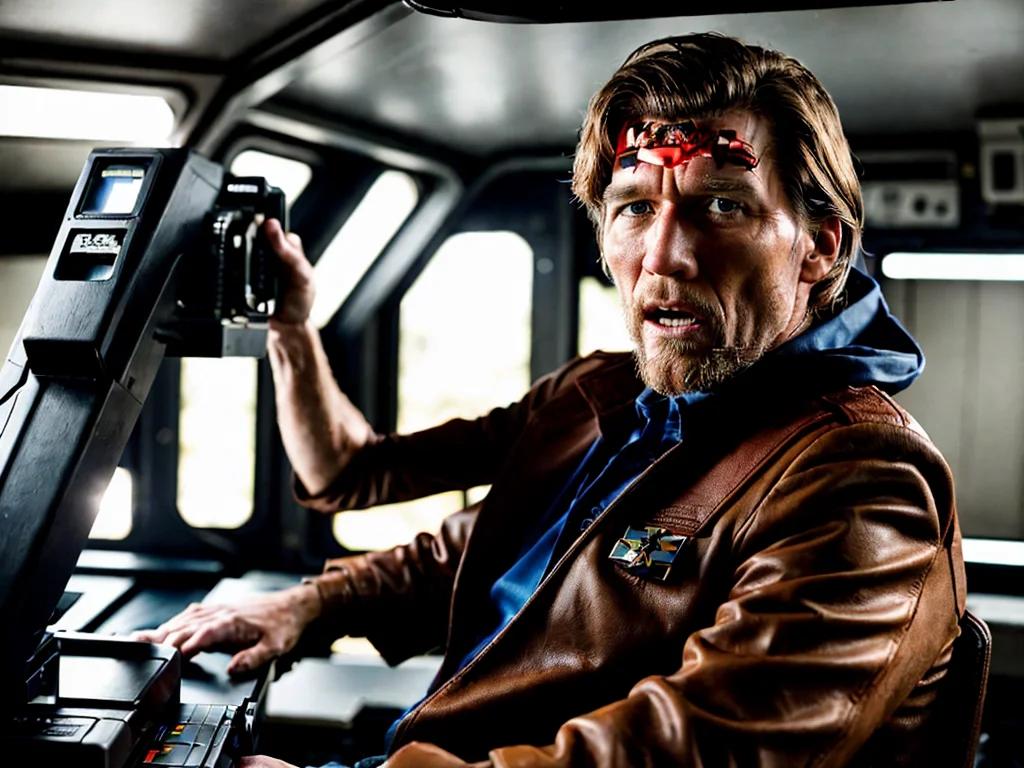
Narrative tech debt is a metaphor for when a TV show prioritizes flashy, high-concept gimmicks over foundational character development, mirroring software's technical debt where quick features are added without proper maintenance. In Strange New Worlds Season 4, this results in hollow episodes that look great but fail to deepen character arcs, similar to shipping code without tests or documentation. The long-term cost is viewer disengagement, just as tech debt leads to system instability.
Showrunners can avoid feature creep by maintaining a clear 'product vision' for each season, just as product managers prioritize a roadmap over ad-hoc features. Regularly assessing whether each episode serves character growth, rather than just spectacle, helps ensure narrative integrity. Additionally, balancing standalone episodes with serialized arcs can prevent the burnout of constant high-concept plots.
The article draws parallels because both fields suffer when short-term gains are prioritized over sustainable growth. In software, features added without care create technical debt; in television, gimmick episodes without character investment create 'narrative debt.' The author uses this analogy to make the critique accessible to a tech-savvy audience, highlighting how both disciplines require disciplined maintenance of the core experience.
The article mentions three specific gimmicks: everyone turning into Vulcans, a holodeck murder mystery, and omnipotent beings playing games with the crew. These concepts follow a pattern of grafting different genres onto Star Trek without anchoring them to character growth, resulting in episodes that are visually exciting but emotionally hollow. The holodeck episode is criticized for not challenging core beliefs, much like a microservice that doesn't integrate with the rest of the system.
Developers can recognize the warning signs of feature creep and technical debt in their own projects, such as the temptation to add flashy features without addressing underlying issues. The article encourages a focus on 'essential maintenance' of core systems, just as good storytelling requires consistent character development. It's a reminder that sustainable work habits, including testing and documentation, lead to long-term success rather than short-term praise.