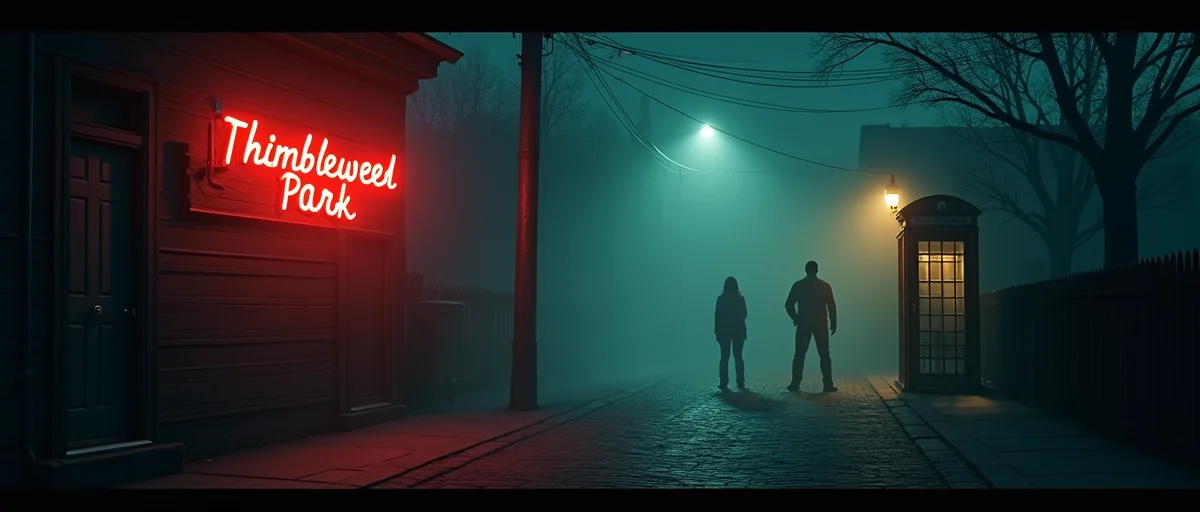
Ron Gilbert's Thimbleweed Park 2 is in development for 2028. “Not really a sequel, not really a prequel.” Fans expect a genre-defying adventure.
It’s been a quiet few years for fans of classic point-and-click adventures. That changed recently when Ron Gilbert confirmed Thimbleweed Park 2 is officially in development. The project is planned for release in 2028, and it arrives with an intriguing caveat: “not really a sequel, not really a prequel.” According to Rock Paper Shotgun’s 2025 report, Gilbert is once again toying with expectations. For anyone who values narrative innovation and retro game design, this is one of the most exciting announcements in the genre’s recent history. The first game earned a dedicated following. The sequel-that-isn’t-quite-a-sequel now has a chance to expand that legacy.
Ron Gilbert has never followed a straight line. He helped define the graphic adventure genre at Lucasfilm Games, then spent decades deconstructing it. With Thimbleweed Park 2, he is doing it again. The phrase “not really a sequel, not really a prequel” appears in the 2025 Rock Paper Shotgun report. It could mean many things:
What feels certain is that Gilbert has no interest in a standard follow-up. That approach creates a powerful narrative hook. It also gives the development team more freedom. Without the constraints of a continuing storyline, designers can experiment with setting, character, and structure.
Development on the Thimbleweed Park follow-up was revealed as part of a broader update on Gilbert’s projects. The most immediate surprise: the previously discussed RPG, which he described as “Classic Zelda meets Diablo meets Thimbleweed Park,” has been canceled. In its place, the team is now committing to Thimbleweed Park 2.
The facts on record are straightforward:
Exactly which platforms will receive Thimbleweed Park 2 has not been confirmed. The original launched on PC, PS4, and Nintendo Switch, so a multi-platform release would not be surprising. But for now, the only timeline is 2028 and the only certainty is that the project exists.
The original Thimbleweed Park, released in 2017, drew heavily from classic adventure games of the late 1980s. It used pixel art, inventory puzzles, and multiple playable characters. That retro presentation was not an accident. It was a deliberate attempt to recapture the emotional feel of games like Maniac Mansion, while still adding modern conveniences such as a built-in hint system and multiple endings.
Technically, the original was a small-scale project by modern standards. Yet it succeeded because of its writing and atmosphere. That lesson matters for developers: a clearly defined art direction and strong puzzle logic can carry an experience more than raw production budget. The game was available across PC, PS4, and Nintendo Switch, giving it broad reach within the adventure genre.
The original’s success also showed that nostalgia is not a barrier to new audiences. Players who never touched a 1987 adventure game could still appreciate the charm of a well-designed pixel world. That is a useful reminder for teams building niche, retro-focused products in 2026 and beyond.
The broader industry is witnessing a revival of classic adventure mechanics. Over the last five years, the trend has been especially noticeable. Crowdfunding platforms have given veteran designers a direct route to their audience. Digital storefronts have eliminated much of the risk in publishing niche titles. Modern engines allow small teams to produce polished 2D worlds without needing massive budgets.
Retro point-and-click games are a natural fit for these conditions. They are smaller, story-driven, and built around hand-authored puzzles. They also stand out in a market crowded with service-based, open-world products.
Ron Gilbert is part of a larger pattern of industry veterans returning to classic genres. Over the past decade, established designers have used indie-sized teams to revisit the styles that made them famous. That pattern is not just nostalgia. It gives veterans control over projects that might be too niche or too unconventional for a large publisher.
Beyond the quote, few concrete details exist. Still, several assumptions are reasonable. Fans should expect the signature blend of comedy, mystery, and meta-humor that defined the original. The game may offer:
For technology professionals, Thimbleweed Park 2 also illustrates an important trend: sustainable development. An adventure game can be designed, implemented, and polished in a manageable timeframe, especially when compared with large multiplayer titles. That does not mean it is easy. Dialogue-heavy games require robust scripting tools, versioned narrative assets, and careful playtesting. But the scope is achievable.
Developers can also watch for production discipline. A targeted release year like 2028 suggests a clear roadmap. Retro aesthetics can stretch art budgets, while a narrow gameplay focus keeps scope under control. Those are practical lessons for any software team.
If Thimbleweed Park 2 hits its 2028 target, it will arrive 11 years after the original. That long gap is rare in today’s content-driven market. Yet it may work in the game’s favor. Absence creates curiosity. A cryptic description like “not really a sequel, not really a prequel” will keep players guessing until the next reveal.
The project could also push the adventure genre forward. A successful sequel-prequel hybrid may encourage other developers to take similar narrative risks. It could also bring more attention to independent adventure studios. For fans, the wait is part of the experience.
Thimbleweed Park 2 is not a normal sequel. It is not a normal prequel. It may not even be a normal game. But it is definitely in development, and the target release date is 2028. Ron Gilbert’s playful description leaves the door open for the unexpected.
The original set a high bar. Now, after more than a decade, point-and-click adventures have a chance to take the spotlight once more. For developers, the lesson is clear: focused design, originality, and creative independence can still produce some of the most compelling software in the industry. Keep 2028 on your radar.
Thimbleweed Park 2 is an upcoming adventure game from Ron Gilbert, set to release in 2028. It is a follow-up to the 2017 point-and-click game Thimbleweed Park, but Gilbert has described it as 'not really a sequel, not really a prequel.' The project is currently in development.
The phrase suggests that Thimbleweed Park 2 will not follow a conventional sequel or prequel structure. It could revisit characters in a different era, focus on a new cast, or play with chronology in a surprising way. Ron Gilbert is known for subverting genre and franchise expectations, so fans should expect something unconventional.
Ron Gilbert has announced a target release year of 2028. No specific release date or launch window has been confirmed yet. Development is currently underway.
Platforms have not been officially confirmed for Thimbleweed Park 2. The original Thimbleweed Park launched on PC, PS4, and Nintendo Switch, so a multi-platform release is possible. Fans will need to wait for an official announcement.
Yes. Ron Gilbert had previously been working on an RPG described as 'Classic Zelda meets Diablo meets Thimbleweed Park,' but that project has been canceled. The team is now focused on Thimbleweed Park 2 instead.