Sequoia's Shaun Maguire leads $1B round for nuclear startup Valar Atomics, valued at $6B. Nvidia deal signals nuclear role in AI infrastructure.
In a seismic development for the advanced nuclear industry, Sequoia Capital’s Shaun Maguire has led a $1 billion funding round for nuclear startup Valar Atomics. The deal, which values the company at $6 billion, signals a new era in which venture capital sees nuclear power as essential infrastructure for artificial intelligence.
This investment underscores a major shift: technology giants are no longer just customers of electricity; they are securing their own power supply. The round also follows a June 2026 development agreement between Valar Atomics and Nvidia, linking next-generation nuclear technology to the massive energy demands of AI data centers.
The new investment cements Valar Atomics as one of the most valuable private nuclear companies in the world. The $1 billion injection, led by Sequoia’s Shaun Maguire, is among the largest ever raised by a nuclear startup.
According to TechCrunch, the round places Valar Atomics at a $6 billion valuation. That figure reflects investor confidence in the company’s technology and business model, as well as the broader market opportunity for clean, always-on power.
Notably, this is not just a climate play. It is a strategic move to address a looming crisis: the power-hungry data centers that underpin modern artificial intelligence. As AI models scale, their electricity consumption has skyrocketed, and nuclear power offers a reliable, carbon-free solution.
To understand why Sequoia and Nvidia are so interested in Valar Atomics, look at the electricity demands of AI hardware. Modern GPUs, like those designed by Nvidia, can draw hundreds of watts under load. A single AI server rack can consume as much power as a typical American home.
Now multiply that by thousands of racks in a hyperscale data center. The result is energy consumption measured in tens of megawatts to over a gigawatt. These facilities need power that is always on, weather-independent, and carbon-free to meet corporate sustainability goals.
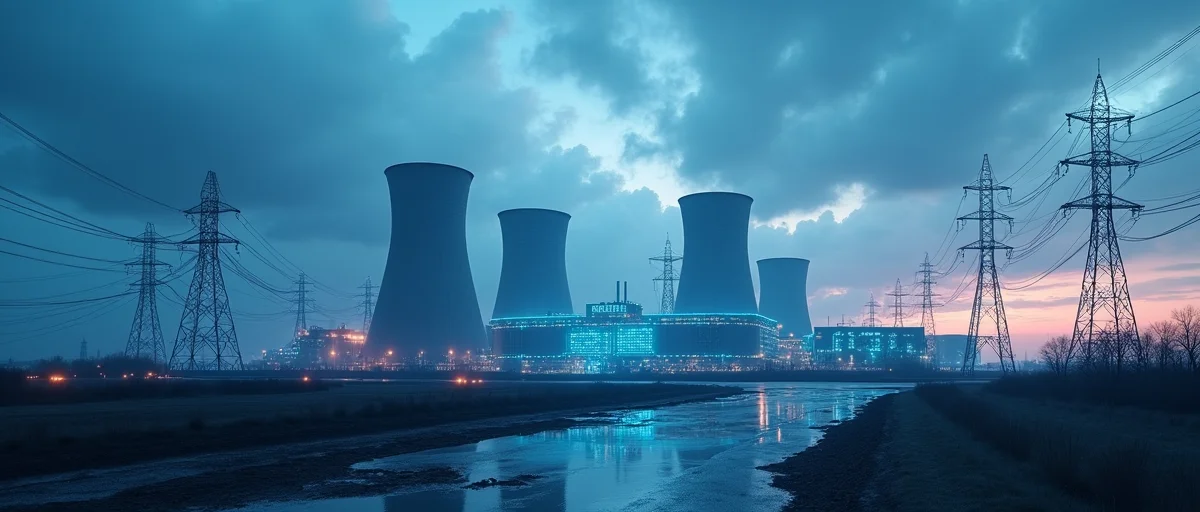
Nuclear reactors are uniquely suited to this task. They produce massive amounts of relentlessly available electricity with near-zero greenhouse gas emissions. That combination is why data center operators and cloud providers are exploring nuclear partnerships.
The June 2026 development agreement between Valar Atomics and Nvidia formalizes this connection. While the exact scope of the deal has not been fully disclosed, the agreement focuses on developing nuclear power infrastructure to support Nvidia’s expanding AI footprint.
This is not Nvidia’s first foray into clean energy. The company has been exploring various ways to secure power for its operations and for its customers. But the Valar Atomics deal signals a deeper strategic intent: to help incubate the energy systems of the future.
For a company like Nvidia, which designs the brains of the AI revolution, power is a critical constraint. Without enough clean electricity, AI growth could stall. By partnering with Valar Atomics early, Nvidia aims to ensure that its GPUs have the energy needed to run.
Nuclear energy is not a fringe technology. In the United States, it is the largest source of clean power. According to the U.S. Energy Information Administration, nuclear power generated 18.6% of U.S. electricity in 2023.
That share has remained relatively stable over the past two decades. However, many reactors are aging, and the industry has struggled to build new large plants due to high costs and long timelines.
Advanced nuclear startups aim to change this. They are developing smaller, modular reactors that can be manufactured in factories and assembled on-site. These designs promise lower costs, shorter construction times, and enhanced safety features.
Valar Atomics is part of this wave. Its technology, while not fully disclosed, is presumably focused on making nuclear power more accessible and scalable for distributed and industrial applications—exactly what data centers need.
The fact that Sequoia Capital is leading this round is highly significant. Sequoia has a long history of backing transformative technology companies, from Apple and Google to electronic design automation firms. Its portfolio focuses on large market opportunities driven by secular trends.
Sequoia’s Shaun Maguire, who led the round, is known for investing in high-growth technology businesses. His involvement indicates that Sequoia views Valar Atomics as a core infrastructure company in the AI era.
Investment decisions like this reflect a growing realization among venture capitalists: the AI revolution will not succeed without a corresponding energy revolution. Funds that can capture the energy side of the AI opportunity stand to benefit enormously.
Venture investment in advanced nuclear has been rising over the past 18 months. Several factors are converging:
In 2024 and 2025, we saw major deals involving other nuclear startups. For example, Microsoft struck a deal with Constellation Energy to restart the Three Mile Island plant to power AI data centers. Amazon invested in X-energy, an advanced nuclear developer. Google partnered with Kairos Power to bring small modular reactors online.
These developments demonstrate that nuclear power is no longer viewed as a niche clean-tech category. It is being integrated into the core infrastructure strategies of the world’s most valuable companies.
Big Tech partnerships with nuclear developers are rising, and the trend shows no sign of slowing down. The Valar Atomics deal, with its $1 billion size and $6 billion valuation, raises the bar for what is possible.
From a financial perspective, nuclear startups offer an attractive opportunity for investors who can look past long development timelines. The revenues can be substantial, especially if the startup builds a pipeline of power plants backed by long-term contracts.
Data center operators need certainty about power availability. They are willing to sign long-term power purchase agreements (PPAs) with plants that can guarantee 24/7 electricity. Nuclear developers can provide that certainty, making them ideal partners.
In return, the developers get a stable revenue stream to finance construction. This model reduces the risk of a nuclear project, making it more appealing to both investors and lenders.
Valar Atomics now has the capital to execute on this strategy. With $1 billion in hand, it can invest in technology development, hire talent, and advance its regulatory path. The involvement of Nvidia could also open doors to other technology customers.
Despite the excitement, nuclear startups face significant hurdles.
The regulatory environment is one of the most difficult obstacles. In the U.S., the Nuclear Regulatory Commission has only certified a few advanced reactor designs. Getting a new design through the process can take decades and cost hundreds of millions of dollars.
Public acceptance is also a challenge. While support for nuclear energy is growing, a segment of the population remains skeptical. Companies must engage with communities and public officials to build trust.
There is also the matter of nuclear waste. Although advanced reactors can use fuel more efficiently, the waste issue has not been fully resolved. Startups will need to address these concerns head-on.
Finally, the availability of skilled labor is a constraint. Nuclear engineering talent is limited, and the industry competes with other high-tech sectors for skilled workers.
Solar and wind are growing rapidly, but their intermittency creates challenges for data centers. Batteries can store energy for short durations, but grid-scale storage remains expensive and limited.
Nuclear power offers a distinct advantage: capacity factor. While solar panels may generate at 20-30% of their rated capacity on average, nuclear reactors can achieve capacity factors above 90%. That means a nuclear power plant delivers nearly its full-rated output around the clock.
This reliability makes nuclear particularly valuable for AI workloads, where a server outage is not acceptable. For tech companies, the cost of downtime is immense, so they are willing to pay a premium for firm power. That is why nuclear, despite its upfront costs, is increasingly attractive.
For those working in technology, the Valar Atomics round offers several important insights:
The intersection of climate tech and AI is fertile ground. Companies that can supply reliable, clean power to the computing demands of the future will be legendary investments.
Sequoia’s $1 billion investment in Valar Atomics is a landmark event in both the nuclear and technology sectors. Led by Shaun Maguire, the round gives Valar Atomics a $6 billion valuation and positions it as a leader in advanced nuclear development.
The timing is no accident. Artificial intelligence is hungry for electricity, and nuclear power is positioned to fill the gap. With Nvidia as a partner, Valar Atomics is at the center of this convergence.
As the world builds out AI infrastructure, the need for new energy sources will only grow. The Valar Atomics round shows that the financial community is waking up to this reality. For the technology industry, the message is clear: the future of AI depends on the power of the atom.
Valar Atomics is a nuclear startup focused on developing advanced nuclear technology to provide reliable, carbon-free electricity. It recently raised a $1 billion funding round led by Sequoia Capital, giving the company a $6 billion valuation. The company is positioned as a key supplier of clean, always-on power for AI data centers.
Nvidia designs high-performance GPUs that power AI data centers, which consume enormous amounts of electricity. A June 2026 development agreement between Nvidia and Valar Atomics links next-generation nuclear power to the energy needs of AI infrastructure. This deal reflects a growing trend where tech companies secure dedicated power sources rather than simply buying from the grid.
AI data centers require massive, continuous electricity to run thousands of power-hungry GPUs. Nuclear reactors produce reliable, weather-independent power with near-zero carbon emissions, making them ideal for these facilities. Unlike solar or wind, nuclear can deliver the consistent baseload energy that hyperscale data centers need around the clock.
Advanced nuclear technology refers to next-generation reactor designs that aim to be safer, more efficient, and more flexible than traditional large-scale reactors. These designs can include smaller modular reactors, novel cooling systems, or fuels that improve safety and reduce waste. Startups like Valar Atomics are working to bring these technologies to market faster to meet growing clean-energy demand.
This round signals strong venture capital confidence in nuclear power as essential infrastructure for AI, not just a climate solution. It is among the largest investments ever made in a nuclear startup and could encourage more private funding into the sector. The deal also highlights a broader shift toward technology companies owning or controlling their own power supply.