Kiro Gateway is an open-source Python proxy that routes Kiro IDE/CLI API requests to Anthropic's Claude models. This article explores its use case, setup, security considerations, and the broader trend of self-hosted AI model gateways.
More developers are embracing AI coding assistants, but choosing the right model can feel just as important as choosing the right IDE. Kiro IDE offers a sleek, AWS-integrated development environment, yet its default AI backend leans on Amazon Q Developer models. For developers who prefer Anthropic’s Claude, that gap creates friction. Kiro Gateway is an open-source Python proxy that solves this problem by redirecting API requests from Kiro IDE/CLI to Claude models. It lets you keep Kiro’s clean interface while using the AI assistant you actually trust. Here’s what you need to know about this rising tool.
Kiro IDE has built a following among developers who want a polished, cloud-connected editor without leaving the AWS ecosystem. Its AI features are designed to work seamlessly with Amazon Q Developer and CodeWhisperer, which are powerful for certain AWS-centric tasks. But many developers prefer Claude for its nuanced code reasoning, strong instruction-following, and large context window. They want to use a familiar tool without being forced into a specific model family.
The result is a common friction point: you like the IDE, but you don’t love the AI backend. You could switch editors entirely, but that often means rebuilding shortcuts, configurations, and muscle memory. Or you can find a way to bridge the two worlds—which is exactly what Kiro Gateway does.
Rather than waiting for Kiro to officially support every model provider, the developer community stepped in. The jwadow/kiro-gateway project appeared as a straightforward, community-driven solution. It reflects a growing mindset: your AI assistant should not be a black box you have to accept as-is.
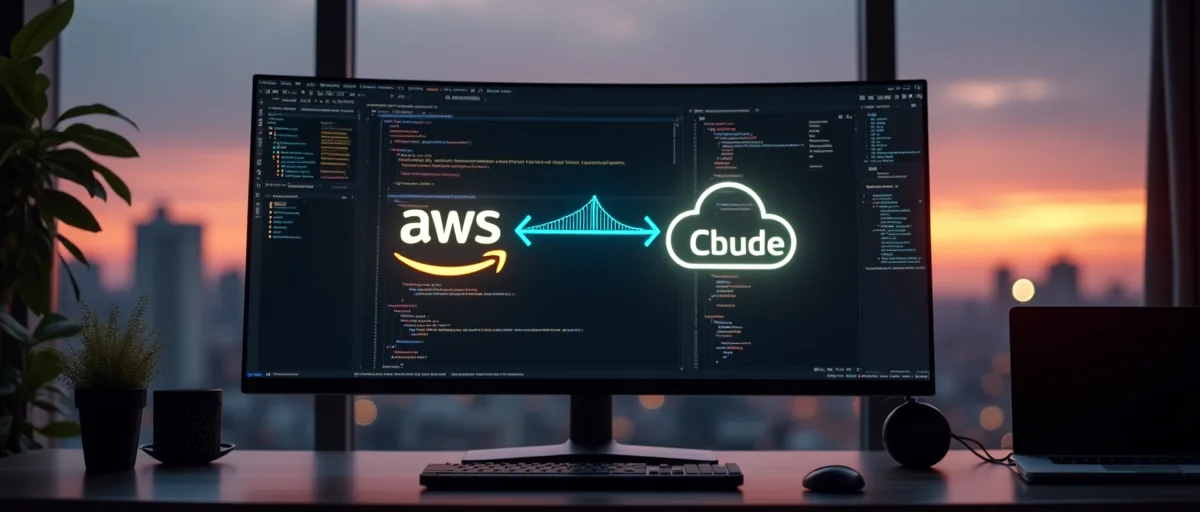
Kiro Gateway is a lightweight, open-source proxy designed specifically for Kiro IDE and CLI users. Instead of sending your AI requests to the default AWS service, it intercepts those requests and routes them to Anthropic’s Claude models. The proxy acts as a translation layer, allowing Kiro to communicate with Claude’s API without modifying Kiro itself.
The project is hosted on GitHub, and it has quickly attracted attention from developers who want more control over their AI backend. Because it is open source, you can inspect the code, contribute improvements, or adapt it to your own needs. This transparency matters in a world where AI tools increasingly handle sensitive code and design decisions.
Behind the scenes, Kiro Gateway runs as a local or remote Python service. It listens for API requests from Kiro, normalizes them as needed, and forwards them to Claude. This proxy-based approach offers several benefits:
Setting this up is a good example of how a small, focused open-source tool can solve a significant workflow problem.
Kiro Gateway is not an isolated experiment. It fits into a larger movement toward self-hosted AI model gateways. Since early 2025, the number of such projects has been rising noticeably. Developers are building small, modular services that sit between their tools and their preferred AI models.
This trend is driven by a simple desire: flexibility. Instead of being locked into a single vendor’s model, developers want to swap models as easily as they change API keys. Gateways also centralize prompts, logging, and cost controls, making them a practical addition to any AI-focused workflow. They also act as an insurance policy—if one model becomes expensive or gets deprecated, you can switch without rewriting your entire toolchain.
The appetite for these tools is clear. According to Stack Overflow’s 2024 Developer Survey, 76% of developers are using or planning to use AI tools in their work. That massive adoption has created a second wave of demand for infrastructure that lets developers tailor those tools to their own preferences. Having the right model is no longer a nice-to-have; it is a productivity decision.
For many developers, self-hosted gateways are becoming as important as version control or continuous integration. They offer a clean separation between the editor, the model, and the requests that flow between them. That architecture keeps your options open and your data under your control.
Getting started with Kiro Gateway is straightforward if you are comfortable with Python and API configuration. The setup process usually involves a few basic steps, and the project’s README provides up-to-date instructions. Here is a typical walkthrough:
git clone https://github.com/jwadow/kiro-gateway.gitpip install -r requirements.txt to set up Python packages.python gateway.py or a similar command.http://localhost:your-port.Many developers find that the proxy is also a great learning tool. By reading the code, you can understand how API request transformation works and how to build your own model-agnostic layer.
Before routing all your development traffic through a third-party proxy—even an open-source one—you need to think carefully about security and compliance.
Your Anthropic API key is the gateway to your usage and your quota. When you run the gateway, that key is stored in the environment or config file. Ensure the server or machine running the gateway is trusted, and consider using environment variables rather than hardcoding keys in files. Never share the proxy endpoint with untrusted users, as they could consume your quota.
Code snippets, prompts, and responses may transit through the proxy. If you run it locally, this traffic stays on your machine. If you run it on a remote server, ensure the connection is encrypted and that your organization’s data policies allow such routing. Remember that sending code to any LLM API—Anthropic’s included—means that data leaves your immediate control.
Using Kiro Gateway may not be officially sanctioned by Kiro or AWS for every use case. The project itself acknowledges that not all use cases are covered by terms of service. Before deploying it in a professional environment, review Kiro’s terms and Anthropic’s usage policies. In some cases, you may need to verify with your organization’s legal team that using a third-party proxy is acceptable. This is especially important for enterprise teams that handle sensitive intellectual property.
Kiro Gateway is a small but meaningful example of the developer ecosystem’s evolution. Instead of accepting a single AI provider’s defaults, developers are building layers of choice. This modular approach reduces vendor lock-in and encourages healthy competition among model providers.
The trend goes beyond Kiro. Tools like LiteLLM, OpenRouter, and various local proxy projects are giving developers a common interface to many models. In that context, Kiro Gateway is a niche solution for a specific IDE, but it shares the same DNA: take control, stay flexible, and make your tools work for you.
As AI models become more capable and diverse, the demand for model-agnostic infrastructure is likely to grow. Developers will increasingly expect their IDE, CLI, and coding assistants to support multiple backends out of the box. Projects like Kiro Gateway demonstrate that the community can fill the gaps quickly when vendors are slow to adapt.
In the coming months, watch for more gateways like this—some tailored to specific IDEs, others to entire toolchains. The key takeaway is that your AI assistant is not fixed. With open-source tools, you can route, switch, and customize the intelligence behind your editor.
Kiro Gateway provides a practical way to pair Kiro IDE’s clean interface with Claude’s powerful models. It addresses a real friction point for developers who prefer one model ecosystem but relies on another. It also exemplifies a broader shift toward self-hosted, modular AI infrastructure that maximizes flexibility and minimizes lock-in.
If you’re a Kiro user who loves Claude, this project is worth trying. The setup is simple, the benefits are immediate, and the code is open for inspection. Just remember to mind your API keys, review terms of service, and keep security front and center.
The era of flexible, model-agnostic development tools is here. Kiro Gateway is one more stepping stone toward a future where developers—not vendors—decide which AI runs their workflows.
Kiro Gateway is an open-source Python proxy that intercepts API requests from Kiro IDE or CLI and redirects them to Anthropic's Claude models instead of Kiro's default AWS-based AI backend. It acts as a translation layer, so Kiro thinks it's talking to the expected service while your queries actually reach Claude. This lets you keep Kiro's interface while choosing your preferred model.
To get started, you'll typically need to clone the jwadow/kiro-gateway repository, install its Python dependencies, and provide your Anthropic API key in the configuration. Then point Kiro's API endpoint to the local proxy address instead of the default AWS endpoint. Check the project's README for exact commands and setup details.
Because Kiro Gateway is open source, you can inspect the code yourself, but you should still follow basic security practices. If you run the proxy locally, your requests go straight from your machine to Anthropic's API, not through Kiro's default service. However, if you expose the proxy publicly, add authentication to prevent unauthorized use.
Kiro's default AI assistant is built around Amazon Q Developer and CodeWhisperer, which are optimized for AWS-centric tasks. Kiro Gateway swaps the backend to Anthropic Claude, giving you Claude's code reasoning, instruction-following, and large context window while keeping Kiro's editor and CLI features. The main tradeoff is that you manage the proxy and your own Anthropic API key.
They're part of a growing trend toward modular, model-agnostic development setups. Developers increasingly want to choose the best model for a task rather than being locked into a vendor's AI backend. As more models become available, lightweight proxies that let tools talk to any provider will likely become more common, though official integrations and managed gateways may reduce the need for self-hosted solutions.