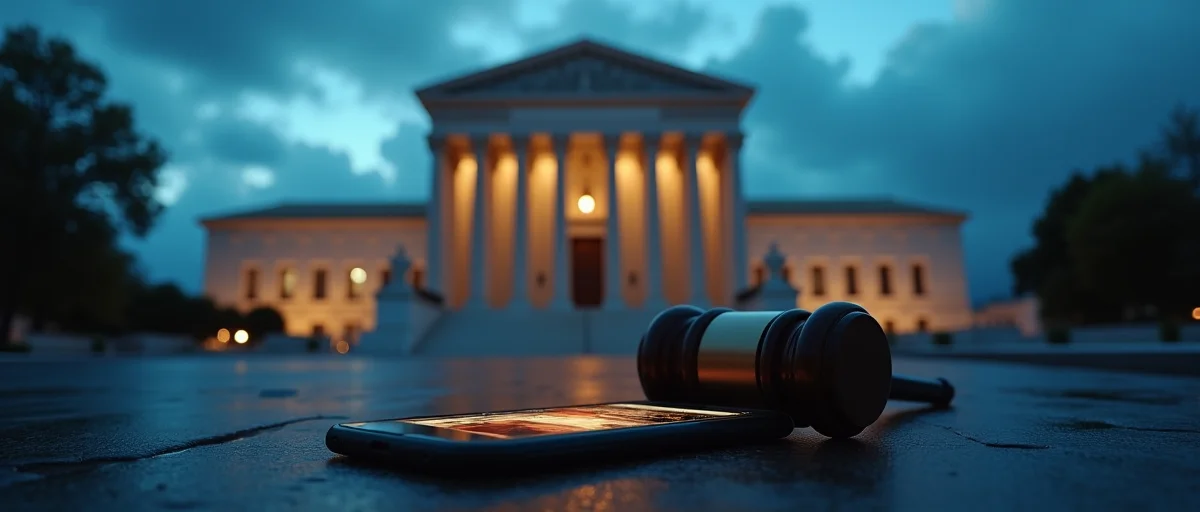
A federal judge denied xAI's motion to block Minnesota's ban on photo-nudification apps, allowing the law to stay in force during litigation. The ruling is an early test of how courts balance deepfake abuse prevention against First Amendment and AI platform arguments.
A federal judge has denied xAI’s request to temporarily block Minnesota’s ban on photo-nudification apps, allowing the state to enforce its law while the company’s broader constitutional challenge continues. The ruling is an early signal that courts may be reluctant to shield AI platforms from state rules targeting non-consensual sexual imagery. For AI developers, the decision underscores the growing legal risk posed by image-generation features that can be misused to create synthetic intimate content.
The lawsuit, filed by xAI, argued that Minnesota’s statute is too broad and could restrict legitimate AI image-generation tools, including features in its Grok chatbot. The company claimed the law could sweep in systems that produce non-sexual nudity or artistic imagery, thereby triggering First Amendment protections. The judge, however, denied the preliminary injunction, concluding that the state’s interest in protecting victims from deepfake sexual abuse outweighed the speculative harms to xAI’s platform. The denial does not decide the case on its merits, but it provides a concrete example of how courts are approaching a new wave of state-level AI regulations.
This is one of the first major court decisions to address a state law specifically designed to ban ‘nudify’ apps. Minnesota’s statute, which took effect earlier this year, explicitly targets tools that use AI to digitally remove clothing from images or generate realistic nude images of individuals without their consent. The law creates civil and criminal liability for creating, distributing, or possessing such imagery, with exceptions for legitimate medical, artistic, and law enforcement uses.
The ruling carries weight beyond the immediate parties because it signals a judicial willingness to uphold such laws, at least at the preliminary stage. Legal analysts note that this decision could influence how other states draft and enforce similar legislation. Multiple states have already enacted or proposed laws targeting AI-generated non-consensual sexual imagery, reflecting a broader regulatory trend.
xAI’s legal challenge centers on overbreadth and free expression. The company maintains that Grok’s image-generation capabilities have legitimate uses, such as generating fictional characters or artistic work, and that Minnesota’s law could chill protected speech. In court documents, xAI argued that ‘nudify’ is an imprecise term that could encompass a wide range of benign outputs.
But the court was not persuaded at this stage. The judge emphasized that the law is narrowly tailored to target the non-consensual sexualized manipulation of a real person’s likeness—a category of content that has historically received no First Amendment protection. This reasoning aligns with earlier court decisions on revenge porn laws, which have generally upheld bans on non-consensual intimate imagery.
The decision is an early test of how courts balance state efforts to curb deepfake sexual abuse against technology-platform arguments. Several other states are watching closely, as similar laws are being drafted or litigated across the country. If federal courts continue to reject platform arguments in these cases, more states may feel encouraged to pass aggressive regulations.
For AI companies, the takeaway is clear: you cannot assume that free-speech arguments will automatically defeat laws aimed at image-manipulation tools. The outcome of this case—and others like it—will likely shape product design decisions, content moderation policies, and even training data choices.
The Minnesota case sits within a rapid regulatory expansion. Since 2024, lawmakers in more than half of U.S. states have introduced bills targeting AI-generated intimate images. Some have already signed laws creating civil causes of action, while others have followed Minnesota’s lead with criminal penalties. According to TechCrunch reporting, multiple states have enacted or proposed such laws, reflecting a growing consensus that existing legal frameworks are insufficient.
This trend is growing:
While a federal framework has been proposed, it has not yet passed. In the meantime, state-level enforcement is becoming the primary regulatory mechanism. That creates a patchwork of requirements for AI companies, but it also gives victims more avenues for recourse.
If your company builds or hosts image-generation tools, the Minnesota ruling offers three practical lessons.
If your model can produce realistic nudity or sexualized images, you need clear policies and filters to prevent misuse. Courts are unlikely to accept ‘we didn’t intend it’ as a defense—especially when the tool has an obvious nudify function. Proactive safety measures are not just good ethics; they are becoming a legal necessity.
The companies that thrive in this regulatory climate will be those that bake safety into the product. That includes:
The word itself carries weight in legislation and public opinion. Avoid positioning your product as a ‘nudify’ tool, even if you have legitimate use cases. Framing matters—both in the court of law and in the court of public opinion.
The Minnesota case is far from over. xAI can appeal the preliminary injunction denial or continue to litigate the underlying claims. Other appellate courts may soon weigh in on similar issues, creating a broader body of deepfake law. Early rulings, however, set a tone. If courts consistently reject platform arguments against deepfake laws, we may see more states pass aggressive regulations. Conversely, if a future ruling gives constitutional protection to AI-generated imagery, states could face an uphill battle.
For now, the practical guidance is straightforward: operate as if your AI’s image capabilities will be scrutinized under state law. That means knowing where your users are located, proactively removing non-consensual intimate content, and cooperating with law enforcement when warranted.
The denial of xAI’s request to block Minnesota’s ban on nudify apps signals that courts are taking deepfake sexual abuse seriously. While the legal fight continues, the immediate effect is that Minnesota can enforce its law, and other states are likely to follow its lead. AI companies should treat this ruling as a warning: your products are not immune from regulation, and the cost of ignoring misuse is far higher than the cost of building safeguards. For technology professionals, the takeaway is to stay informed, adapt quickly, and prioritize responsible design over reactive fixes.
Nudify apps are AI-powered tools that can digitally remove clothing from photos or generate realistic nude images of individuals without their consent. They typically use deep learning models to infer or synthesize what a person might look like unclothed, often producing highly convincing but fake imagery. These apps have become a major concern because they are frequently used to create non-consensual sexual images of real people.
Minnesota's statute explicitly bans tools that use AI to create synthetic nude or sexual images of identifiable individuals without their consent. The law creates both civil and criminal liability for creating, distributing, or possessing such imagery, with exceptions for legitimate medical, artistic, and law enforcement uses. Penalties can include fines and criminal charges, depending on the severity of the offense and whether the victim suffers harm.
The judge denied the preliminary injunction because the state's interest in protecting victims from deepfake sexual abuse outweighed the speculative harms xAI claimed about the law being too broad. The court concluded that xAI did not show a strong likelihood of success on its First Amendment argument, and that allowing the law to take effect during litigation was the right balance. The ruling does not decide the case's final merits, but it signals that courts are taking deepfake abuse prevention seriously.
AI developers must now pay closer attention to state-level laws that target misuse of image-generation features, especially those that could produce non-consensual intimate imagery. The ruling suggests that courts may not automatically shield AI platforms from liability under the First Amendment when the harm is concrete and severe. Developers should review their content policies, implement safeguards, and consider how their tools could be used to create deepfake sexual images, even if that is not their intended purpose.
This ruling provides an early judicial signal that state laws targeting nudify apps can survive preliminary challenges, which may encourage other states to draft similar legislation. Legal experts expect more states to pass or refine laws banning non-consensual deepfake sexual imagery, following Minnesota's lead. However, the case is still ongoing, and the final merits decision could shape the boundaries of how far states can go without violating First Amendment protections.