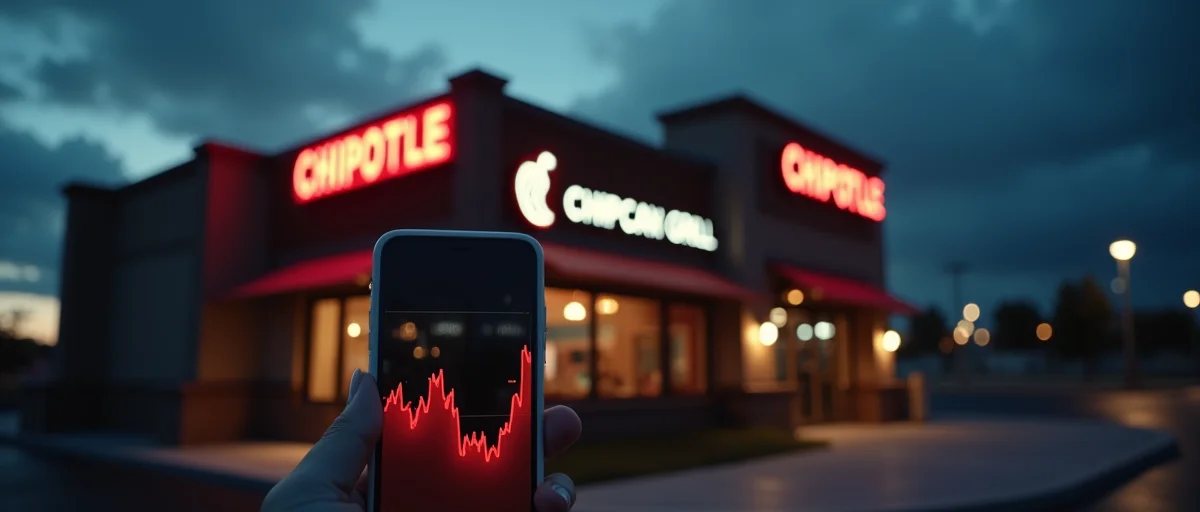
Chipotle stock fell after a potential salmonella outbreak in Minnesota. It pulled affected supply, showing how food safety news impacts restaurant stocks.
Markets react to headlines, and this week, Chipotle stock did just that. The fast-casual chain was potentially linked to a salmonella outbreak in Minnesota, and investors responded by sending the share price lower. The company quickly acted by pulling affected supply from restaurants and replacing it with peppers from different growers. Although the investigation is still unfolding, this incident offers a powerful lesson for investors and technology professionals: food safety events can move restaurant valuations instantly.
The news emerged when Minnesota health officials began investigating a connection between local salmonella cases and Chipotle. As reports spread, Chipotle stock declined. The exact percentage move may vary by the time you read this, but the direction was clear: investors treated the news as a material risk.
Chipotle did not wait for regulators to force action. It removed the potentially affected supply from restaurants and switched to peppers from different growers. This rapid response may prevent additional cases and help reassure customers. However, the stock drop shows that even early action cannot fully protect a brand from investor uncertainty.
The event also underscores how quickly food safety news can affect a company with a large public footprint. A contamination scare in one state can create concern in many markets.
Salmonella is one of the leading causes of foodborne illness worldwide. It spreads through contaminated food, water, or surfaces. Common sources include poultry, eggs, produce, and processed foods. Symptoms typically include diarrhea, fever, and stomach cramps. People who become ill may need medical care, though most recover within a few days.
For restaurant chains, the risk is not simply medical. A single ingredient can travel through a complex supply network. Growers ship produce to distributors, distributors deliver to restaurants, and restaurants prepare meals for thousands of customers. When a contamination source is suspected, companies must trace the affected product backwards and forwards through that chain.
This is why the Centers for Disease Control and Prevention (CDC) and the U.S. Food and Drug Administration pay close attention to restaurant-linked clusters. Even a small number of cases can trigger a public health investigation, especially when a national brand is involved.
Restaurant stocks are uniquely sensitive to food safety alerts because trust is the foundation of the industry. Consumers choose a restaurant not only for taste and convenience but also because they expect the food to be safe. When that expectation breaks, the fallout can be immediate.
Investors understand this dynamic. A food safety headline may cause customers to delay visits, regulators to inspect facilities, and media outlets to amplify the story. All of these factors can hit sales and profit margins. That explains why Chipotle stock moved lower on the Minnesota salmonella news.
Chipotle has faced food safety challenges in the past. As a result, investors may apply a higher risk premium to its shares. Even a potential link to a new outbreak can trigger a rapid reassessment of the stock’s value.
These costs are not necessarily permanent. A quick, transparent response can shorten the damage. But each day of uncertainty can make the financial impact larger.
Chipotle’s actions in this case reflect an important principle in crisis management: act fast, communicate clearly, and remove the source of risk. By pulling the affected supply and replacing it with peppers from different growers, Chipotle aimed to stop the potential spread of salmonella.
The company also benefited from having a recognizable brand. Customers and investors can see exactly what the company did to address the problem. That transparency may help limit long-term reputational damage.
However, a fast response is not the same as a complete solution. The investigation in Minnesota is still ongoing. If health officials find additional cases, investor concerns could intensify. If they determine that the outbreak was isolated, Chipotle stock may recover.
The situation is a good reminder that food safety is an ongoing process. One incident can expose weaknesses in supplier monitoring, batch tracking, or staff training. Companies that treat every event as a learning opportunity are more likely to emerge stronger.
Answers to these questions can help investors decide whether a dip in the stock is an overreaction or a warning.
For technology professionals, the Chipotle salmonella story is more than a finance headline. It is an example of why data and supply chain visibility matter. When food moves through multiple stages, manual processes can delay the detection of a contaminated batch.
Digital tools can help. Batch-level tracking systems allow companies to trace ingredients from farm to restaurant. Real-time sensors can monitor temperature and storage conditions. Analytics can identify unusual patterns before they become public health issues. Some supply chains use blockchain or distributed ledgers to create immutable records of product movement.
These technologies do not eliminate risk entirely. But they reduce the time needed to react. In a food safety incident, hours can matter. A faster response can prevent additional illnesses and reduce the financial damage.
Chipotle was able to identify and remove the affected supply, which suggests it already has some tracing capability. Still, the incident shows how much depends on the speed and accuracy of information flow.
This incident underscores how food safety concerns can affect restaurant company valuations. When an outbreak hits a national brand, the impact is not limited to the cost of discarded ingredients. Investors may revise their expectations for future revenue, operating margins, and cash flow.
In a typical stock valuation model, analysts project earnings and apply a multiple. Food safety risk can change both inputs. The earnings forecast may drop due to expected lost sales. The multiple may shrink because investors demand a higher return to compensate for brand risk. The combination can produce a noticeable decline in the share price.
That is why food safety is now a critical part of restaurant investment analysis. Companies with strong safety protocols may trade at higher multiples. Companies with repeated incidents may face persistent discounting by the market.
The Chipotle episode is a reminder that even a potential contamination event is enough to shift sentiment. The market often prices in uncertainty before all the facts are known.
Chipotle stock fell after the company was potentially linked to a salmonella outbreak in Minnesota. In response, Chipotle pulled the affected supply and replaced it with peppers from different growers. These actions demonstrate how a restaurant chain can try to contain risk quickly.
Investors should monitor the investigation results, foot traffic trends, and management comments in the next earnings call. If the outbreak is contained and no additional cases appear, Chipotle stock could stabilize. If the investigation expands, volatility may continue.
For technology professionals, the lesson is clear. Food safety is a data problem as much as a food problem. Robust traceability, automated monitoring, and clear communication can reduce the impact of future incidents. In an industry where consumer trust is the ultimate currency, investing in prevention is always smarter than paying the price of a crisis.
Investors viewed the potential health link as a material risk because food safety incidents can lead to lawsuits, regulatory penalties, lost sales, and reputational damage. Chipotle's quick response by pulling affected supply did not prevent the initial dip because investigation outcomes remain uncertain.
Food safety news often triggers an immediate sell-off as markets price in possible legal costs, cleanup expenses, and lower customer traffic. The effect can be temporary or long-lasting depending on outbreak scope, the company's response speed, and the brand's history of safety problems.
Salmonella is a foodborne bacteria that can cause diarrhea, fever, and stomach cramps, and it is commonly found in poultry, eggs, produce, and processed foods. It can enter a restaurant's supply chain through contaminated ingredients, water, equipment, or food handlers, then spread from growers to distributors to restaurants. Tracing affected product along that chain is key to containing an outbreak.
Restaurant chains can reduce risk by enforcing strict supplier audits, temperature controls, sanitation procedures, employee training, and traceability systems. Technologies like blockchain and IoT sensors can improve supply chain visibility and make recalls faster. In this case, Chipotle's quick action to replace peppers from different growers helped reduce further exposure.
Investors should monitor official health investigation updates, recall scope, regulatory actions, same-store sales trends, and repeat food safety incidents. They should also assess how management communicates with the public and whether customer trust appears to recover. Short-term volatility may create opportunities, but long-term impact depends on the investigation's findings.