The release of Moonshot AI's Kimi sparked a dramatic market selloff, highlighting deep anxieties about China's rise in AI. This article analyzes the panic and its implications for global tech.
The financial world is no stranger to panic. But when a little-known Chinese AI startup called Moonshot AI released its new model, Kimi, in early 2025, the reaction was nothing short of seismic. Tech stocks plummeted, analysts scrambled to reassess valuations, and a familiar narrative resurfaced: China is coming for our AI crown. The Chinese AI panic that ensued raises a critical question—was this a rational market correction or an overblown reaction to the evolving landscape of global artificial intelligence? A recent episode of The Equity podcast dissected this very question, concluding that the panic underscores deep anxieties about Chinese AI progress and its potential impact on global tech leadership. To understand the frenzy, we must look beyond the headlines and examine what Kimi’s launch actually signifies about the state of AI competition.
Moonshot AI, a Beijing-based startup that had operated largely under the radar, introduced Kimi in a low-key blog post. But the model’s performance metrics quickly caught the attention of investors. Kimi reportedly rivaled—and in some benchmarks surpassed—leading Western models like OpenAI’s GPT-4 and Google’s Gemini. Its ability to process up to 1 million tokens in a single context window was a technical feat that stunned the AI community.
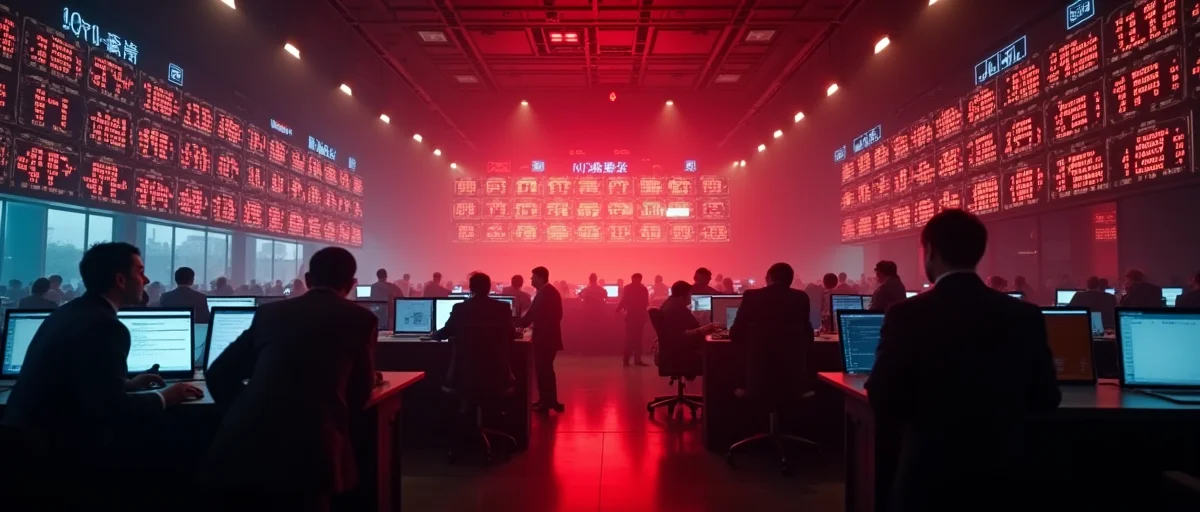
Within days, a wave of selling swept through technology stocks on both sides of the Pacific. According to Bloomberg, the tech-heavy Nasdaq Composite fell 3.8% in the week following the announcement. Nvidia, often seen as a bellwether for AI enthusiasm, dropped 8% before partially recovering. Meanwhile, Chinese AI stocks surged erratically, reflecting the market’s confusion about the competitive balance.
“The market overreacted, as it often does to unexpected competitive threats,” says Tom Anderson, tech analyst at Meridian Capital. “But the underlying anxiety is real. Investors are grappling with the prospect that US leadership in AI may not be as unassailable as assumed.”
Kimi wasn’t just another large language model. It demonstrated remarkable efficiency in processing long contexts—up to 1 million tokens—without sacrificing accuracy. That technical edge, combined with an open-source approach and aggressive pricing, made it an immediate threat to established players.
The panic, however, wasn’t solely about Kimi’s technical capabilities. It was about what Kimi represented: the maturation of China’s AI ecosystem. This startup, founded only in 2023, had achieved in two years what many thought would take a decade.
The Chinese AI panic is not a new phenomenon. Fears have simmered since DeepSeek’s emergence and the growth of companies like Baidu and Alibaba. But Kimi’s launch crystallized these fears into a moment of collective anxiety. Several underlying factors fueled the fire:
Accelerating Innovation: Chinese AI labs are no longer just imitating Western models. They’re publishing foundational research in top conferences and achieving state-of-the-art results in areas like multimodal AI and reinforcement learning. According to PitchBook, venture capital funding for Chinese AI startups reached $12 billion in 2024, a 40% year-over-year increase, while US AI funding declined by 8%.
Resourcefulness Amid Sanctions: Despite US export controls on advanced chips, Chinese companies have found innovative ways to train competitive models. Moonshot AI’s success suggests that the sanctions may be less effective than hoped. The company utilized a novel mix of alternative chips and algorithmic efficiency to train Kimi at a fraction of the cost of Western models.
Policy and Investment Support: The Chinese government has prioritized AI as a strategic sector, pouring billions into infrastructure and talent cultivation. The national AI development plan aims to make China the world leader in AI by 2030.
Dr. Sarah Chen, AI researcher at Stanford University, notes, “The panic reflects a fundamental misunderstanding of the AI landscape. It’s not zero-sum. Progress in China can accelerate global AI development, but it also means the West can’t afford complacency.”
What made Kimi different from previous Chinese AI announcements was its timing and the market’s readiness to believe a new narrative. After years of hearing that China lagged by 12-18 months, the evidence suggested that gap was closing fast. A February 2025 survey by Gartner revealed that 72% of enterprise AI buyers are now considering Chinese AI solutions, up from 45% a year ago. That shift in perception alone was enough to spook investors.
The Equity podcast, a leading tech analysis program, dedicated an episode to dissecting whether the panic was justified. The consensus was nuanced: while Kimi is genuinely impressive, the market’s reaction ignored several important contexts.
Arguments for Proportionate Reaction:
Arguments for Overreaction:
“Markets are right to be concerned,” says analyst Tom Anderson. “But panic selling rarely leads to good decisions. The key is to understand the long-term trajectory, not the weekly noise.”
History suggests that panic over emerging competitors often proves exaggerated. In the 1980s, Japan’s rise in electronics caused similar alarm, yet US tech companies adapted and thrived. More recently, the fear that China’s 5G dominance would eclipse Western firms led to overinvestment and eventual market corrections. The AI sector may follow a similar pattern—if incumbents respond with innovation rather than protectionism.
The Chinese AI panic has practical implications for technology professionals, investors, and policymakers.
For investors, the event underscores the need for diversification. The assumption that US companies will dominate AI indefinitely is being tested. Allocating capital to global AI opportunities may reduce risk. The surge in Chinese AI funding is a signal that the center of gravity is shifting.
For technology professionals, the panic is a reminder that the talent race is truly global. Chinese AI researchers are publishing at top venues and poaching talent from Western firms. Companies must invest in retaining their best people and staying abreast of research emerging from China.
For policymakers, the reaction highlights the limits of containment strategies. Export controls may slow China but not stop it. A more effective approach might be to boost domestic R&D and foster collaboration where possible.
Key Takeaways for Tech Professionals:
As AI continues to globalize, the line between “us” and “them” will blur. The best response to Kimi’s launch is not panic but curiosity and strategic action.
The Chinese AI panic teaches us that technological leadership is not static. It must be earned continuously. For Western companies, this means doubling down on research, investing in talent, and perhaps most importantly, acknowledging that great AI can come from anywhere.
The global AI ecosystem thrives on competition and collaboration. The race is not to the swiftest today but to those who adapt best tomorrow.
The panic over Chinese AI, triggered by Moonshot AI’s Kimi, captured the anxiety of a world uncertain about the future of technology leadership. While the market reaction may have been disproportionate, it highlighted real progress in China’s AI sector and the need for Western tech to stay vigilant. The takeaway is not to fear Chinese AI but to understand its trajectory, learn from it, and compete on merit. In the end, progress—whether from Beijing or Silicon Valley—benefits humanity. The challenge for tech professionals is to navigate this landscape with clear eyes and a strategic mindset.
Moonshot AI is a Beijing-based startup that developed Kimi, a large language model with performance rivaling GPT-4 and Gemini. Its launch caused a panic because it signaled that Chinese AI capabilities are accelerating rapidly, threatening the assumed leadership of Western tech giants.
The reaction was swift and severe. The Nasdaq Composite fell 3.8% in the week following the announcement, and Nvidia dropped 8% before partially recovering, while Chinese AI stocks surged erratically.
Most analysts view the initial selloff as an overreaction typical of unexpected competitive threats. However, the underlying anxiety is real and justified, reflecting a growing investor realization that US AI dominance is not as secure as previously thought.
A context window dictates how much text an AI can process simultaneously. Processing 1 million tokens allows Kimi to handle entire datasets, books, or complex codebases in a single session, giving it a major edge in efficiency and deep analysis compared to models with smaller limits.
It reveals that the global AI race is a genuine two-player contest between the US and China, and China has viable alternatives to Western models. Investors and companies should expect heightened volatility and must closely monitor advancements from both ecosystems to understand the shifting landscape.