Moonshot AI's Kimi model triggered market panic, raising questions about Chinese AI. This article draws on the Equity podcast to separate hype from reality.
The tech world was set abuzz when Moonshot AI released its new model, Kimi, triggering a sudden and intense reaction across financial markets and industry circles. The episode — which became a lightning rod for broader anxieties about China’s rapid progress in artificial intelligence — has left many wondering whether the fear is justified or simply the latest symptom of an increasingly tense global tech rivalry. In a recent episode of Equity, analysts sought to parse the noise, asking a crucial question: Was the panic over Chinese AI proportionate to the actual threat? This article dives into that question and what it reveals about the current state of AI competition.
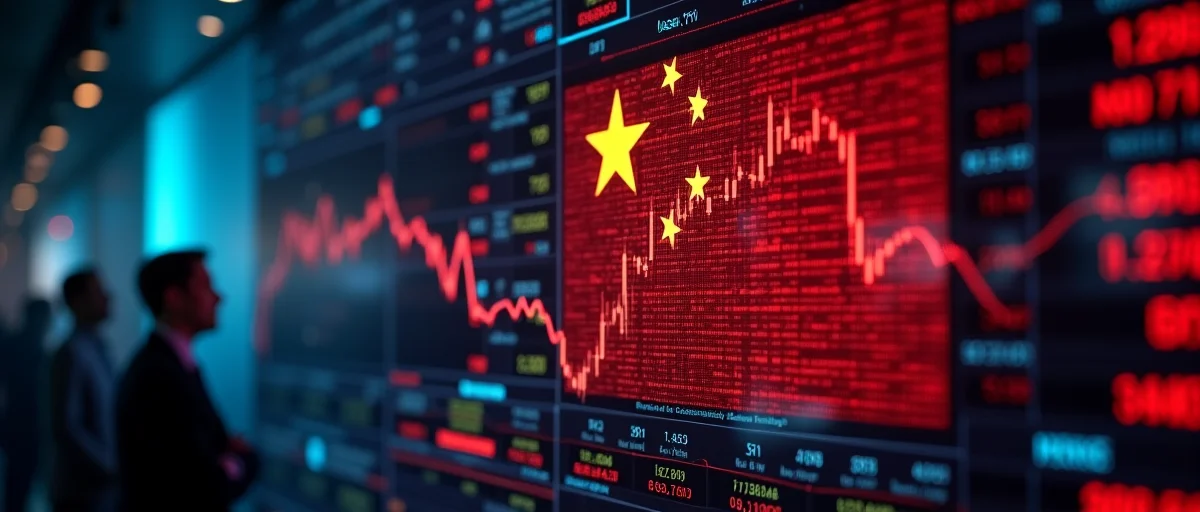
What exactly happened when Kimi was launched? Initial reports highlighted the model’s ability to handle long-context inputs with remarkable coherence — a feature that has practical applications in research, law, and finance. But the market reaction was instant and outsized. Stock prices of AI-related companies fluctuated sharply, and social media erupted with warnings of a new “Sputnik moment”. The Equity episode examined these response patterns critically. The key finding was that while Chinese AI is indeed advancing, the intensity of the panic reveals more about the anxiety embedded in current global tech dynamics than about the model’s actual capabilities.
Several factors contributed to the disproportionate response. First, Moonshot AI is a relatively new player in a field dominated by established giants. Its sudden visibility was perceived as a sign that innovation is widely distributed and unpredictable. Second, the geopolitical context — including US chip export controls, restrictions on AI talent mobility, and heightened national security scrutiny — magnified the significance of any Chinese advance. Third, financial markets, already jittery from the rapid pace of AI developments, overcorrected on limited information.
To assess whether the panic is warranted, we must look beyond a single model release. Chinese AI has made undeniable progress, but it operates under unique constraints. While companies like Moonshot, DeepSeek, Zhipu AI, and others create compelling models, they often rely on older hardware due to export restrictions. This forces optimization and ingenuity, but it also limits the scale of training runs compared to US labs. Furthermore, the regulatory environment in China imposes different rules on data use, content moderation, and deployment.
The ecosystem is vibrant, but no single player has yet achieved the global dominance exerted by OpenAI or Google in the West. The real competition may not be between specific models but rather between different philosophical approaches: Western emphasis on scale and frontier capability versus Chinese focus on application-specific efficiency and rapid iteration.
The analysis on the Equity podcast provided a valuable framework for understanding the panic. By dissecting the market movements and the underlying technological claims, the show highlighted a crucial distinction: the difference between a company’s announcement and its long-term trajectory. According to the episode, while Kimi demonstrated genuine strengths, it did not represent a paradigm shift. The panic over Chinese AI, therefore, was more a reflection of collective anxiety than a rational assessment of the competitive landscape.
Media coverage played a significant part in amplifying the sense of crisis. Catchy headlines and superficial comparisons to the Sputnik launch fuelled the narrative that the US was losing the AI race. The Equity analysts pointed out that such framing ignores the nuanced reality of scientific progress. Innovation is rarely a linear race, and a single model — no matter how impressive — cannot instantly overturn years of cumulative advantage.
At its core, the question of whether the fear is justified depends on how we define “justified.” If the concern is that China is becoming a formidable AI competitor, then yes, that trend is real. Companies like Moonshot are innovating fast, and dismissing them would be strategically foolish. However, if the fear implies an imminent technological takeover, that claim does not stand up to scrutiny.
Kimi’s key advancement — long-context understanding — is significant but incremental. It refines existing techniques without redefining the field. In overall reasoning, multilingual capability, and multimodal performance, frontier models from the US still hold an edge. Moreover, Chinese AI firms face substantial headwinds from semiconductor sanctions, which may widen the gap in the short term.
Financial markets often overreact to new entrants, especially in a buzz-driven field like AI. Such volatility tends to correct once more data becomes available. For technology professionals, the lesson is to focus on underlying trends rather than daily news cycles. As the Equity analysis noted, the steady convergence of capabilities between Chinese and Western AI is notable, but it is a gradual process, not a sudden overtaking.
Navigating the hype requires a disciplined approach. Here are key guidelines:
Companies should diversify their strategies beyond just competing on model size or headline metrics. Focus on efficient deployment, domain adaptation, trustworthy AI, and partnerships that are less susceptible to single-model hype.
The panic over Chinese AI reflects a deeper structural shift. The era of unquestioned Western leadership in AI is over. The US and its allies now face a landscape where China is a major competitor — not necessarily in pushing the absolute frontier, but in rapidly implementing and scaling AI solutions across industries. This calls for a renewed focus on innovation policy, selective collaboration, and clear-eyed risk management.
The Equity episode aptly reminded listeners that the AI competition is a marathon. Each new model, whether from Moonshot, OpenAI, or others, is but one step in a long journey. The reactions to Kimi — whether overblown or alert — highlight the intense scrutiny that will accompany every development. The challenge for global tech leadership is to remain proactive, investing in foundational research and resilient infrastructure, rather than reacting fearfully to each headline.
The panic sparked by Moonshot AI’s Kimi release offers a valuable lesson in separating hype from substance. Chinese AI is advancing, but the intensity of the reaction tells us more about our collective anxieties than about a fundamental shift in technological leadership. The future of AI competition will be shaped by sustained, cumulative progress, not isolated events. For technology professionals, the best response is to stay informed, think critically, and avoid being swayed by fear-driven narratives. As the landscape evolves, those who keep a steady hand will be best positioned to lead.
The 'Kimi Effect' refers to the market panic and geopolitical anxiety triggered by Moonshot AI's release of its Kimi model, which demonstrated impressive long-context handling. This event highlighted how quickly perceptions of Chinese AI progress can impact global tech markets and amplify existing tensions.
The reaction was driven by a combination of factors: Kimi's unexpected capabilities from a relatively new player, the tense geopolitical backdrop of US-China tech rivalry, and jittery financial markets prone to overreaction. The episode became a lightning rod for broader anxieties about China's rapid AI progress.
Chinese AI companies often operate under hardware constraints due to US export controls, forcing them to optimize and innovate with older chips. Meanwhile, US companies have more access to cutting-edge hardware but face their own regulatory and market pressures. Both ecosystems are advancing rapidly, but with different strategies and limitations.
While Chinese AI has made undeniable progress, the panic often outweighs the actual threat. The real state of Chinese AI is strong but constrained, and the intense reaction reveals more about global tech anxiety than objective capabilities. A balanced view recognizes both the achievements and the limitations.
The 'Kimi Effect' may lead to increased scrutiny of Chinese AI companies and could accelerate efforts to diversify AI supply chains. It also highlights the need for measured assessments of AI progress to avoid market volatility driven by hype. The event underscores that AI innovation is globally distributed and unpredictable.