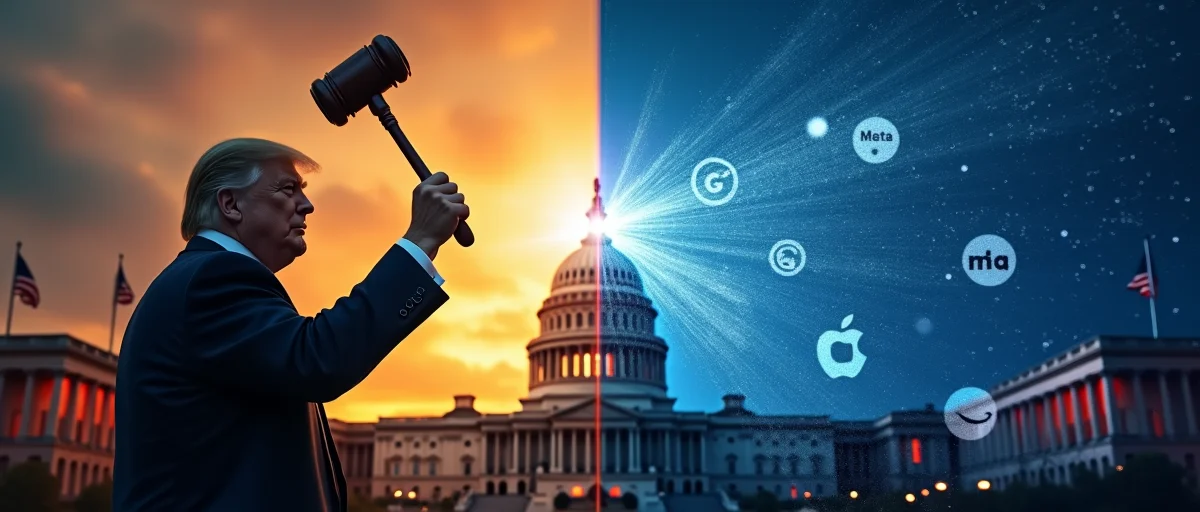
Donald Trump pledges to investigate the EU's record fines against US tech giants. This article explores the potential trade war, the billions at stake, and what the escalating conflict means for the future of global technology regulation.
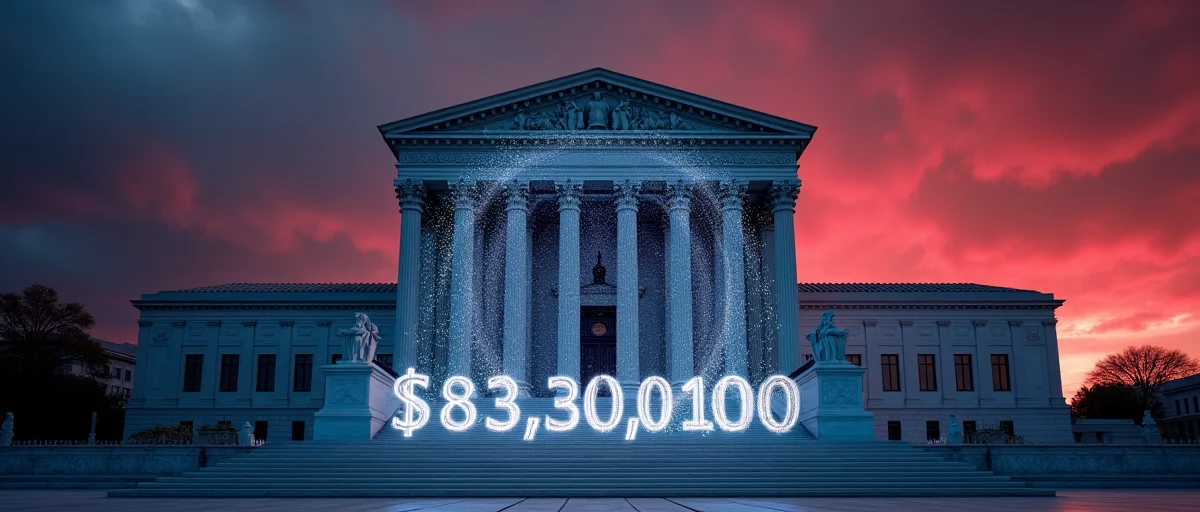
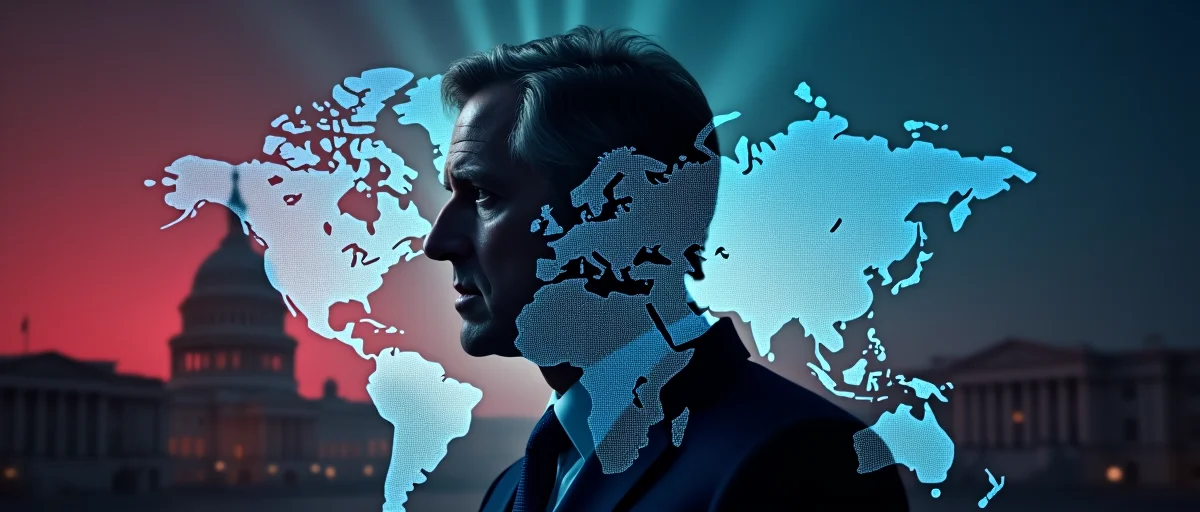
Donald Trump has thrown down a gauntlet in the escalating transatlantic battle over technology regulation. The former president and current Republican nominee has explicitly vowed to investigate the European Union’s multi-billion-euro fines levied against American tech giants if he returns to the White House. This pledge marks a significant escalation in the ongoing conflict between US tech exceptionalism and Europe’s robust digital regulatory framework. The combined pressure of over €8 billion in penalties has clearly sparked a political reaction in Washington, promising a turbulent future for global tech policy.
In a statement reported by BBC News, Trump declared, “These fines against Google, Apple, Meta and Amazon should be entirely reversed.” This highly specific critique aligns with a broader Republican platform that views European tech regulation as an unfair trade barrier designed to undermine American economic dominance.
Trump’s vow signals a potential shift to a highly antagonistic US stance against the European Commission. While previous administrations have expressed concerns over EU regulation, Trump’s promise suggests a move from diplomatic criticism to active retaliation. By framing legal enforcement actions as national attacks, he is setting the stage for a potential trade war focused squarely on the digital economy.
The European Union has systematically pursued the largest American tech firms for what it deems anti-competitive behavior and privacy violations. The track record of fines is staggering:
These cases represent the pillars of Europe’s digital sovereignty project. They enforce the idea that American companies must play by European rules when operating within the single market. The total fines imposed represent a 150% increase in penalties from 2017 to 2024, showcasing a steadily escalating regulatory environment.
The conflict is not merely about money; it is a clash of fundamental philosophies regarding technology governance, consumer rights, and corporate power.
The European Commission strongly defends its actions. As a spokesperson stated:
“The EU’s actions are designed to protect European consumers and ensure a level playing field. They are not targeting any specific nationality.”
This view posits that democratic states must curb the power of unaccountable private monopolies. The Digital Markets Act (DMA) and Digital Services Act (DSA) are the vanguard of this movement. They are hard-fought laws designed to create a fair and safe digital space, not trade barriers.
Conversely, critics in the US argue that Europe’s enforcement of the DMA and GDPR is “digital protectionism.” They contend these rules are designed to hobble successful American companies in favor of local European champions.
Donald Trump taps directly into this frustration. His call to “investigate” the EU implies that these fines are an act of economic warfare rather than legitimate domestic regulation. This perspective sees the EU’s actions as a unilateral tax on US digital exports.
If Trump is elected, he has several levers to pull against the EU in response to these fines.
The fines are just the enforcement action. The real battle is over the rules of the road. The Digital Markets Act (DMA) requires gatekeepers to open up their platforms to competitors. The Digital Services Act (DSA) holds platforms accountable for algorithmic harms and illegal content. The General Data Protection Regulation (GDPR) sets a global standard for privacy.
The US has no direct equivalent to these comprehensive laws. Trump’s administration would likely argue these laws create a chilling effect on innovation and disproportionately harm US firms. A potential second Trump term might see the US actively working to delegitimize the DSA and DMA on the world stage, representing a massive shift in the transatlantic relationship.
It is important to note that the tech industry is not monolithic. While hegemonic platforms like Google and Apple despise the EU’s restrictions, smaller competitors (like Spotify, Epic Games, and various privacy-focused startups) often benefit from them.
A US government crackdown on EU regulation could be a double-edged sword. It might relieve compliance burdens for giants, but it could also stifle the competitive dynamics that the DMA is designed to foster. For technology professionals, this means navigating an increasingly politicized business environment where legal teams must prepare for multiple conflicting scenarios.
The vow from Donald Trump represents a fork in the road for global technology governance. Will the US double down on a hands-off approach to tech company regulation, or will it eventually work with the EU to find common ground? For now, the path leads toward increased friction, geopolitical brinkmanship, and a deeply fragmented internet.
Tensions have been rising sharply since 2018, and the stakes are incredibly high. We may see the internet fragment into distinct digital ecosystems: the US model (light touch, free market approach) and the EU model (rights-focused, heavily regulated). This creates a chaotic environment for tech companies who must navigate conflicting regulatory regimes.
For technology professionals and enthusiasts, this tension means heightened uncertainty, potential market volatility, and a pronounced need to understand geopolitics as a core component of strategic planning. The era of the internet as a borderless, self-regulated space is definitively over. The new era is one of active digital conflict, requiring agile legal, compliance, and business strategy teams to survive the coming turbulence.