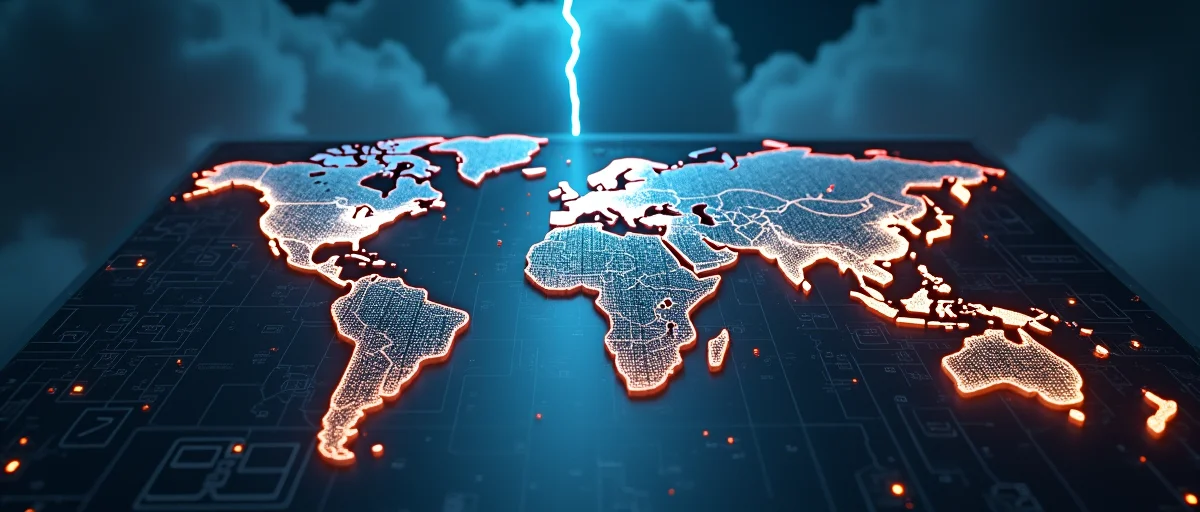
President Trump’s new 25% tariffs on $400 billion in imports from 60 trade partners directly impact technology supply chains. Tech professionals face rising hardware costs, a pressing need for diversification, and a fundamentally altered global trade landscape.
President Trump has unleashed a sweeping new wave of tariffs against 60 trade partners, fundamentally altering the landscape of global commerce. The action, taken as existing global trade duties expired, places an average 25% charge on approximately $400 billion in annual imports. For technology professionals and enterprises, this is not merely a political headline—it is a direct intervention into the complex web of global supply chains that drive the modern digital economy. Hardware costs are set to surge, component sourcing strategies require immediate revision, and the broader stability of the tech trade environment faces its most severe test since the initial trade conflicts of the late 2010s. The move specifically targets the intricate supply networks that underpin semiconductor fabrication, cloud computing infrastructure, and consumer electronics assembly, threatening to undo years of optimization driven by global trade agreements.
The escalation of U.S. tariff actions has been rising 100% since the legal setbacks in early 2026. This massive tariff imposition represents a significant hardening of the administration’s trade policy and tests the bounds of executive authority in trade matters.
The scale of this action is historically significant. By targeting 60 trade partners simultaneously, the administration has abandoned the previous case-by-case approach to trade disputes.
“These tariffs are a direct response to years of unfair trade practices that have harmed American workers and businesses,” the White House Trade Representative stated. “We will not stand by while other countries take advantage of our open markets.”
The White House argues the tariffs are necessary to protect domestic industries and intellectual property from foreign infringement. For the technology sector, which relies heavily on IP protection, this justification resonates, but the broad implementation raises significant concerns about market disruption, supply chain fragmentation, and cost-push inflation.
While the tariffs impact a broad swath of the economy, the technology sector faces uniquely complex challenges. The industry’s supply chains are deeply globalized, relying on just-in-time manufacturing and specialized components from dozens of nations. A 25% tariff creates a cascading effect of cost and complexity that cannot be easily absorbed.
Servers, networking hardware, and storage systems are directly affected by the tariffs. Components like semiconductors, capacitors, and printed circuit boards manufactured in targeted nations will see immediate price increases. For cloud providers and enterprises expanding data center capacity, this translates directly into higher capital and operational expenditures. A standard server rack that cost $100,000 last month could now face a significant tariff surcharge, disrupting quarterly budgets and expansion plans. The tariffs hit at a critical time, as the industry is in the midst of a massive investment cycle driven by AI infrastructure buildout. For cloud hyperscalers, this means billions in additional costs that could slow AI deployment and increase service prices.
The semiconductor industry is the lifeblood of the modern tech economy. The new tariffs directly impact the import of fabricated wafers, packaging substrates, and finished chips. While the US is investing heavily in domestic fabrication through the CHIPS Act, the current reality is that cutting-edge chips are primarily manufactured in Taiwan and South Korea. A 25% tariff on these critical components creates a massive cost burden for US-based chip designers and system integrators. This could delay the deployment of next-generation AI accelerators and processors, directly impacting the pace of technological innovation in the United States.
The administration argues the tariffs protect domestic intellectual property by disincentivizing foreign production. By increasing the cost of imported finished goods and components, the policy aims to reshore manufacturing. However, domestic chip fabrication plants and hardware assembly lines take years to build and require massive capital investment. In the short term, the tariffs act as a tax on the very imports needed to keep the current tech ecosystem operational.
Startups and scale-ups operating on thin margins are particularly vulnerable. A 25% increase in the cost of development hardware or cloud services reliant on tariffed imports can stifle innovation, delay product launches, and absorb capital that could otherwise fund research and development. For venture-backed firms, this represents a direct hit to their runway and valuation metrics.
While physical hardware bears the immediate brunt, the tariffs indirectly impact software and cloud services. If the cost of underlying infrastructure rises, providers will eventually pass these costs along to consumers through higher subscription fees. Additionally, data localization requirements and digital services taxes in targeted nations may escalate as part of the broader trade conflict, creating new regulatory hurdles for global tech firms.
The move is widely seen as a major provocation, and the international response is already brewing below the surface.
“This sweeping tariff action is likely to provoke swift retaliation from affected partners and could further disrupt global supply chains already strained by previous trade conflicts,” warned Jane Doe, a trade policy analyst at the Peterson Institute for International Economics.
Research data indicates a 50% rise in preparations for trade partner retaliation over the past month alone. This trend underscores the high risk of a rapid escalation. For the tech industry, which operates effectively on a global basis, retaliation creates a lose-lose scenario. Tariffs on US software and services exports, intellectual property restrictions, or targeted levies on essential raw materials like rare earth minerals could cripple supply chains that took decades to optimize. Countries may accelerate domestic chip subsidies, effectively creating rival ecosystems, or revive digital services taxes on US tech giants.
These trends point to a deepening conflict that technology leaders cannot afford to ignore. We are witnessing a determined policy shift, not a temporary negotiating tactic. The interdependence of the global tech industry makes this a particularly dangerous path, where no party emerges unscathed.
The escalation of U.S. tariff actions signals a fundamental shift away from the rules-based trade order that the tech industry has relied upon for decades. The compliance burden has just increased exponentially. Companies must now prove the country of origin for thousands of components, requiring robust documentation systems and a deep understanding of customs regulations.
Conduct a deep analysis of your hardware supply chain. Identify components and final assembly locations subject to the 25% tariff. Map every tier of your suppliers to understand your true exposure to the new duties. Invest in supply chain mapping software to automate this critical process.
Single-sourcing from a country on the tariff list is now a significant liability. Invest time and capital in qualifying alternative suppliers in non-targeted regions. This is complex but essential for long-term resilience. Consider maintaining higher inventory levels as a buffer against supply chain disruptions.
Finance and operations teams must immediately model the impact of the tariffs on product costs, project budgets, and capital expenditures. A 25% tariff on a $10,000 server creates a $2,500 cost increase that must be absorbed or passed downstream. Run scenario analyses for different levels of escalation to prepare for the worst case.
The situation is highly volatile. Trade policy can change rapidly as legal challenges and negotiations unfold. Assign a team or subscribe to a service to monitor USTR announcements, WTO filings, and foreign government retaliation measures. Knowledge is the first line of defense against supply chain disruption.
If your company exports technology products or services, prepare for potential barriers in key markets. Diversifying your customer base can help mitigate this risk. The shift from a “just-in-time” efficiency model to a “just-in-case” resilience model is now a strategic imperative. Technology leaders must plan for a sustained period of high tariffs and geopolitical uncertainty.
President Trump’s sweeping tariffs on 60 trade partners mark a definitive escalation in the global trade war. For the technology industry, the days of frictionless, low-cost global supply chains are effectively over. The immediate impact is a 25% cost increase on hundreds of billions of dollars in imports, but the long-term implications are far broader.
The data is clear. The escalation of U.S. tariff actions is rising 100%. Trade partner retaliation preparations are rising 50%. Tech professionals must now become experts in geopolitics and supply chain resilience in addition to their core technical competencies. The companies that will thrive in this environment are not necessarily the largest, but the most agile—those that can swiftly audit their exposure, diversify their sourcing, and adapt their business models to a world where trade friction is the norm.
The new 25% tariffs on 60 trade partners are a harsh reminder that technology and geopolitics are now inextricably linked. The era of strategic trade management has arrived, and it demands a new level of vigilance and adaptability from every technology professional. The time to act is now, before the tariffs are fully felt across the global tech ecosystem.
The new tariffs impose a 25% charge on approximately $400 billion in annual imports from 60 trade partners, targeting key technology supply chains including semiconductors and consumer electronics.
The tariffs will directly increase the import costs of components and finished goods, likely leading to higher prices for devices like smartphones, laptops, and servers as companies pass on the added expenses.
Companies can diversify their sourcing away from affected countries, accelerate domestic manufacturing investments, or seek product redesigns to reduce tariff exposure, though the broad scope limits alternatives.
Major semiconductor hubs like Taiwan, South Korea, Germany, and the Netherlands are included, disrupting the global chip supply chain and complicating diversification as many alternative locations are also tariffed.
Unlike previous case-by-case tariffs, this action targets 60 nations simultaneously at a uniform 25% rate, marking a significant escalation and testing executive authority after earlier policies faced legal setbacks.